Power has always relied on the canvas. Centuries ago, kings commissioned oil portraits to stretch their jaws, smooth their wrinkles, and project an immortal authority that defied their rotting flesh. Today, the brush has been replaced by neural networks, and the palace walls have moved to the glowing feeds of social media.
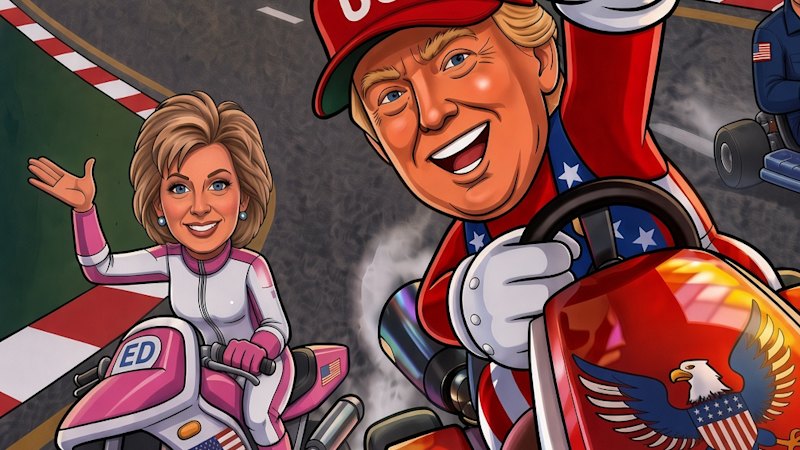
Consider what happens next in the modern communication office: a screen illuminates a dimly lit press room, projecting an artificial intelligence-generated cartoon designed not to inform, but to provoke.
When official government channels embrace synthetic satire and deepfake imagery, something fundamental shifts in the contract between the governed and the governing. We have entered an era where political discourse is processed through the distorting lens of generative pixels. When the White House account shares stylized, AI-doctored media—ranging from cartoonish fan art to inflammatory visual trolling—critics scream about the erosion of truth. Defenders shrug and call it a meme.
The friction is real. Imagine sitting in a university lab with a researcher who studies information propagation. They will tell you that the human brain evolved to process visual evidence as reality. When a state apparatus injects manipulated imagery into the public square, it weaponizes that evolutionary shortcut. The line between official policy communication and shitposting dissolves entirely.
Let us look at the mechanics of this shift. Historically, political satire flowed upward. Citizens mocked the crown; late-night comedians drew politicians with exaggerated features. Now, the vector has inverted. The state itself adopts the aesthetic of the internet troll, utilizing generative tools to mock adversaries, spark outrage, and crowd out substantive debate with glossy, synthetic spectacle.
When Hakeem Jeffries responded to a manipulated video by posting a historical photograph of Donald Trump alongside Jeffrey Epstein, he was participating in a familiar tit-for-tat. But the subsequent escalation—where the administration doubled down, flooding official feeds with more stylized imagery—revealed a new political reality. The goal is no longer persuasion. The goal is total saturation.
Information science tells us that outrageous content travels faster than nuance. Algorithms reward engagement, and nothing engages quite like a grievance wrapped in an absurd digital disguise. Yet, every time an official seal is stamped onto an AI-generated caricature or an altered arrest photo, a small piece of institutional credibility is traded for a moment of viral dominance.
We are left standing in the wreckage of a shared consensus. When everything can be dismissed as a joke or labeled as fake news depending on political convenience, the public square stops being a place of debate. It becomes an echo chamber of competing illusions.
The pixels fade, but the distrust remains.
Iran mocks Trump, his alleged Epstein ties with AI generated, LEGO-themed propaganda
This video provides a direct look at how international actors and rival states utilize the exact same AI-driven propaganda tactics to mock political figures on the global stage.
http://googleusercontent.com/youtube_content/1