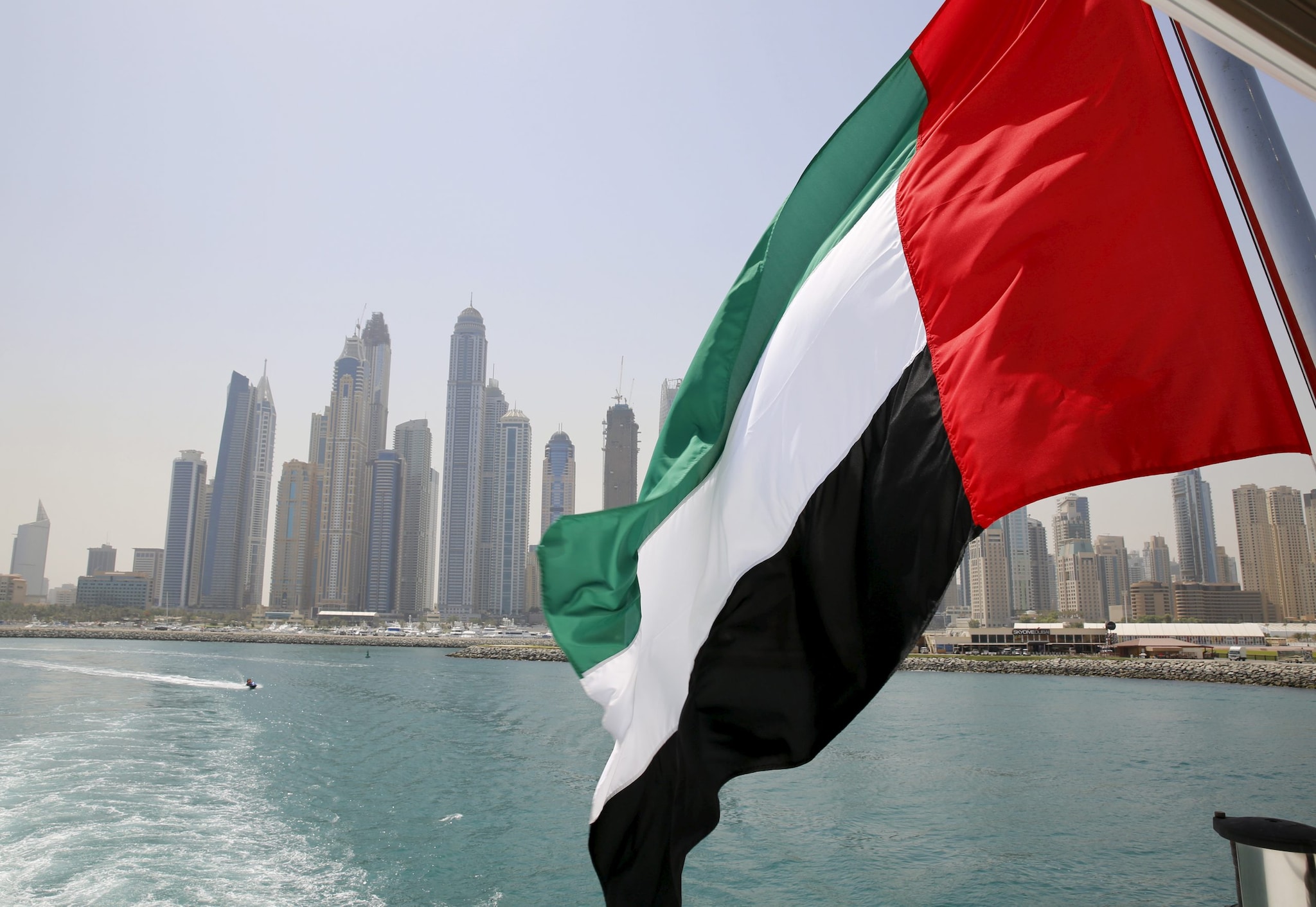
The air inside the boardroom in Abu Dhabi doesn't carry the scent of the desert. It smells of expensive filtration, espresso, and the silent, heavy weight of a decision that could shift the axis of the world’s energy. On the screens, charts flicker with the jagged heartbeats of global oil prices. Outside, the skyline of a nation built on "black gold" glitters against a haze of heat. But there is a restlessness here. A feeling that the old rhythms—the ones set by a group of men in Vienna decades ago—no longer match the pulse of a modern state.
When Angola walked away from OPEC late last year, the shockwaves were felt less as a seismic event and more as a whisper of permission. It was a crack in the monolith. Now, the world watches the United Arab Emirates. People talk about barrels. They talk about quotas. They talk about spare capacity. But what they are really talking about is sovereignty. They are talking about the right of a nation to decide its own future without asking for a show of hands from neighbors whose interests might be diverging.
Energy is not just a commodity. It is survival. It is the ability to fund schools, to desalinate the ocean so a city can drink, and to build a post-oil future before the wells run dry.
The Architect’s Dilemma
Think of a man named Omar. He is a hypothetical high-level strategist in the UAE’s energy ministry. Omar grew up in a house that remembers the time before the skyscrapers. He knows that his country’s wealth is a miracle of timing and geology. Every morning, he looks at the production numbers. The UAE has spent billions of dollars to expand its ability to pump oil. They have the technology. They have the efficiency. They have the ambition to produce five million barrels a day.
Then the phone rings.
It is the collective voice of the cartel. They tell him to wait. They tell him to cut back. They tell him that to keep the price high for everyone, he must leave his own potential locked in the ground. For years, this was the deal. It was the price of stability. But Omar looks at the new solar parks rising from the sand and the nuclear reactors humming at Barakah. He realizes that the window of the oil age is closing. If the UAE doesn't sell its resources now to fund the transition to a green economy, those resources might eventually become worthless.
The frustration is human. It is the feeling of a marathon runner being told to walk so the rest of the group can keep up.
The Weight of the Group
OPEC was founded on the idea of a fist. Clenched together, the oil-producing nations could strike a hard bargain with the West. For half a century, it worked. It created a middle class in the Middle East and dictated the cost of a gallon of gas in Ohio. But fists are rigid. In a world where the United States is now a massive oil producer and China is pivoting toward electric vehicles with frightening speed, rigidity is a liability.
The UAE is currently reviewing its multilateral ties. That sounds like a dry, bureaucratic phrase. In reality, it is a soul-search. It is an audit of every friendship and every alliance to see if they still serve the vision of 2030 and beyond.
Rumors of an "OPEC exit" for the Emirates have become a recurring ghost in the financial markets. Every time production quotas are tightened, the ghost appears. Analysts scramble. Traders hedge. The UAE government eventually steps in to say they are committed to the group, but the denial always feels like it has a footnote. They are staying—for now. Because leaving isn't just about oil. It’s about diplomacy. It’s about not wanting to be the one who broke the world’s most powerful club.
Still, the internal logic is shifting.
Consider the mathematics of the modern oil market. If the UAE leaves, they can pump at will. They can capture market share. They can undercut rivals. But they also risk a price war that could send the cost of a barrel tumbling to depths that would hurt even their diversified economy. It is a game of high-stakes poker where no one is showing their cards, and the pot is the future of the global economy.
A Multipolar Identity
The UAE is no longer just an oil state. It is a logistics hub. It is a tourism magnet. It is a space-faring nation. When officials sit down to review their multilateral ties, they aren't just looking at the OPEC ledger. They are looking at BRICS. They are looking at the COP climate summits. They are looking at trade deals with India and Indonesia.
They are realizing that the old world was binary: East vs. West, OPEC vs. The Consumers. The new world is a web.
In this web, the UAE wants to be the center node. To do that, they need flexibility. They need to be able to talk to the Russians one day and the Americans the next, while selling oil to the Chinese and investing in European wind farms. Being tied to a production quota set by a committee in Vienna feels increasingly like wearing a suit that was tailored for someone else.
The tension is visible in the data. While other OPEC members struggle to even hit their assigned targets due to aging infrastructure or political instability, the UAE is sitting on a surplus of capability. They are ready to go. They have the "spare capacity" that the world screams for when prices are high, yet they are forbidden from using it by their own allies.
The Shadow of Angola
When Angola left, the reason was simple: they felt bullied. They felt that the big players in the room were dictating terms that ignored the reality of their struggling economy. The UAE is not struggling. It is thriving. That makes their potential departure a much larger threat. If the rich guy leaves the club, the club loses its prestige.
The UAE has ruled out more departures for now. They are the "stabilizers." They are the ones holding the line. But loyalty in geopolitics is rarely about sentiment. It is about the calculation of benefit. As long as OPEC provides a shield against price volatility, the UAE will stay. But the moment the shield becomes a shackle, the calculation changes.
Imagine the quiet conversations in the majlis. The elders and the young technocrats debating the path forward. One side argues for the safety of the collective. The other argues for the daring of the independent. They look at the "Exit" sign, not with a desire to run, but with the calm knowledge that they could. That knowledge alone is a form of power. It gives them leverage in every negotiation. It ensures that when the cartel meets, the UAE’s voice is the one that causes the room to go silent.
The Invisible Stakes
For the person at the pump in London or the factory owner in Mumbai, these boardroom dramas feel distant. They shouldn't. The UAE's internal review is a proxy for the global struggle to manage the end of the carbon era. If the UAE decides to prioritize its own volume over the group’s price floor, energy costs could plummet. This would be a boon for consumers but a death knell for the high-cost green energy projects that need expensive oil to be competitive.
The stakes are the climate, the cost of living, and the stability of the Middle East.
There is a specific kind of silence that follows a great shift in history. It’s the silence before the first stone of a wall is moved. The UAE is currently standing by that wall, hand resting on the stone, feeling the weight of it. They aren't pushing yet. They are checking the mortar. They are seeing how much of the structure depends on them, and how much they depend on the structure.
The desert doesn't change quickly, but it does change. Dunes shift. Oases dry up. New paths appear where there was only sand. The UAE has always been a master of reading the wind. Right now, the wind is blowing away from the old collectives and toward a fierce, calculated independence.
They will stay in the room. They will smile for the group photos in Vienna. They will sign the communiqués. But their eyes are on the horizon, tracking a sun that is setting on the era of the cartel and rising on a world where every nation must eventually walk alone. The drumbeat of the old guard is fading. A new rhythm is beginning, and the UAE is already moving to its own beat.