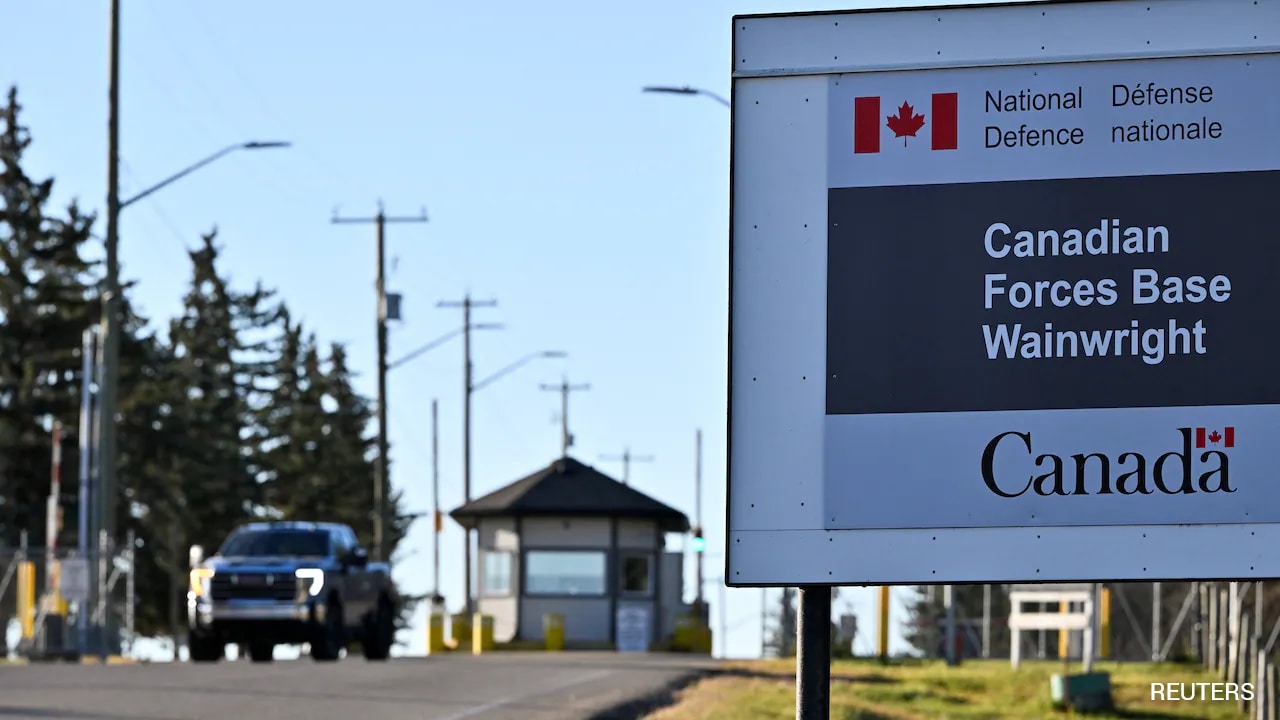
Mass casualty fire incidents in military environments follow a biphasic mortality curve that standard news coverage routinely misinterprets. When a fifth Canadian soldier dies a month after a military fire while twenty-four others remain hospitalized, the headline captures a statistical lagging indicator rather than a new acute event. To understand why fatalities accumulate weeks after initial containment, analysts must evaluate the physiological mechanics of severe burn trauma, the structural hazards of enclosed military platforms, and the compounding failure modes of multi-organ systems under prolonged intensive care.
Standard reporting treats a thirty-day gap between an incident and a fatality as an anomaly. In trauma medicine and military safety engineering, this timeline represents the predictable secondary phase of thermal and inhalation injury. The survival trajectory of the twenty-four remaining hospitalized personnel depends entirely on how effectively clinical teams manage the transition from acute resuscitation to long-term metabolic and immunological stabilization.
The Biphasic Mortality Curve of Severe Thermal Trauma
Trauma epidemiology divides fire-related fatalities into two distinct operational windows: immediate/early mortality and delayed/late mortality. Each window is governed by entirely different failure mechanisms.
Phase One The Acute Resuscitation Window (0 to 72 Hours)
Immediate deaths at the scene or within the first three days result from direct airway obstruction, carbon monoxide or cyanide toxicity, and refractory hypovolemic shock. When human tissue is exposed to extreme heat, capillary permeability spikes across the entire body, not just at the burn site. Fluid shifts rapidly from the intravascular space into the interstitial tissues. Without precise, high-volume fluid resuscitation, blood pressure collapses, leading to immediate end-organ ischemia.
Phase Two The Systemic Decompensation Window (Days 7 to 45)
Personnel who survive the first seventy-two hours enter a prolonged period of extreme physiological vulnerability. A fatality occurring at the thirty-day mark is rarely caused by the initial thermal shock. Instead, it reflects the exhaustion of the body's compensatory reserves. During this window, three primary mechanisms drive mortality:
- Invasive Sepsis and Barrier Loss: The skin is the primary immunological barrier against environmental pathogens. Extensive full-thickness burns destroy this barrier, leaving vast areas of necrotic tissue, known as eschar, that serve as an ideal medium for bacterial proliferation. Even with aggressive surgical debridement and grafting, hospitalized patients require multiple central venous catheters, arterial lines, and endotracheal tubes. Every invasive line is a vector for nosocomial pathogens, frequently multidrug-resistant organisms common in intensive care units.
- Inhalation Injury Progression: Thermal damage to the upper airway causes immediate swelling, while chemical inhalation damages the lower respiratory tract. Smoke from burning military materials—synthetics, fuels, lubricants, and specialized coatings—carries toxic particulates deep into the alveoli. Over weeks, sloughing of damaged bronchial mucosa combined with ventilator-associated pneumonia leads to Acute Respiratory Distress Syndrome (ARDS). Lung compliance drops, requiring higher ventilator pressures that further damage fragile pulmonary tissue.
- Hypermetabolic Exhaustion: Severe burns trigger the most extreme hypermetabolic state known in clinical medicine. Resting energy expenditure can double, driven by massive surges in catecholamines, cortisol, and inflammatory cytokines. The body begins catabolizing its own skeletal muscle and visceral protein to fuel the immune response and wound healing. At the four-week mark, a patient whose nutritional and metabolic demands outpace clinical support suffers catastrophic muscle wasting, cardiac insufficiency, and immune paralysis.
Structural Risk Multipliers in Military Environments
A military fire differs fundamentally from a civilian residential or commercial fire in both fuel load and physical containment. Analyzing the casualty distribution—five dead and twenty-four requiring extended hospitalization—indicates an incident characterized by high thermal energy and restricted egress.
Compartmentalization and Flashover Dynamics
Military infrastructure, whether armored vehicles, naval vessels, aircraft, or hardened garrison structures, relies on compartmentalization to contain ballistic or blast damage. While effective against external kinetic threats, tight enclosures trap heat and toxic gases during an internal fire. In a confined space, radiant heat feedback accelerates the transition to flashover—the point at which all combustible surfaces ignite simultaneously. Personnel inside a compartment during flashover experience simultaneous circumferential burns and deep inhalation trauma before evacuation is physically possible.
High-Density Energy and Synthetic Fuel Loads
Military operations concentrate volatile energy sources in close proximity to personnel. JP-8 or diesel fuels, hydraulic fluids under high pressure, lithium-ion battery banks, and propellant charges create fires with rapid heat-release rates. When hydraulic lines rupture under heat, they produce atomized mist fires that generate extreme temperatures instantaneously. Furthermore, modern tactical gear, flame-resistant uniforms, and vehicle interiors contain synthetic polymers. When burned at high temperatures, these materials release hydrogen cyanide, phosgene, and hydrochloric acid, compounding thermal airway burns with systemic cellular asphyxiation.
The Triage Funnel and Resource Saturation
When a single event generates roughly thirty severe casualties, it immediately saturates local and regional trauma networks. Burn care is uniquely resource-intensive. A single patient with burns covering over forty percent of their total body surface area requires a dedicated multidisciplinary team, specialized isolation rooms to prevent cross-contamination, continuous surgical access for staged skin grafting, and massive blood product reserves.
When twenty-nine casualties enter the medical pipeline simultaneously, the system faces a bottleneck at the surgical and intensive care tiers. Even in advanced military and civilian healthcare systems, distributing two dozen critical burn patients requires strategic aeromedical evacuation to specialized burn centers across multiple jurisdictions. The survival of the twenty-four remaining soldiers depends on avoiding systemic bottlenecks in operating room availability and allograft skin supplies during weeks three through six.
Clinical Trajectories for the Remaining Twenty-Four Casualties
The presence of twenty-four soldiers still hospitalized one month post-incident indicates a cohort with moderate-to-severe total body surface area (TBSA) burns, complex orthopedic trauma from secondary blasts or structural collapse, or severe inhalation injuries requiring prolonged mechanical ventilation.
At the thirty-day threshold, the clinical population stratifies into three distinct risk tiers:
- Tier One Ventilator-Dependent ICU Patients: This group remains on invasive mechanical ventilation, possibly requiring extracorporeal membrane oxygenation (ECMO) or continuous renal replacement therapy (CRRT) due to acute kidney injury. They face the highest immediate risk of mortality from sepsis or multi-organ dysfunction syndrome (MODS). Every additional week on a ventilator increases the statistical probability of fatal ventilator-associated pneumonia.
- Tier Two Staged Surgical Reconstruction Patients: These individuals have stabilized hemodynamically and weaned off respiratory support, yet they remain in acute burn wards undergoing repeated operations. Surgeons excise remaining necrotic tissue and apply autografts (skin harvested from unburned areas of the patient's own body). Because donor sites are limited in extensive burns, surgeons must harvest, allow the donor site to heal over two weeks, and re-harvest the same area. This cyclical process keeps patients hospitalized for months and exposes them to repeated surgical stress and transient bacteremia.
- Tier Three Early Rehabilitative Transition Patients: Patients with smaller TBSA percentages or less severe inhalation trauma enter intensive physical and occupational therapy while still inpatient. As burn wounds close, hypertrophic scarring and contractures begin forming across joints. Without aggressive, painful daily splinting and mobilization, scar tissue permanently locks joints, rendering the soldier non-deployable and severely disabled.
Systemic Failure Analysis and Investigative Imperatives
When a military training or operational incident produces a casualty count of this magnitude, internal safety boards and military police investigators run parallel inquiries. Because exact operational details remain restricted during active investigations, analysts evaluate the standard failure modes that produce multi-casualty military fires.
Root Cause Categorization
Military fire investigations isolate failures across three domains:
- Material and Engineering Failure: Degradation of fuel lines, electrical short circuits in high-amperage systems, or failure of automatic fire suppression systems (such as Halon or clean-agent extinguishers in vehicle crew compartments). If an automatic suppression system fails to discharge within milliseconds of a thermal spike, crew survival rates plummet.
- Procedural and Protocol Drift: Deviations from standard operating procedures (SOPs) during maintenance, refueling, or live-fire exercises. Storing flammable materials outside designated lockers, bypassing grounding straps during fuel transfer, or operating ventilation systems improperly during maintenance are common human-factor precursors.
- Command and Safety Oversight: Inadequate risk assessments prior to high-hazard activities, insufficient fire-watch personnel, or lack of immediate, high-capacity firefighting equipment at the point of operation.
Limitations of Public Casualty Reporting
Media coverage of military accidents suffers from structural blind spots. Privacy laws, operational security, and next-of-kin notification protocols restrict the release of granular clinical data. The public sees only aggregate numbers: total injured, total hospitalized, and cumulative fatalities.
This lack of granularity creates analytical distortion. Without knowing the distribution of TBSA percentages, the presence of inhalation injuries, or the age and baseline health of the cohort, external observers cannot accurately model the final mortality rate. Using standard burn mortality predictors—such as the Revised Baux Score, which calculates mortality risk by adding patient age, percentage of body burned, and a factor of seventeen for inhalation injury—requires clinical inputs that military health services do not release publicly.
Strategic Risk Mitigation and Institutional Response
For military leadership, defense safety boards, and medical command structures, a mass-casualty fire with a thirty-day lagging fatality curve demands immediate structural interventions across both operational safety and clinical logistics.
Operational Containment Protocols
Commanders must enforce immediate compliance audits across all high-energy platforms and storage facilities, focusing on three non-negotiable controls:
- Zero-Tolerance Fuel and Vapor Management: Eliminate improvised storage of fuels, solvents, and lubricants inside personnel-occupied structures or vehicles. Mandate mechanical ventilation verification prior to any maintenance involving volatile compounds.
- Suppression System Readiness Verification: Conduct unannounced diagnostic checks on automated optical and thermal fire suppression systems in armored vehicles, ships, and aircraft. A suppression system with expired propellant or obstructed sensors is a latent catastrophic failure.
- Egress Drill Standardization: Train personnel to execute blindfolded, zero-visibility egress from compartmentalized spaces under simulated smoke conditions. In real flashover events, toxic smoke eliminates visibility within seconds, making muscle memory the sole determinant of escape.
Medical Surge and Long-Term Force Preservation
Medical command must treat the thirty-to-ninety-day post-incident window as an active operational phase rather than a passive recovery period. To prevent further fatalities among the twenty-four hospitalized soldiers, clinical leadership must prioritize aggressive infection control protocols, maintain strict isolation barriers to halt cross-transmission of resistant bacteria, and deploy early, high-protein enteral nutrition to arrest hypermetabolic muscle wasting. Simultaneously, behavioral health teams must integrate directly into the burn units; survivors of mass-casualty fires experience extreme rates of acute stress disorder, post-traumatic stress, and survivor guilt, all of which directly impair immunological recovery and rehabilitation compliance.
Defense institutions must institutionalize the lessons of delayed burn mortality by aligning safety engineering with clinical reality: preventing the initial flashover is the only reliable intervention, because once thirty personnel sustain severe thermal and inhalation trauma, medical science can only wage a prolonged, high-attrition war against systemic biological failure.