The basement office smelled of stale coffee and damp carpets. It was late 2025, and an independent software developer—let’s call him David—sat staring at a screen that felt less like a tool and more like a tripwire. David’s small firm had spent three years building an open-source data analytics tool meant to help local libraries track reading trends. It was standard, tedious, useful work. Then came the letter from a newly formed government-backed entity. The letter hinted, in dense bureaucratic dialect, that David’s software might be weaponized by foreign adversaries to track political dissent. If he wanted to keep his federal grants, he needed to alter the code. He needed to build a backdoor.
David felt his chest tighten. He wasn't a spy. He was a guy in a faded hoodie who liked clean code. Overnight, a quiet initiative hidden deep within the federal budget had transformed his life’s work into a geopolitical chess piece.
This was the reality of the short-lived, deeply controversial anti-weaponization fund. Officially designed to insulate American technology from foreign manipulation, the fund quickly devolved into something far more volatile: a mechanism that critics argued turned the federal government into an arbiter of digital speech and private innovation.
Then, the axe fell.
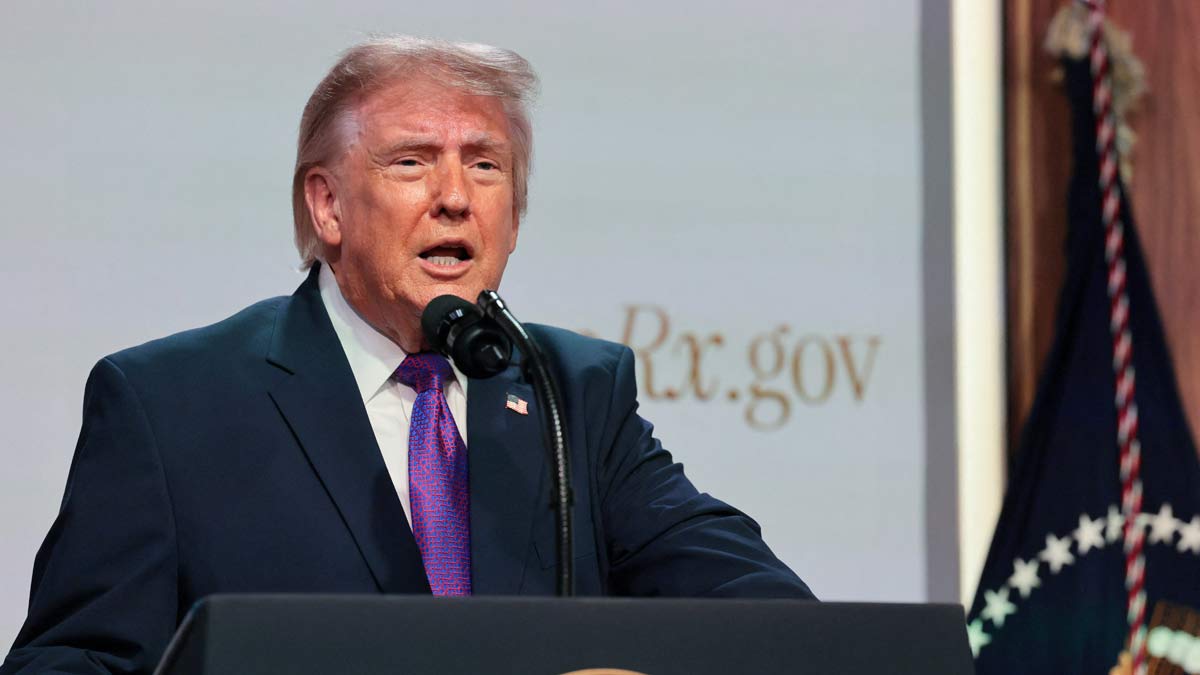
With a single administrative stroke, the Trump administration dismantled the fund. To understand why this decision sent shockwaves through both Silicon Valley and Capitol Hill, you have to look past the dry press releases. You have to look at the invisible stakes that almost rewrote the rules of the American internet.
The Good Intentions that Built a Panopticon
Every bad bureaucratic idea begins with a genuinely terrifying problem.
The problem, in this case, was real. Foreign intelligence agencies have spent years turning ordinary digital infrastructure against the public. They buy targeted ads to stoke racial tension. They manipulate algorithms to amplify conspiracy theories. They weaponize the very openness that makes the internet beautiful.
In response, well-meaning policymakers proposed a shield. The anti-weaponization fund was conceived as a financial reservoir to help tech companies, researchers, and civil society groups identify and neutralize these digital vectors of attack. It sounded noble. It sounded protective.
But money from Washington always comes with strings attached, and these strings quickly began to look like a noose.
Consider how a fund like this operates in the wild. The government allocates tens of millions of dollars. To distribute that money, a committee must define what constitutes a weaponized platform. Is a forum where citizens complain about inflation an example of healthy democratic debate, or is it a foreign disinformation campaign designed to destabilize the economy? Who gets to decide?
Suddenly, bureaucrats were tasked with defining truth.
For small tech startups and independent researchers, the fund created a toxic incentive structure. If you wanted the funding—or if you simply wanted to avoid the scrutiny of being labeled a vulnerability—you conformed. The program began to function as an ideological filter, quietly pushing platforms to moderate content in ways that aligned with the prevailing winds of Washington.
The shield had become a sword.
The Backlash in the Trenches
By early 2026, the pushback had reached a boiling point. It wasn't just partisan bickering; it was an alliance of civil liberties advocates, tech entrepreneurs, and constitutional scholars who realized the machine was spinning out of control.
The system was broken because it ignored human nature. When you give an agency a budget to find a specific threat, that agency will find that threat everywhere. To a hammer, everything looks like a nail. To an anti-weaponization committee, every dissenting opinion looks like a state-sponsored cyber operation.
Academic researchers who had spent decades studying online behavior found themselves cut off from data or pressured to alter their findings. Startups discovered that accepting a government contract meant allowing federal overseers to audit their algorithmic logic.
The digital ecosystem thrives on chaos, experimentation, and a healthy skepticism of authority. The fund replaced that vitality with fear. Engineers were no longer asking, "How do we make this platform better?" They were asking, "How do we keep the federal monitors happy?"
The internal friction became unbearable. Whistleblowers within the program began whispering to journalists about lists of targeted websites and flagged accounts that looked suspiciously domestic. The bipartisan consensus that had initially allowed the fund to slip through the legislative process evaporated overnight.
The Sudden Turn of the Crank
The decision to scrap the fund entirely was delivered with characteristic abruptness. The administration framed the cancellation as a victory for free speech and a dismantling of the administrative state’s overreach. Critics of the administration called it a reckless abandonment of national security in the face of ongoing foreign threats.
The truth, as it usually does, lay in the messy gray area between those two extremes.
By defunding the initiative, the administration stopped a dangerous experiment in state-sponsored content curation. But the cancellation did not magically solve the underlying crisis. The foreign troll farms are still operating. The algorithms are still vulnerable to manipulation. The digital battlefield remains active, and American infrastructure is still in the crosshairs.
What changed was the realization that the cure was rapidly becoming worse than the disease. You cannot protect a free society by adopting the tactics of an authoritarian regime. You cannot defend free speech by creating a department that monitors it.
The removal of the fund forces a hard pivot back to the private sector. It places the responsibility of defense back onto the shoulders of the companies that built these platforms in the first place.
The Empty Desk
Imagine David’s office today. The letter from the anti-weaponization committee is sitting in a recycling bin. The pressure to alter his library software is gone. He can go back to writing code without wondering if a federal analyst is reading over his shoulder.
But he still logs on every morning and looks at the security logs. He still sees the automated bots from IP addresses in St. Petersburg and Beijing probing his system for weaknesses. The threats haven't stopped just because the government closed its checkbook.
The collapse of the anti-weaponization fund is a stark reminder of the limits of state power in the digital age. Security cannot be bought at the expense of liberty, because a society that surrenders its openness to protect itself soon finds it has nothing left to defend.
The screens in the basement offices remain lit, glowing in the dark, as a quiet, decentralized army of engineers continues to fight the real war—the one waged with code, not committees.