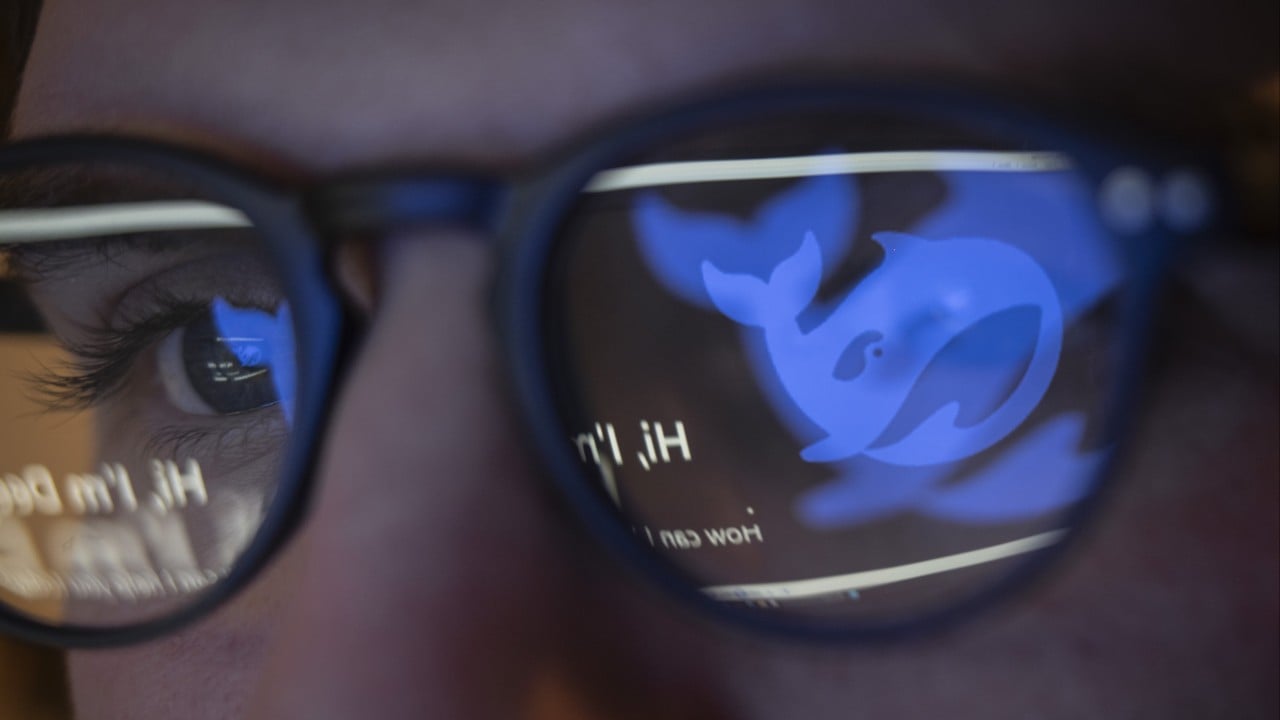
DeepSeek just dropped its V4 model, and the tech world is scrambling to benchmark it against GPT-5.4. But while the code is open for everyone to see, the man behind the curtain remains a ghost. Liang Wenfeng, the founder who turned the AI industry upside down with a $6 million budget and a handful of engineers, hasn't been seen in public for months. In an era where tech CEOs like Sam Altman and Jensen Huang are treated like rock stars, Liang’s silence is loud. It's not just a quirk; it’s a strategy that’s starting to make investors nervous.
If you’re looking for the face of DeepSeek right now, you won't find it on a stage at a glitzy conference. You’ll find it in corporate filings and internal memos. Just today, April 28, 2026, news broke that Liang used his own cash to boost DeepSeek’s registered capital by 50%. He’s now sitting on an 84.3% effective ownership stake. He isn't talking, but he is certainly paying the bills. You might also find this connected article interesting: Structural Solvency and Sovereign Risk the Mechanics of IMF Credit Exposure.
The CEO who refuses to be a celebrity
Most founders would kill for the "Sam Altman of China" label CNN threw at him. Not Liang. He’s spent the last year dodging the spotlight while his R1 and V4 models did the talking. This isn't just about being shy. DeepSeek was born out of High-Flyer Quant, a massive hedge fund that lives and breathes on proprietary algorithms and quiet execution. Liang is a quant at heart. To him, a press release is just noise that doesn't improve the loss curve of a model.
The mystery of his absence has fueled two very different narratives. To his supporters, he’s a purist focusing on AGI without the distraction of "benchmaxxing" for the sake of hype. To his critics—and a few spooked investors—his lack of public presence looks like a liability. When you’re trying to raise $300 million at a $20 billion valuation, people usually want to look the boss in the eye. As highlighted in detailed articles by Investopedia, the effects are widespread.
Who is actually running the show
Since Liang won’t take the mic, who is? DeepSeek doesn't have a traditional PR machine. Instead, the company communicates through technical papers and Github updates. When V4 launched last Friday, the "voice" of the company was a research paper and a quote from the philosopher Xunzi.
- The Technical Leads: Much of the public "speaking" happens through the lead authors of their papers. But even that’s getting shaky. DeepSeek has been losing talent to big spenders like ByteDance and Tencent.
- Huawei and Domestic Partners: In many ways, DeepSeek’s partners are doing the talking for them. Huawei recently stood up to announce they are powering V4 with their Ascend 950 chips.
- The Parent Company: High-Flyer Quant remains the financial backbone. Because they’ve been funding DeepSeek with their own profits, Liang hasn't had to answer to venture capitalists. Until now.
The cost of staying quiet
You can’t stay a mystery forever when you’re competing with trillion-dollar giants. DeepSeek’s "idealistic" approach—flexible hours, linear reporting, and a focus on research—is great for morale, but it hasn't stopped the poaching. Key researchers like Guo Daya have already jumped ship.
Why? Because stock options in a company with no clear public face or exit strategy feel like Monopoly money. By staying out of sight, Liang has kept the focus on the tech, but he’s also made the company’s future feel tethered entirely to his own personal whims. If he decides tomorrow that he’s bored with LLMs, what happens to the $20 billion valuation?
Why the funding round changes everything
The reported talks with Alibaba and Tencent are a turning point. You don't take hundreds of millions from Jack Ma’s empire and stay a hermit. These strategic investors aren't just looking for a cool API; they want "synergies." They want board seats. They want a CEO they can call when things go sideways.
Liang’s recent move to pump his own millions into the company's registered capital feels like a final act of independence before the big players move in. He’s consolidating his power so that when he finally does have to step into the light, he’s doing it on his own terms.
What you should do next
If you're following the DeepSeek saga, don't wait for a livestreamed keynote. It’s probably not coming. Instead, watch the Tianyancha filings and the Github commits.
- Monitor the API migration: DeepSeek is killing off its "chat" and "reasoner" legacy names by July. If you’re building on their tech, you need to switch to the V4-Pro or V4-Flash endpoints now.
- Watch the talent flow: If more lead authors from the V4 paper follow Guo Daya to ByteDance, it's a sign that the "quiet research lab" culture is losing out to the reality of the 2026 AI arms race.
- Check the hardware: The success of V4-Pro depends on Huawei’s Ascend 950 "Supernodes." If those don't ship in volume, DeepSeek's low-cost advantage evaporates.
Liang Wenfeng might be the most powerful person in AI that you've never heard speak. In a world of loud-mouthed founders, his silence is either a masterclass in focus or a ticking time bomb for his company’s corporate structure. Honestly, it's probably both.