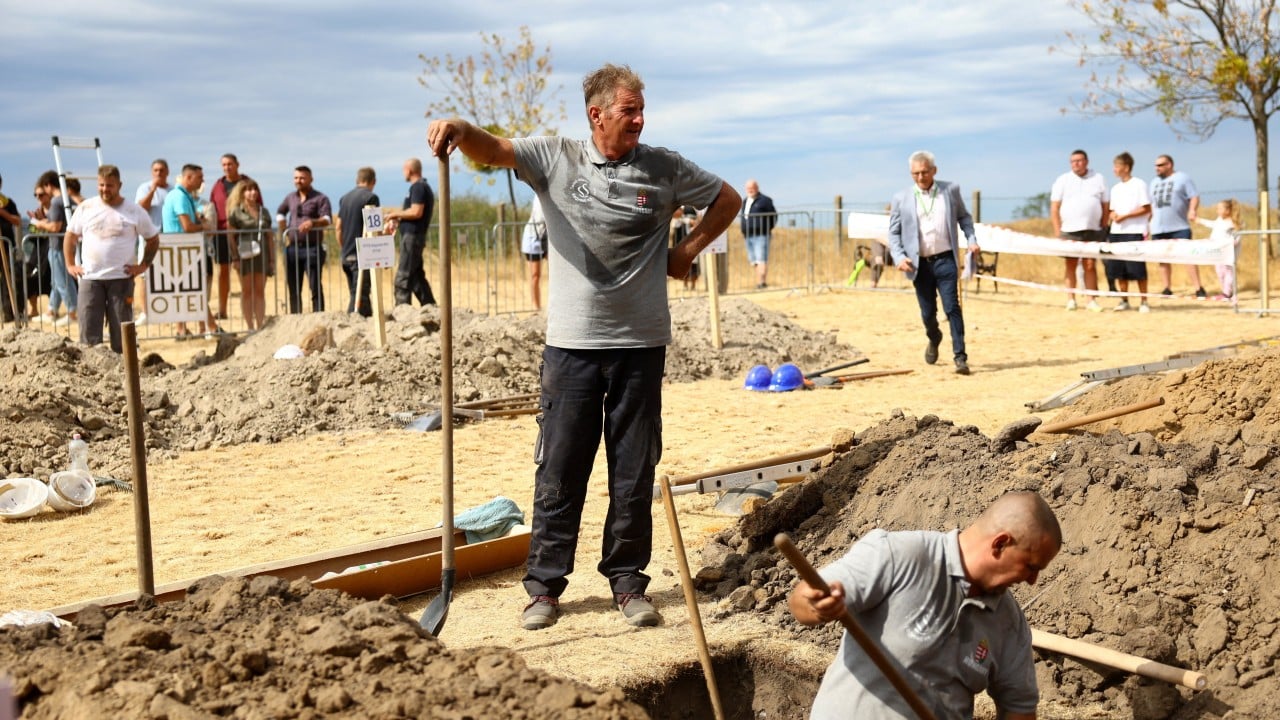
The ground does not give up its secrets easily. Ask anyone who has ever wrestled a shovel into virgin soil at dawn, when the morning frost still glazes the blade like cheap enamel, and they will tell you the earth fights back. It is heavy, damp, and stubbornly bound to history. Now, imagine taking that quiet, solitary struggle and turning it into a stadium event.
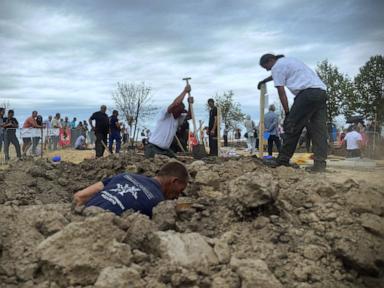
This is not a dark joke. It is the annual Hungarian grave-digging contest, a peculiar gathering where men and women line up with pickaxes and shovels to face off in a test of raw endurance, ancestral technique, and municipal pride. Teams from across Hungary and neighboring countries converge on a patch of open turf, not to mourn, but to work.
To the uninitiated, the spectacle feels jarring. Death is supposed to be soft. It wears black wool, low voices, and handkerchiefs pressed against damp eyes. It does not wear mud-stained high-vis vests or listen to the rhythmic metallic chink of steel hitting flint at seventy beats per minute. Yet, beneath the grim premise lies something profoundly human. It is a celebration of an invisible labor force. These are the people who manage humanity’s final address, working in the lonely peripheries of town life while the rest of us look away.
Consider the geometry of the task. Regulation Hungarian graves are standard for a reason: two meters long, eighty centimeters wide, and one meter and sixty centimeters deep. That is roughly two cubic meters of dirt, roots, clay, and occasionally stubborn stone, all to be hauled out and piled neatly around the perimeter within a strict time limit.
Watch a veteran team work, and you stop seeing manual labor and start seeing choreography.
There is the breaker, usually the older man with shoulders shaped like anvil blocks, whose job is to shatter the crust and break the stubborn lower strata. Then there is the shoveler, fluid and relentless, flicking the loosened debris over their shoulder with an economy of motion that defies the sheer weight of the load. They do not waste a single calorie. Every twist of the torso is calculated. Every breath is timed to the bite of the metal.
Sweat cuts pale channels through the dust on their cheeks. Muscles burn. Blisters form, burst, and are ignored.
Why do they do it? Prize money is minimal. Recognition outside of trade circles is virtually non-existent. But walk among them between heats, sharing a thermos of black coffee that tastes faintly of chicory, and the motivation snaps into sharp focus.
Pride. Pure, unadulterated vocational pride.
In a modern economy that increasingly shunts physical labor into the shadows, these competitions offer a rare public stage. Software engineers get hackathons. Chefs get Iron Chef. Grave-diggers get the sod. For generations, this trade was passed down through families like a grim heirloom. Fathers taught sons how to read the soil. Sand caves in. Clay holds a vertical wall like carved marble. Loam smells like old leaves and rain.
The contest honors that tacit knowledge. Judges do not just look at the stopwatch. They drop a framing square into the raw excavation. They check the verticality of the walls. They measure the corners to ensure they form sharp, unforgiving right angles. A sloppy grave is a sign of disrespect, a rushed exit. A well-dug grave is a final act of architecture, built with the same care a carpenter uses to frame a cathedral door.
Competitors approach the final thirty minutes of the heat with a silent intensity that borders on the sacred. By this point, the pile of earth beside the hole is towering, a miniature mountain of displaced history. The competitors are moving slower now, their chests heaving, boots sinking into the churned turf. Spectators gather closer, falling silent. The morbid curiosity of the tourist fades, replaced by the universal empathy of watching fellow humans push past their physical limits.
When the buzzer sounds, tools drop instantly. Shovels clatter against the turf. The exhausted crews lean heavily on their handles, chest to air, staring down into the neat, rectangular abyss they have just carved out of the world.
They wipe their brows with dirt-caked forearms. They grin through exhaustion.
The crowd applauds, not for the morbid nature of the craft, but for the fierce dignity of the craftsmen. In that brief moment, the invisible become entirely visible. They are the gatekeepers of our final transitions, the ones who make peace possible when the rest of us have nothing left to say.
The dirt settles back into the trucks by nightfall. The turf is rolled back out, green and indifferent. But somewhere beneath the surface, the standard has been set, measuring the depth of human endurance against the cold, quiet earth.