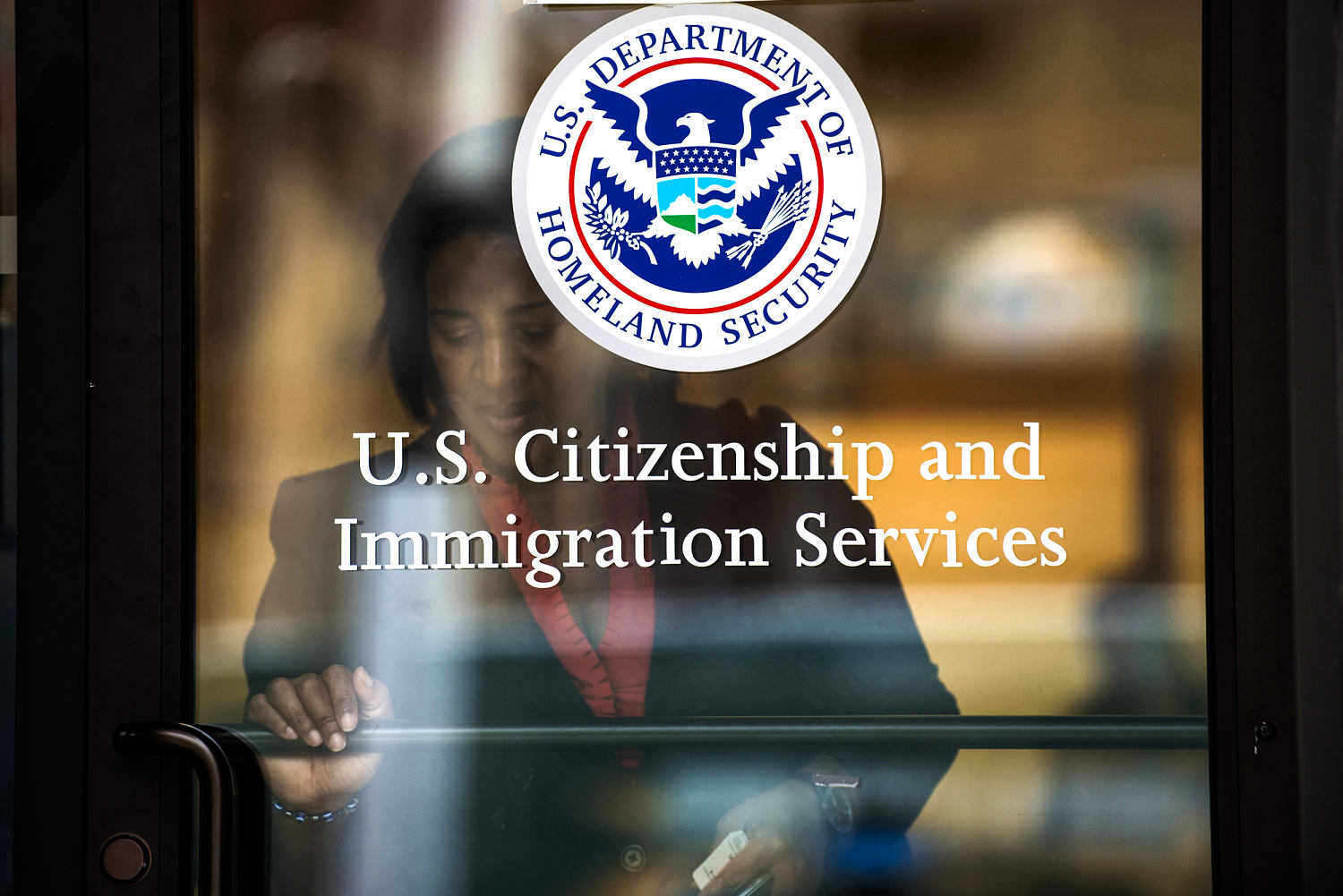
The United States Citizenship and Immigration Services (USCIS) issued a transformative policy memorandum that systematically alters the mechanics of acquiring lawful permanent residency. By redefining the adjudication standards of Section 245(a) of the Immigration and Nationality Act (INA), the administration has transitioned domestic green card processing from a standard administrative default into an "extraordinary form of relief." This structural pivot compels the majority of nonimmigrant visa holders residing within the United States—including those on high-skill H-1B, L-1, and F-1 visas—to exit the country and complete their permanent residency applications via Department of State consular processing in their nations of origin.
To evaluate the operational, economic, and systemic impacts of this guidance, one must bypass political rhetoric and analyze the underlying mechanics of immigration architecture. The policy represents an aggressive reinterpretation of agency discretion designed to restrict legal migration volume by imposing logistical bottlenecks.
The Structural Mechanics: Adjustment vs. Consular Processing
The core of this policy shift lies in the operational bifurcation of the permanent residency pipeline. Historically, foreign nationals residing legally in the United States utilized one of two distinct pathways to secure a green card:
- Adjustment of Status (AOS): An administrative process managed domestically by USCIS under INA § 245(a). This allows eligible applicants to transition from nonimmigrant to immigrant status without disrupting their domestic employment, residency, or family structures.
- Consular Processing (CP): An international workflow coordinated between USCIS and the Department of State. The applicant must attend an interview and undergo background vetting at a U.S. embassy or consulate abroad before being admitted at a port of entry as a permanent resident.
The new USCIS directive establishes an aggressive baseline assumption: nonimmigrant status is fundamentally temporary, and any transition to permanent status must execute externally via Consular Processing.
The Discretionary Framework Filter
The administrative mechanism executing this change is the amplification of adjudicator discretion. Under the plain language of INA § 245(a), meeting statutory eligibility requirements (such as an approved I-140 or I-130 petition and an available visa number) does not guarantee domestic adjustment; it merely makes the applicant eligible for a favorable exercise of agency discretion.
The guidance instructs officers to treat domestic adjustment as an exception rather than a rule. Adjudicators are directed to deny Form I-485 applications on discretionary grounds unless the applicant demonstrates "extraordinary circumstances." This shifts the burden of proof, requiring applicants to present highly documented positive equities to overcome the administrative presumption in favor of consular processing.
The Three Pillars of Policy Enforcement
The administration's strategic framework relies on three distinct operational levers to enforce this structural migration. Understanding these pillars reveals how the policy targets previously secure classes of high-skill legal migrants.
1. The Neutralization of Dual Intent Protections
The most significant disruption targets H-1B (specialty occupation) and L-1 (intracompany transferee) visa holders. These categories possess explicit statutory "dual intent" protections, meaning holders can legally maintain nonimmigrant status while actively pursuing permanent residency.
The new USCIS guidance introduces a critical distinction: maintaining valid dual-intent status throughout the immigration process is no longer sufficient, on its own, to justify a favorable exercise of domestic discretion. By decoupling dual intent from the favorable exercise of Section 245(a) discretion, the policy subjects high-skill corporate workers to the same external processing requirements as single-intent categories.
2. The Nonimmigrant Intent Friction Point
For single-intent visa categories, such as F-1 international students or B-1/B-2 visitors, the policy creates an immediate administrative trap. To secure an F-1 or B visa, an applicant must demonstrate to a Department of State consular officer that they have a foreign residence they have no intention of abandoning.
When an F-1 student files a domestic Form I-485, USCIS adjudicators are now instructed to heavily weigh that prior representation of nonimmigrant intent. The act of filing domestically is treated as a contradiction of their original visa terms, providing a direct rationale for discretionary denial and forcing the applicant into the international pipeline.
3. The Equities Balancing Test
Because the policy relies on case-by-case discretionary evaluations, the success of a domestic I-485 application hinges entirely on an applicant's ability to demonstrate significant positive equities. This creates a highly unequal playing field dictated by an applicant's duration of stay:
- Long-Term Backlog Beneficiaries: Applicants from nations experiencing severe employment-based backlogs (such as India and China) who have resided in the U.S. for over a decade have an advantage. Their positive equities—including U.S.-citizen children, deep real estate footprints, corporate progression, and long-term tax contributions—serve as powerful arguments to meet the "extraordinary circumstances" threshold.
- Recent Entrants: Individuals who entered the U.S. recently or are early in their career pipelines lack the accumulated domestic ties required to overcome the discretionary hurdle. These individuals face near-certain redirection to overseas consular offices.
Macroeconomic and Systemic Bottlenecks
Moving the green card application process from domestic offices to foreign consulates creates severe operational constraints across the entire U.S. immigration apparatus.
The Consular Capacity Crunch
The Department of State’s consular infrastructure is fundamentally unequipped to absorb the immediate influx of hundreds of thousands of green card applicants currently residing within the United States. Historically, more than half of the approximately one million green cards issued annually are processed domestically via USCIS adjustment of status.
Shifting this volume overseas introduces structural delay mechanisms:
[Domestic Applicants] ➔ [Forced Departure] ➔ [Consular Visa Backlog] ➔ [Extended Wait Times/Work Disruption]
Consular posts in high-volume regions are already burdened by massive nonimmigrant visa queues. Forcing permanent residency applicants into this same international pipeline will trigger exponential increases in wait times, extending consular processing timelines far beyond the standard 6-to-18-month average.
The Cost Function of Career Disruption
The mandate introduces a critical operational bottleneck for U.S. employers: the loss of continuous work authorization. During a traditional domestic Adjustment of Status process, applicants concurrently file Form I-765 for an Employment Authorization Document (EAD) and Form I-131 for Advance Parole. These documents allow the applicant to remain and work legally in the U.S. even if their underlying nonimmigrant visa expires while their green card is pending.
Consular processing offers no such interim benefits. An applicant who must leave the United States to wait for an international consular interview loses their domestic work authorization the moment their underlying nonimmigrant status lapses or they exit the country without an active visa stamp. The consequences are highly disruptive:
- Corporate Talent Attrition: U.S. enterprises face sudden, unpredictable gaps in critical technical roles when essential employees are stuck abroad waiting for consular appointments.
- Capital Flight: Rather than maintaining idle U.S. salaries during indefinite consular delays, multinational corporations face clear financial incentives to permanently relocate high-skill personnel to foreign subsidiaries or nearshore engineering hubs.
- Academic Deficits: International research institutions and universities risk losing top-tier scientific talent midway through critical projects, as doctoral and post-doctoral researchers face high-risk consular adjudications in their home countries.
Systemic Risks and Operational Boundaries
This policy intervention is an exercise of executive agency discretion, and its long-term viability depends on surviving predictable legal challenges and operational limits.
The Statutory Conflict
The primary legal vulnerability of this guidance is the potential violation of the Administrative Procedure Act (APA) and the Immigration and Nationality Act. While Section 245(a) is explicitly discretionary, federal courts have historically held that administrative agencies cannot exercise discretion so restrictively that it effectively eliminates a path created by Congress. By turning an option intended for broad legal use into a rare privilege, the administration invites immediate federal litigation from business coalitions, immigration advocacy groups, and educational institutions.
Enforcement Deficits
The administration states that requiring applicants to file from their home countries reduces the enforcement burden of tracking and deporting individuals whose domestic green card applications are denied. However, this logic ignores the reality of visa timelines. Most high-skill applicants maintain valid H-1B or L-1 status throughout their green card processing. Denying domestic adjustment to an individual who holds an active, valid work visa does not make them deportable; it simply strips them of an orderly pathway to permanent residency while keeping them on a temporary status loop.
Strategic Playbook for Employers and Applicants
Because this policy shifts green card processing from a predictable paperwork exercise into a complex litigation-style case, employers and foreign nationals must immediately change their immigration strategies.
Action Plan for Enterprise Employers
Companies must audit their entire foreign national workforce to identify employees with pending or upcoming permanent residency applications. For individuals early in the permanent residency pipeline, corporate legal teams must proactively build an extensive portfolio of domestic equities long before filing Form I-485. This means tracking and documenting local community involvement, long-term residential leases or property ownership, specialized corporate contributions, and family ties within the United States.
Every domestic filing must be treated as a complex legal argument rather than a standard administrative submission. If an employee faces a high probability of discretionary denial, the company must plan for international relocation or remote work structures well ahead of time to avoid sudden workflow disruptions.
Action Plan for Individual Visa Holders
Foreign nationals currently residing in the United States on temporary visas must avoid traveling abroad without analyzing how it affects their status. If an individual must use consular processing, they should coordinate with their sponsor to submit all necessary civil documents to the National Visa Center as early as possible to secure a place in the consular queue.
For those attempting a domestic adjustment of status, the application must include comprehensive evidence showing that returning to their home country would cause extraordinary hardship or disruption to a critical U.S. interest. Relying entirely on holding an H-1B or L-1 visa is no longer a viable strategy for securing an approved domestic adjustment of status.
(mh=Dw6W9uWaLcHnfEql)0.jpg)

