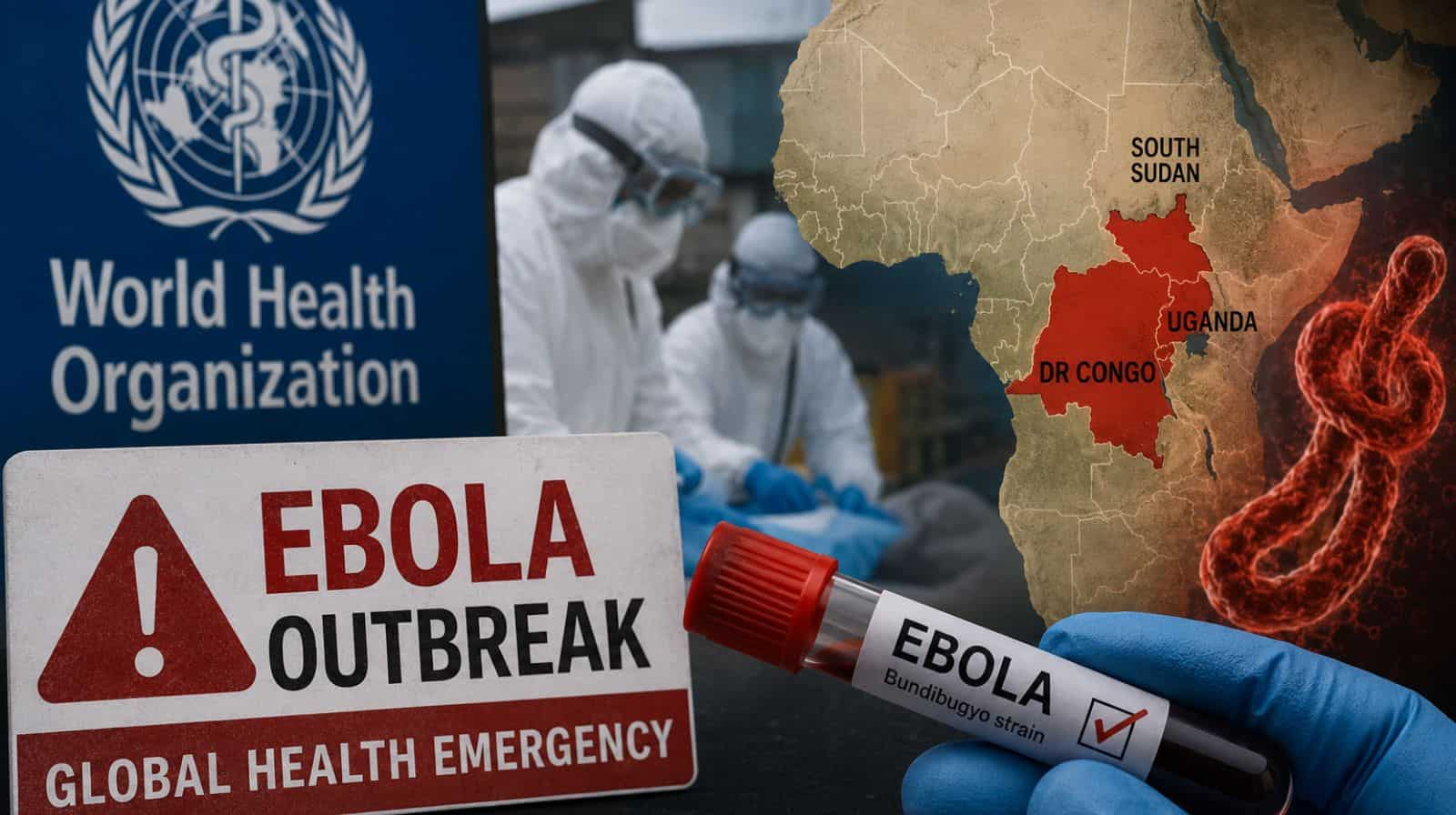
The headlines always follow the exact same predictable script. A fresh outbreak hits a new province in the Democratic Republic of Congo, spreading the footprint of an ancient hemorrhagic fever into a seventh region, while government officials stand behind polished podiums insisting that total case numbers are flattening out. It is a masterclass in bureaucratic self-delusion.
Watchers nod along with the official line because comfort sells better than panic. They want to hear that containment protocols are holding, that contact tracers are working overtime, and that the epidemiological curve has finally bent downward. If you found value in this piece, you should check out: this related article.
Every single time we buy into the narrative of declining cases while a virus quietly seeds itself into virgin territories, we are making a catastrophic mathematical error. The official metric of reported cases is a lagging indicator built on a broken foundation. It measures our capacity to detect, not the pathogen's capacity to destroy. When a disease breaches a seventh province, the geographic expansion matters infinitely more than the daily tally of confirmed hospital admissions.
Epidemiology has a dirty little secret that public information officers refuse to touch with a ten-foot pole. Surveillance blind spots expand faster than response teams can deploy. In regions fractured by logistical nightmares, infrastructural collapse, and profound community distrust, a downward trend in reported numbers rarely means the virus is retreating. It usually means the local population has stopped reporting sick relatives to clinics they view as detention centers or death wards. For another angle on this story, refer to the latest update from National Institutes of Health.
Public health bureaucracies love to talk about flattening curves because curves give the illusion of control. They plot data points on a Cartesian grid as if a complex viral zoonosis respects administrative borders and bureaucratic reporting cycles. I have watched organizations celebrate a two-week dip in active chains of transmission, only to be blind-sided when the infection explodes fifty miles away in a district that lacked diagnostic kits entirely. The virus does not care about your press release.
Consider the fundamental architecture of how these outbreaks propagate. Ebola does not move in a straight line across a predictable map. It hitches rides on motorbikes, mini-buses, and cross-border traders operating in informal economies that no government census has ever mapped accurately. When an outbreak manages to hopscotch across multiple provinces, the surface area for silent transmission multiplies exponentially. By the time a central ministry reports that cases are declining in the original epicenter, secondary and tertiary clusters have already established permanent roots in environments with zero medical infrastructure.
The lazy consensus among international observers is that modern containment playbooks are fundamentally sound, and that failure only happens when local populations resist implementation. This reverses reality on its head. The playbook is outdated. It relies on a top-down, militarized quarantine model designed for industrial-era disease control, dropped into hyper-mobile, decentralized twenty-first-century populations. When you treat community apprehension as an educational problem rather than a systemic symptom of broken institutional trust, you guarantee your own failure.
Let us look at the data through a lens that strips away the diplomatic varnish. If testing rates drop by half because reagent shipments are delayed at a regional airport, daily case numbers will plummet on paper. The bureaucrats will rush to announce a trend. In reality, transmission is accelerating in the shadows. We are confusing the absence of detection with the absence of disease. It is the medical equivalent of driving blindfolded down a winding mountain road and celebrating the fact that you haven't hit a tree in the last ten seconds.
The real danger of the declining cases myth is resource diversion. International donors look at official progress reports, decide the crisis has peaked, and quietly reallocate funds to the next shiny geopolitical emergency. Vaccine stockpiles shift. Personnel rotate home. The surveillance net thins out just as the pathogen enters its most insidious phase of silent geographic drift.
If we want to stop playing this tragic game of epidemiological whack-a-mole, we have to abandon the comforting fiction of national case counts. An outbreak in a remote province is not a localized incident to be managed with temporary field tents. It is a stress test for an entire regional biosafety network.
Stop measuring success by the number of closed treatment wards. Start measuring it by the speed and transparency of diagnostic distribution in the most isolated zip codes on the map. Until we treat geographic expansion as a far more critical threat than daily numerical fluctuations, every victory lap we take will end in a graveyard.