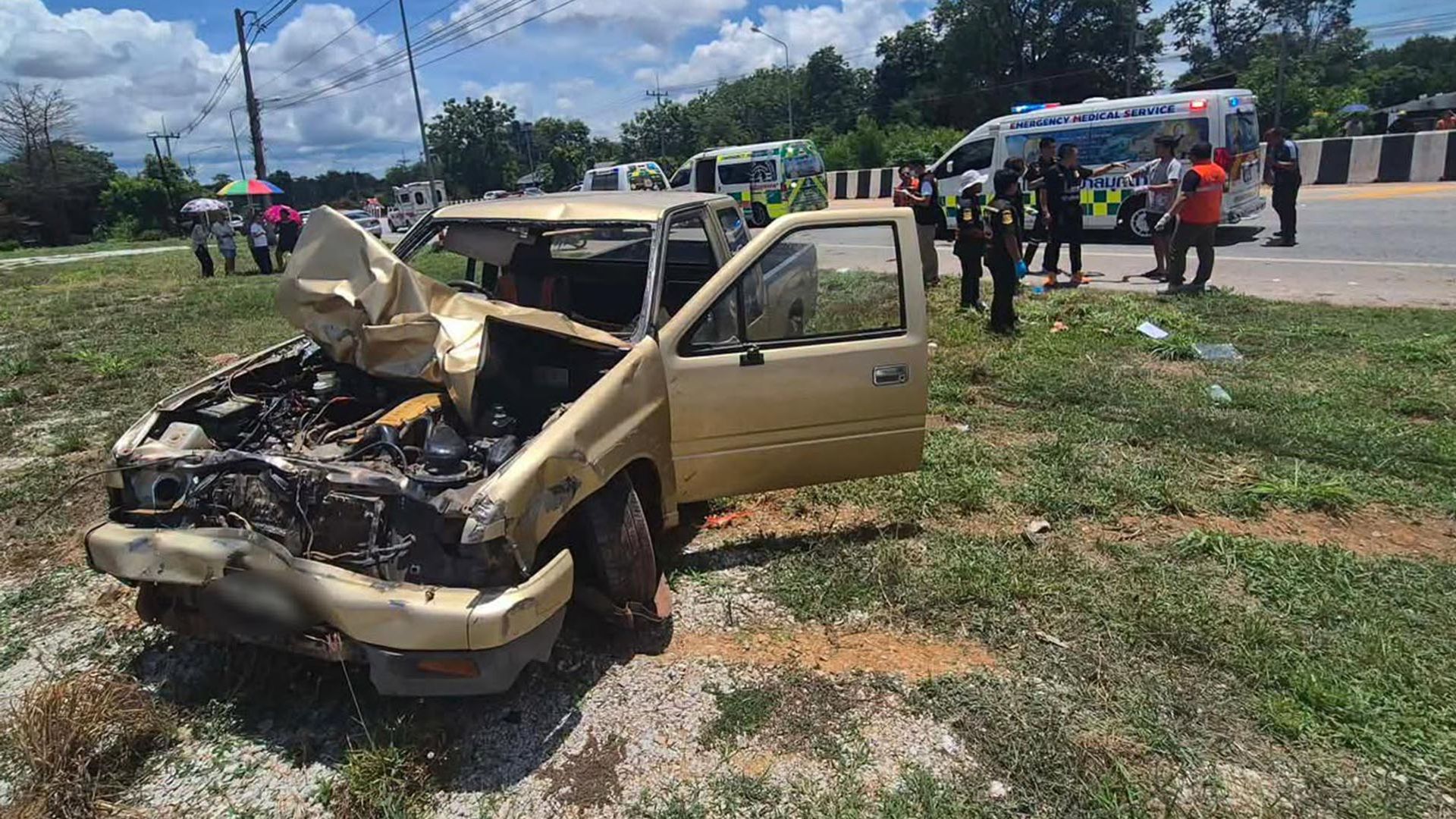
A horrific traffic accident in rural Thailand has left nine Buddhist monks dead after an 11-year-old boy crashed a pickup truck into their dawn pilgrimage procession. The tragedy highlights a systemic crisis of underage driving and broken traffic enforcement outside the country's major cities. While initial headlines focused on the shocking age of the driver, the disaster underscores a deeper, structural failure within rural Thai infrastructure, where community traditions frequently collide with high-speed, unmonitored roads.
The incident occurred during a traditional morning alms walk, a sacred daily ritual for monks that requires them to walk along the shoulders of local highways.
The Perfect Storm on Rural Highways
The mechanics of this disaster involve a deadly combination of cultural blind spots and a total lack of regulatory oversight. In rural provinces, the pickup truck functions as the primary economic engine and a universal family utility vehicle.
Children in these agricultural communities are routinely taught to drive at early ages to help with farm work, moving crops, or running household errands. What begins as a practical necessity on private dirt roads frequently spills over onto public asphalt, entirely unchecked by local law enforcement.
Monks on pilgrimage or daily alms rounds are highly vulnerable. They walk in single file, often in the dim light of dawn, wearing saffron robes that offer minimal visibility against the backdrop of early morning fog or poorly lit rural roads. When you place an untrained child behind the wheel of a two-ton steel vehicle traveling at high speeds, the margin for error disappears completely.
The Fatal Mechanics of Underage Driving
An 11-year-old child lacks the cognitive development required to handle emergency maneuvers or accurately judge braking distances.
At high speeds, a pickup truck requires immediate, precise micro-corrections when a driver encounters an unexpected obstacle. In this instance, the young driver lost control of the vehicle entirely, veering directly into the path of the walking monks.
- Cognitive overload: Underdeveloped spatial awareness prevents young minors from calculating speed differentials between their vehicle and pedestrians.
- Vehicle mass: The heavy cargo capacity of standard rural pickup trucks increases momentum, making them lethal when control is compromised.
- Lack of infrastructure: Rural roads consistently lack dedicated pedestrian lanes, sidewalks, or adequate street lighting, forcing foot traffic directly onto the shoulder.
Why Local Enforcement Fails Uniformly
The issue is not a lack of traffic laws on the books, but rather a complete breakdown in how those laws are applied outside municipal boundaries.
Thailand consistently ranks among the highest in global traffic fatality statistics. The royal police force maintains checkpoints on major inter-provincial highways, but the secondary network of rural roads remains an unpoliced territory. In small villages, social cohesion and familial ties often override legal mandates. Local police officers, frequently embedded in the communities they patrol, are notoriously reluctant to penalize neighbors for allowing underage relatives to operate vehicles.
"The reliance on informal community agreements rather than strict statutory enforcement creates a culture of impunity where dangerous driving habits become normalized over generations."
This cultural leniency creates a false sense of security. Parents allow children to drive to local schools or markets under the assumption that the short distance mitigates the danger. It does not. The transition from a quiet dirt track to a paved secondary highway is where these fatal interactions occur.
The Infrastructure Illusion
The state has poured billions into expanding paved roads across rural provinces to boost agricultural supply chains. However, this development focused strictly on vehicle throughput rather than pedestrian safety.
Building wider roads without adding sidewalks, lighting, or speed-calming measures simply invites faster vehicular travel through populated areas.
A Disconnect in Planning
Urban planners in Bangkok design infrastructure frameworks that fail to account for the actual reality of rural life. A highway cutting through a village does not stop residents from crossing it on foot, nor does it stop monks from using it for their spiritual duties.
| Infrastructure Component | Rural Standard | Required Safety Standard |
|---|---|---|
| Pedestrian Walkways | Non-existent or unpaved | Elevated or barriers-separated sidewalks |
| Lighting | Intermittent or absent | Continuous solar-powered LED streetlights |
| Speed Enforcement | Occasional manual checkpoints | Automated speed cameras and rumble strips |
Without structural changes to the roads themselves, campaigns advocating for traffic safety remain useless. People will continue to use the roads as they are built, and children will continue to access vehicles as long as the keys are left within reach.
Breaking the Cycle of Generational Neglect
Resolving this crisis demands a harsh shift away from treating these events as isolated, tragic accidents. They are predictable systemic failures.
Holding parents legally and financially accountable for the actions of their underage children behind the wheel is a necessary first step. If a minor causes a fatal collision using a family vehicle, the owner of that vehicle must face severe criminal negligence charges. Currently, legal repercussions for guardians remain minimal, often settled through private compensation agreements that fail to deter future negligence.
Simultaneously, the monastic community must adapt to the modern realities of Thai roads. While the tradition of the morning alms walk is centuries old, the speed and volume of modern traffic require new safety protocols, such as high-visibility vests worn over robes during roadside journeys and designated safety escorts.
The loss of nine lives in a single morning is a gruesome reminder that tradition and infrastructure cannot coexist safely without enforcement. Until the state closes the gap between urban traffic laws and rural reality, the country's secondary roads will remain a hazard for everyone on foot.