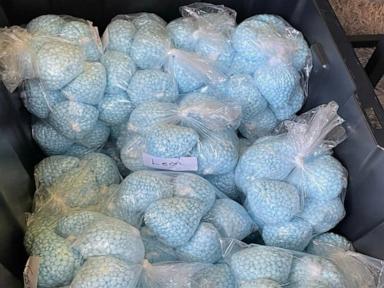
Federal drug agents watched a shipment of 74,000 fentanyl pills roll into an Albuquerque mobile home park. They had a plane tracking the delivery from the sky. More than a dozen agents listened in via real-time wiretaps. They knew the phones, the locations, and the players.
They didn't stop it. They didn't seize the pills. They just watched.
This wasn't an isolated mistake. For two years, the Drug Enforcement Administration repeatedly monitored but refused to intercept major shipments of counterfeit painkillers flooding New Mexico. It was part of a high-stakes legal gamble to net bigger kingpins. Now, the agency faces a massive scandal that echoes one of the darkest chapters in federal law enforcement history.
DEA Administrator Terry Cole asked the Justice Department's Inspector General to open an independent investigation into his own agency. The decision comes after a blistering Associated Press investigation exposed how federal agents basically let hundreds of thousands of lethal doses flood local communities between 2023 and 2025.
The strategy is called "controlled delivery" by prosecutors, but street-level cops and whistleblowers call it what it really is. Letting the drugs walk.
The Whistleblower Who Risked His Career
David Howell, a veteran DEA agent, saw the body count rising in New Mexico and couldn't stay silent. He filed a formal whistleblower complaint back in 2023. Howell openly accused his own agency of poisoning the community just to build bigger criminal cases.
The logic from top federal prosecutors was simple. Intercepting a single shipment "burns the wire," meaning it tips off the cartels that law enforcement is listening. If the wire goes cold, the chance to map out the entire distribution network disappears.
Former U.S. Attorney for New Mexico Alex Uballez defended the strategy. He pointed out his office faced severely limited resources. In his view, dismantling entire transnational organizations saves more lives in the long run than seizing small batches of pills at the local level. Last year, that exact strategy helped the DEA pull off the largest fentanyl bust in Albuquerque history.
To the federal government, a few hundred thousand pills were just the cost of doing business. But to people living in New Mexico, those pills meant funerals.
A Deadly Spurt of Overdoses
While the rest of the United States saw a 14% drop in overdose deaths last year, New Mexico suffered a brutal 21% spike. The state is completely ravaged by the synthetic opioid crisis. The White House even designated fentanyl as a weapon of mass destruction. Yet federal agents treated it like low-level contraband.
The DEA aggressively pushes its prominent "One Pill Can Kill" public safety campaign, warning families that just two milligrams of fentanyl can end a life. But behind closed doors, agents allowed massive quantities of those exact same pills to bypass seizures.
Families who lost children to the epidemic are furious. Michael Glownia, who founded a nonprofit after his daughter died from an overdose, pointed out that the Justice Department had clear guidelines to seize these opioids whenever practical. The fact that agents ignored those rules to play chess with cartels is heartbreaking.
Whistleblower David Howell raised internal alarms about specific tragedies, including a toddler in Espanola who died after ingesting fentanyl residue left on a piece of foil. When you let 100,000 pills walk into a state, you lose control of where they land. The DEA cannot prove those specific unseized shipments didn't kill people. Frankly, critics say the agency doesn't want to know.
The Government Moves the Goalposts
The Justice Department handled the internal pushback by changing the rules.
When Howell first blew the whistle, the internal playbook required agents to seize fentanyl whenever "practicable." It was an explicit safeguard designed to protect the public from highly lethal substances. Shortly after Howell raised his objections, the DOJ quietly rewrote those exact guidelines. They granted law enforcement far wider discretion to let drugs flow during active investigations.
DEA Leadership claims the operational decisions were entirely lawful and consistent with Department guidance. Spokesperson Amanda Wozniak insisted that public descriptions suggesting the agency knowingly permitted fentanyl to hit communities are false and fundamentally mischaracterize the facts.
Local officials aren't buying the corporate damage control. New Mexico Governor Michelle Lujan Grisham bypassed federal channels completely. She ordered the state's attorney general to launch a separate criminal investigation into whether the DEA broke state law.
Lujan Grisham called the federal strategy reckless and dangerous, stating plainly that the DEA knew people would die and let it happen anyway. It is an extraordinary public clash between a state executive and a federal law enforcement powerhouse.
Fast and Furious Part Two
The unfolding scandal looks identical to Operation Fast and Furious, the disastrous Bureau of Alcohol, Tobacco, Firearms and Explosives investigation. In that case, federal agents allowed thousands of illegal firearms to "walk" into Mexico to track cartel buyers. The government completely lost track of the guns. One was later used to murder U.S. Border Patrol Agent Brian Terry.
Congress banned gun-walking tactics after that disaster. Yet the same underlying institutional arrogance convinced drug enforcement officials that they could successfully track an invisible, ultra-lethal powder without public consequences.
Democratic lawmakers are demanding immediate, closed-door briefings from Cole regarding the operational tactics used in New Mexico. U.S. Representative Melanie Stansbury noted that New Mexicans are paying the price for an epidemic tearing families apart, arguing the DEA should focus strictly on stopping drugs before they hit the pavement.
What Needs to Change Immediately
The independent Inspector General review will take months, if not years, to produce a final report. Communities facing skyrocketing overdose rates cannot wait for a slow government watchdog to publish a PDF.
Local police departments must demand full transparency regarding federal wiretap operations in their jurisdictions. If federal agents refuse to seize lethal contraband during an active surveillance operation, local authorities should step in and execute the seizure under state law.
State governors across the country need to follow New Mexico's lead by establishing strict oversight protocols. Federal law enforcement operates with vast autonomy, but they do not possess a mandate to endanger American citizens to balance their prosecutorial spreadsheets.
If you want to protect your community, start putting pressure on local representatives to force a congressional audit of all active DEA controlled delivery operations. The policy of letting poison walk must end now.