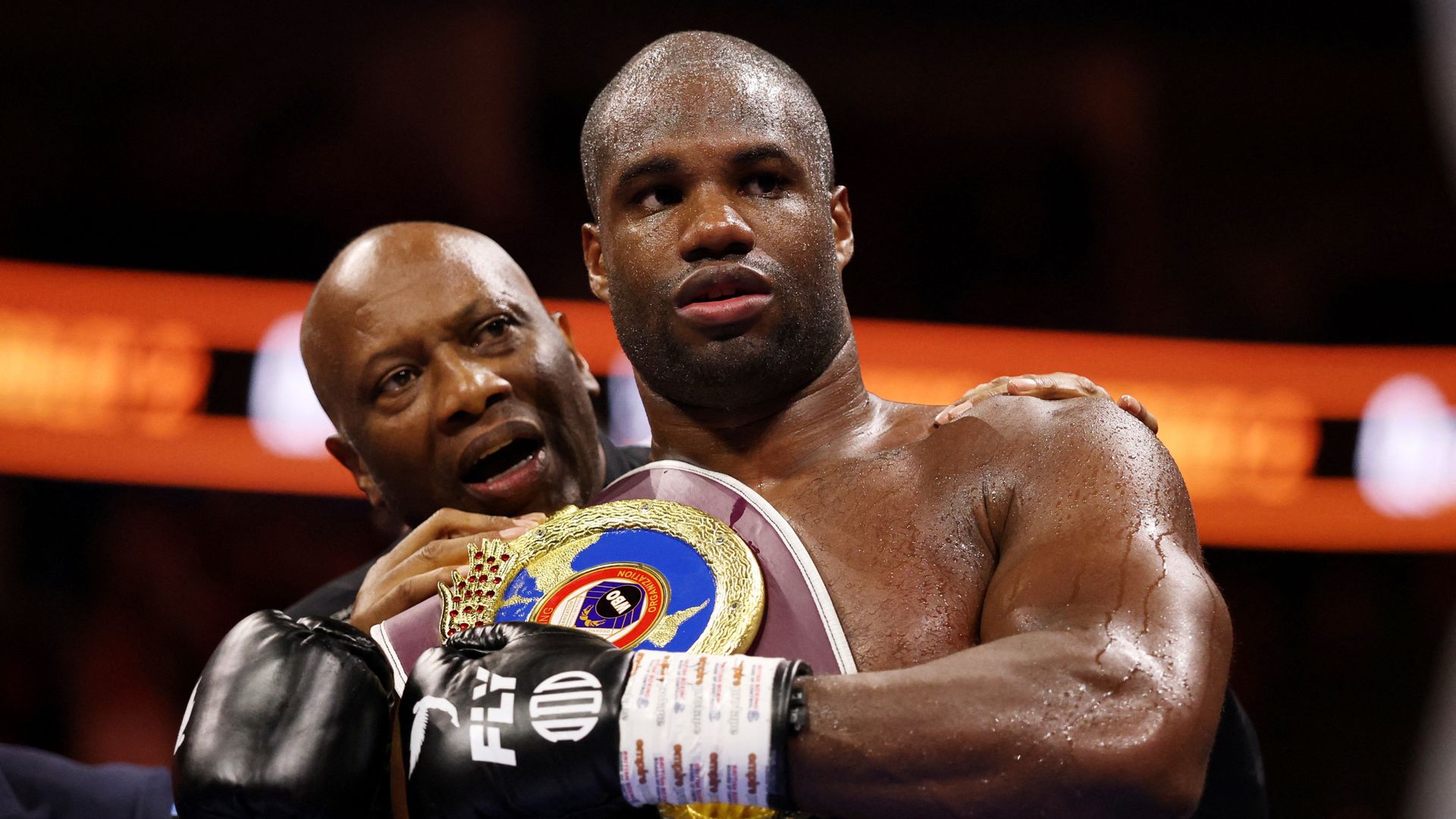
Two rounds. Two minutes and twenty-one seconds into the second. A knockdown inside the opening twenty seconds. A towel flying into the ring at London's O2 Arena.
Read the standard fight recaps and you would think Daniel Dubois just booked a permanent throne at the top of heavyweight boxing. They call it a statement. They call it dominance. They treat a two-round retention against Fabio Wardley as proof that Dubois has solved every flaw that haunted him earlier in his career.
That is lazy consensus. Worse, it is bad analysis.
Yes, Dubois beat Wardley by second-round TKO on October 17, 2026, to retain his WBO heavyweight title. Yes, that came five months after their bloody, eleven-round war in Manchester in May 2026, where Dubois survived two early knockdowns to rip the belt away from Wardley. On paper, turning an eleven-round slugfest into a two-round wipeout looks like total arrival.
In reality, a two-round blowout over a fighter you already broke in eleven rounds tells you far less about undisputed superiority than boxing scribes want to admit. Context matters. Matchup mechanics matter. Sanctioning politics matter.
The Lazy Consensus Around Dubois vs. Wardley II
The conventional narrative treats October 17 as a clean linear progression: Dubois had rough nights in the past, survived chaos in May, adapted in camp, and vaporized Wardley in October.
Look closer at what actually happened.
First, Wardley entered the rematch carrying physical and psychological baggage from May's grueling eleven-round stoppage—his first career defeat, punctuated by facial damage and sustained punishment late in the fight. Fighters do not simply download a new defensive system in five months when their primary weapon is a wide, swinging right hand and sheer grit. When Wardley missed with an overhand right in the second round of the rematch, he did not get punished by some sudden masterclass in pocket defense. He got punished by a bigger, heavier puncher who already knew how Wardley reacts under fire.
Second, look at the weight on the scale. Dubois came in at 253.9 lbs, while Wardley weighed 248.3 lbs. When a 254-pound heavyweight with 23 knockouts walks down a fighter whose entire style relies on exchanges and late-fight attrition, early momentum changes everything. Dropping Wardley in the opening seconds flipped the script before Wardley could establish rhythm or draw Dubois into deep water.
Third, a title retention under one alphabet banner is not the same thing as ruling the division. Holding the WBO belt means you hold a belt. With other champions and contenders waiting in the wings—including Filip Hrgovic stepping into the frame after the O2 finish—retaining a single belt against a familiar opponent is a business milestone, not a coronation.
What People Also Ask About This Fight
Did Daniel Dubois prove his durability and mindset are permanently fixed?
Not from a two-round stoppage. That is the wrong question to ask.
The real question is whether Dubois has solved high-level tactical pressure over twelve rounds against elite technicians, not whether he can walk down a game brawler who already took a beating from him in May.
Earlier in his career, critics questioned Dubois's composure and reaction when hurt—even after he showed grit to climb off the canvas twice against Wardley in their first meeting. Rising twice in Manchester showed real resilience. Stopping Wardley in two rounds in London showed explosive starting power and urgency. Neither feat erases the difference between winning a brutal firefight or an early blitz versus out-thinking an elite operator when the jab and footwork stay sharp in round eight.
Was Fabio Wardley exposed as a fraud in the rematch?
Calling Wardley a fraud is cheap clickbait. Wardley came up the hard way without a lifelong amateur pedigree, built a genuine following through relentless action, and took Dubois to the brink in May before losing by stoppage.
What the rematch exposed is simpler: heart and heavy hands have a ceiling at world level when a larger, heavy-handed opponent refuses to trade recklessly and punishes mistakes immediately. Wardley did not quit out of cowardice; his corner threw in the towel at 2:21 of the second round while he was trapped and absorbing unanswered power shots. A corner stopping a fight early to save a fighter from severe cumulative damage is often smart stewardship, not disgrace.
Should Dubois fight Filip Hrgovic next instead of chasing another rematch?
Yes—if Dubois wants legacy rather than comfort.
Rematches with an opponent you just stopped in two rounds offer diminishing returns. Moving toward a unification or major clash against a contender or fellow titlist like Filip Hrgovic forces Dubois to test his timing, jab mechanics, and discipline against a different problem.
Battle Scars From Inside the Fight Game
I have spent years around combat sports promotions, matchmaking rooms, and post-fight pressers, and I have watched promoters and pundits blow millions of dollars of hype on the exact same trap: mistaking a stylistic win for a universal truth.
I have seen heavyweights look like invincible monsters in rapid-fire stoppages against fighters tailor-made for their right hand, only to look lost six months later against a southpaw with disciplined angles and a stiff jab. I have also seen fighters written off after tough nights come back and win belts—just as Dubois did when he rebounded from setbacks to become a multi-time world champion.
Let's be precise about terms so we stop muddying the waters:
- Retaining a title means keeping a championship belt after a defense. It proves you beat the man in front of you that night. It does not automatically mean you are the number-one heavyweight on earth.
- A TKO (technical knockout) stops a bout because a fighter cannot safely continue—whether by referee intervention or the corner throwing in the towel. Treating every two-round TKO as an identical display of pure boxing mastery ignores how differently a fight plays out when an opponent's timing gets disrupted in the first twenty seconds.
Great historians of the sport—from A.J. Liebling writing about the sweet science to modern boxing analysts who actually chart clean punches instead of crowd noise—have always stressed one rule: style makes fights, and context edits the highlight reel.
Imagine a scenario where a heavyweight champion stops a domestic rival in two rounds after dropping him early. Two months later, the champion faces a disciplined counter-puncher who refuses to throw wild looping shots in the first minute, ties up on the inside, and drags the fight past round six. Every single punch that worked in minute two of the blowout may fail completely in minute two of the championship rounds. That thought experiment is not pessimism. It is basic fight math.
The Downside of Betting Against Power
My contrarian take carries its own risk, and I will own it upfront: underestimating a 250-plus-pound heavyweight with concussive power is a great way to look foolish.
Heavyweight boxing has an equalizer no spreadsheet can erase. One clean shot on the chin or temple can rewrite a tactical plan in half a second. Dubois has legitimate, heavy-handed power. When he starts fast and lands clean, almost nobody in the division wants to stand in front of him. Saying his win over Wardley does not prove total divisional supremacy is not the same as saying he cannot hurt anyone. Those are two very different claims.
What Dubois, Matchmakers, and Fans Should Do Next
If you want to actually use what happened at the O2 Arena instead of swallowing recycled PR lines, take these steps:
- For Daniel Dubois's team: Push for high-stakes unification or top-tier divisional tests—such as the clash with IBF titlist Filip Hrgovic—rather than burning time on low-value detours. Capitalize on the momentum while keeping defense and footwork sharp past round four.
- For Fabio Wardley's team: Take a real reset. Do not rush straight back into another collision course with a massive puncher before addressing defensive habits and rebuilding confidence with a smartly chosen test.
- For boxing fans and bettors: Stop grading heavyweights on two-round highlight clips alone. Watch how a fighter handles pressure when their first-round blitz misses, how they respond to body work, and how they look when forced to go twelve hard rounds.
A two-round retention is a loud night at the office, not the final word on heavyweight history.