Cyprus sits atop billions of cubic meters of natural gas, yet not a single molecule of that fuel heats a European home today. While Cypriot leaders routinely pitch these offshore reserves as an immediate lifeline for European energy security, the reality beneath the waves tells a much slower, far more expensive story. Between deepwater engineering bottlenecks, absent pipeline infrastructure, and bitter geopolitical disputes with Turkey, turning Cyprus into a genuine energy hub requires billions in upfront capital and years of political compromises that have yet to materialize.
For over a decade, press releases out of Nicosia and Brussels have painted the Eastern Mediterranean as Europe's next great energy frontier. The pitch sounds seductive on paper. Following Russia's invasion of Ukraine and the subsequent collapse of Nord Stream deliveries, the European Union scrambled to replace roughly 155 billion cubic meters of annual Russian pipeline gas. Against that backdrop, every new discovery off the southern coast of Cyprus—from the Aphrodite field to Calypso, Glaucus, and Cronos—gets framed by officials as a strategic windfall ready to rescue European consumers.
Veteran energy traders and offshore engineers view those speeches with a healthy dose of skepticism. Finding gas under two kilometers of seawater and three kilometers of rock is only the opening act. Getting it out of the seabed, stripping out impurities, liquefying it, and loading it onto tankers bound for Rotterdam or Athens is where projects either make money or die on a spreadsheet.
The Geology and Economics of Deepwater Stranded Gas
To understand why Cypriot gas remains trapped under the Mediterranean seabed, you first have to look at the sheer scale of the physical problem. Unlike shallow-water fields in the North Sea, where platforms sit in a hundred meters of water close to established onshore terminals, Cyprus operates in ultra-deepwater territory.
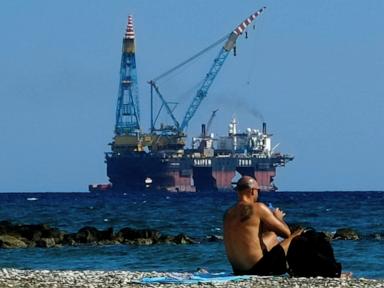
The Aphrodite field, discovered in Block 12 back in 2011 by Noble Energy (now owned by Chevron), lies in roughly 1,700 meters of water. Later discoveries like Glaucus (operated by ExxonMobil and QatarEnergy) and Cronos (operated by Eni and TotalEnergies) sit in even deeper waters, exceeding 2,000 meters. Drilling a single exploration well at those depths costs upwards of $100 million. Building a full-scale production system costs several billion.
In the oil and gas industry, reserves without a clear route to market are known as stranded gas. Cyprus has no domestic gas grid capable of absorbing this volume, nor does it possess a liquefied natural gas (LNG) export terminal of its own. That leaves energy majors with only two viable ways to monetize what they find.
The Egyptian Export Route
The most realistic commercial path runs south, not north. Egypt already possesses two underutilized LNG export plants on its Mediterranean coast at Idku and Damietta, alongside an extensive domestic pipeline network. By laying subsea tie-back pipelines from Cypriot blocks—such as Cronos or Aphrodite—directly to existing Egyptian offshore platforms like Zohr, operators can send raw gas to Egypt for processing and liquefaction. From there, LNG carriers can ship the fuel to European buyers.
This approach avoids the massive capital expenditure of building a greenfield LNG plant in Cyprus. Yet even this pragmatic route has stalled repeatedly over commercial disagreements. Chevron and the Cypriot government spent years deadlocked over revised development plans for Aphrodite, arguing over whether to build a floating production unit or rely entirely on subsea pipelines to Egypt. Every year lost to regulatory haggling pushes first gas further toward the end of the decade, shrinking the window before Europe's long-term climate targets begin eroding gas demand.
The EastMed Pipeline Mirage
Politicians love mega-projects, which explains why the EastMed pipeline refused to die long after energy economists wrote its obituary. Proposed as a 1,900-kilometer subsea pipeline connecting Israeli and Cypriot gas fields to Greece and Italy, the project promised a direct physical link to mainland Europe.
The engineering math never worked. Laying a high-pressure pipe across the Aegean Sea meant crossing depths of up to 3,000 meters in one of the most seismically active fault zones on the planet. Estimated costs ballooned past $6 billion, making the delivered gas far more expensive than LNG shipped from the United States or Qatar. When Washington quietly withdrew its diplomatic backing for the pipeline in early 2022, citing environmental concerns and commercial unviability, the fantasy of a direct pipeline to Europe effectively collapsed.
Geopolitics Under the Surface
Even if energy companies solved every engineering hurdle tomorrow, politics in the Eastern Mediterranean moves at a glacial pace. Cyprus has been divided since 1974, when Turkey invaded the northern third of the island following a Greek-backed coup. Today, the internationally recognized Republic of Cyprus controls the south, while the breakaway Turkish Republic of Northern Cyprus—recognized only by Ankara—controls the north.
Turkey does not recognize the Republic of Cyprus's maritime borders or its Exclusive Economic Zone (EEZ). Ankara argues that Turkish Cypriots have equal rights to any offshore resources around the island and claims that parts of Cyprus's southern exploration blocks overlap with Turkey's own continental shelf.
This is not merely a diplomatic footnote. In 2018, Turkish warships physically blocked an Eni drillship from reaching its target in Cypriot Block 3, forcing the Italian energy giant to abandon the site. Ankara subsequently dispatched its own seismic survey vessels and drillships—such as the Fatih and Yavuz—into waters claimed by Nicosia, triggering European Union sanctions and severe regional tension.
Major oil companies are notoriously risk-averse when naval vessels enter their operating zones. While giants like ExxonMobil and Chevron have continued drilling in southern blocks closer to Egypt—areas where Turkish claims carry less weight—no board of directors will greenlight a multi-billion-dollar pipeline passing anywhere near disputed waters without a broader political settlement.
The European Demand Paradox
Brussels sends mixed signals to gas producers, and those contradictions sit at the heart of Cyprus's dilemma. On one hand, European officials visit Nicosia to praise Cypriot gas as a vital component of diversification away from Russian fossil fuels. On the other hand, the European Union's binding climate laws—specifically the Fit for 55 package and the REPowerEU plan—mandate steep, permanent reductions in natural gas consumption across the bloc.
Consider the timeline mismatch. A major offshore gas project approved today typically takes five to seven years to reach peak production. A field coming online in 2029 or 2030 needs at least fifteen to twenty years of steady sales to pay back its upfront construction debt and generate an acceptable return for shareholders.
By 2040, however, the European Union aims to have slashed its greenhouse gas emissions by 90 percent compared to 1990 levels. European utilities, bound by strict decarbonization mandates, are increasingly reluctant to sign twenty-year take-or-pay gas contracts that extend deep into the 2040s. Without long-term buyers willing to lock in guaranteed prices, banks refuse to finance the infrastructure.
Global competition adds another layer of pressure. The United States and Qatar are currently bringing massive new waves of LNG export capacity online. Between 2025 and 2028, global LNG supply is expanding faster than at any point in history. By the time Cypriot gas finally reaches the market, it will not enter a panicked, supply-starved Europe willing to pay any price. It will enter a crowded, fiercely competitive global market dominated by low-cost producers with existing infrastructure.
What Actually Happens Next in Block 6 and Beyond
If Cyprus is going to monetize its offshore wealth before the energy transition closes the door, the strategy has to abandon grand geopolitical visions in favor of surgical, incremental tie-backs.
The brightest spot on the map sits in Block 6, operated by Eni and TotalEnergies. Unlike the isolated Aphrodite field, Block 6 holds multiple discoveries—Calypso, Cronos, and Zeus—clustered relatively close to Egypt's existing offshore infrastructure. Eni has already proven it can fast-track Eastern Mediterranean gas; the Italian firm took Egypt's massive Zohr field from discovery to first gas in under two and a half years, an industry record.
By linking Cronos directly to the Zohr subsea network, Eni and TotalEnergies can bypass the need for new standalone processing platforms. The gas flows south to Egypt, gets chilled into LNG at Damietta, and boards tankers bound for European regasification terminals. It is an unglamorous, commercially pragmatic solution that treats Cyprus not as a standalone energy superpower, but as an upstream satellite feeding an established regional hub.
Meanwhile, the Cypriot government faces a hard domestic reality. For years, politicians promised citizens cheap electricity powered by domestic natural gas and sovereign wealth funds overflowing with export royalties. Yet a separate project to import LNG into Cyprus via a floating terminal at Vasilikos—meant to finally get the island's power plants off expensive, polluting heavy fuel oil—became mired in contractor disputes, cost overruns, and fraud investigations backed by European prosecutors.
Until Nicosia can reliably import gas to keep its own lights on, grand declarations about rescuing Europe's energy grid will ring hollow in the boardrooms of Houston, Rome, and Brussels. The molecules under the Mediterranean seabed are real, and Europe will gladly buy them if the price is right. Whether they ever reach the market depends entirely on whether politicians get out of the way and let engineers build the cheapest, fastest pipe to Egypt before the global gas window slams shut.