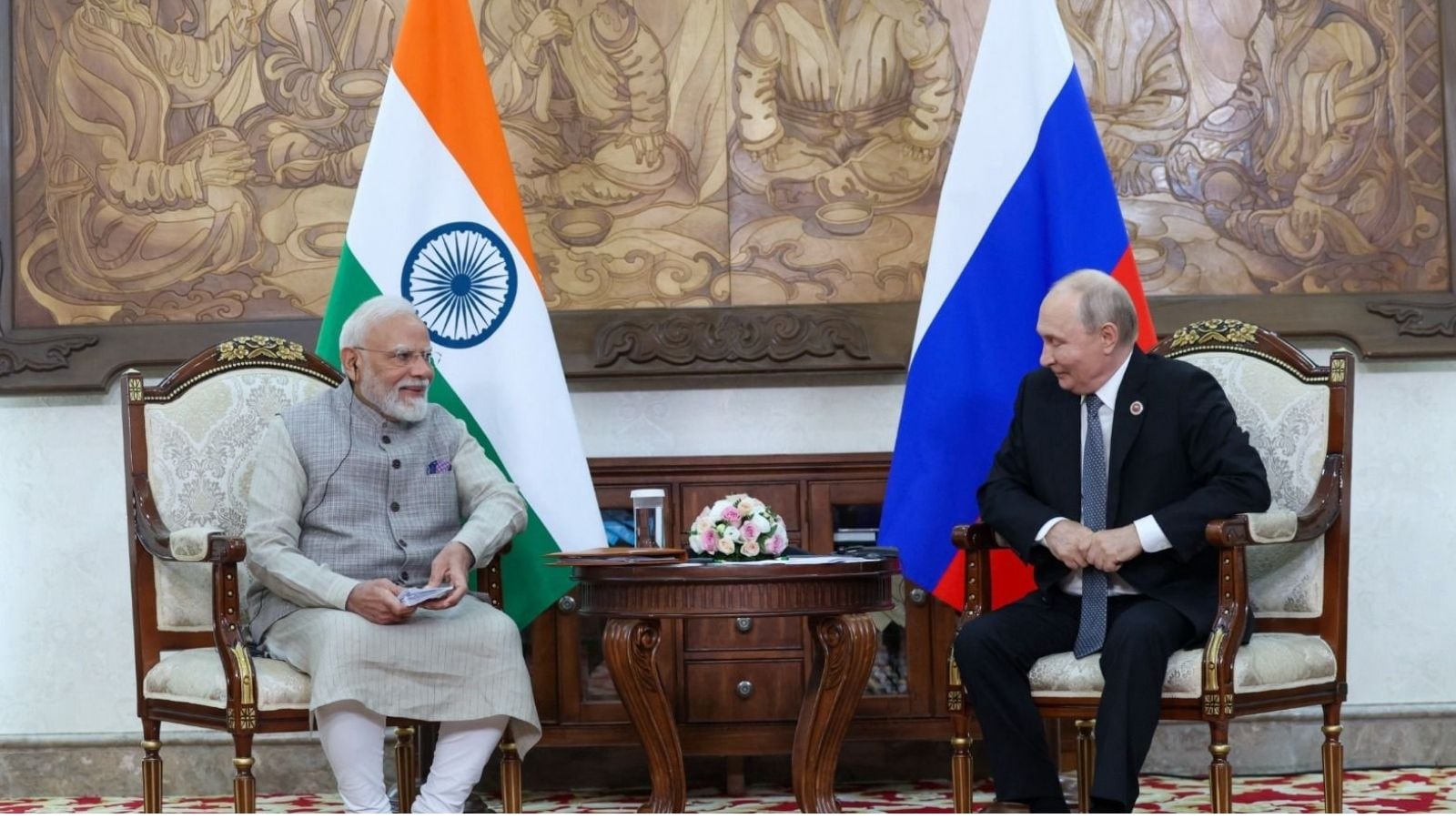
The mainstream foreign policy press is currently swooning over the supposedly deepening ties between India and Cyprus. You have seen the headlines. They trumpet a new era of cooperation spanning defense, trade, counter-terrorism, and culture. Journalists eagerly repeat official press releases about strategic partnerships in the Eastern Mediterranean. They treat a routine diplomatic charm offensive as a massive geopolitical shift.
It is a comforting narrative. It is also entirely wrong.
The lazy consensus among international relations commentators is that Cyprus represents India’s golden gateway to Europe and a critical anchor for its Mediterranean strategy. This view ignores basic economic reality, structural asymmetries, and the cold logic of realpolitik. India is a rising global heavyweight with a three-trillion-dollar economy and a population of 1.4 billion. Cyprus is a divided island nation with a GDP smaller than the city of Ahmedabad and a population matching a minor Mumbai suburb.
Branding this lopsided relationship as a strategic partnership of equals is not just optimistic. It is a fundamental misreading of how global power works. New Delhi does not need a Mediterranean pivot built on platitudes. It needs to look at the cold, hard numbers.
The Trade Myth Follow the Tax Evaders, Not the Cargo Ships
Examine any standard analysis of India-Cyprus relations, and the author will invariably point to investment statistics. They will highlight that Cyprus has historically been one of the top ten sources of Foreign Direct Investment (FDI) into India. The implication is clear: Cyprus is a massive economic engine fueling Indian growth.
This is a complete misunderstanding of corporate finance.
Cyprus does not possess a vast pool of domestic industrial capital looking for yield in Bangalore tech startups or Gujarati manufacturing plants. For decades, the island functioned primarily as a tax haven and a round-tripping hub. Wealthy individuals and corporations routed Indian capital out of the country, through shell companies in Nicosia, and back into India to bypass local taxes and capital controls.
When India amended its double taxation avoidance agreement with Cyprus to introduce capital gains taxation on investments, the artificial investment boom cooled. To treat these historic financial flows as a sign of deep commercial synergy is a joke.
[Typical Round-Tripping Route]
Indian Capital -> Cyprus Shell Company -> Re-investment in India (as "FDI")
Real bilateral trade—the actual exchange of physical goods, machinery, and services—remains embarrassingly low. India’s actual economic interests lie in major European hubs like Germany, France, and the Netherlands. Spending diplomatic capital trying to scale up trade with an economy that ranks outside the top 100 globally is an inefficient use of resources.
I have watched corporate strategists spend millions trying to establish European distribution centers in Mediterranean outposts based on these flawed geopolitical narratives. They invariably find themselves strangled by logistics bottlenecks. The infrastructure is not there, the domestic market lacks scale, and the regulatory environment is designed for financial arbitrage, not physical supply chains.
The Defense Mirage Small Islands Do Not Win Continental Contests
The latest talking point among the defense establishment is the signing of defense cooperation agreements between New Delhi and Nicosia. Analysts speculate about joint military exercises, intelligence sharing on counter-terrorism, and even defense exports.
Let us be brutal about the military balance. Cyprus is a nation with a small National Guard whose primary security concern is the frozen conflict on its own soil. It possesses zero expeditionary capability. It has no naval presence capable of securing sea lines of communication in the wider Indian Ocean or even the Western Mediterranean.
What exactly is the Indian Navy—a force projecting power across the Indo-Pacific with multiple aircraft carrier battle groups—supposed to gain from a tactical partnership with Nicosia?
The argument for counter-terrorism cooperation is equally hollow. The security threats India faces originate in its immediate neighborhood, driven by state-sponsored actors in South Asia. The threats Cyprus faces are tied to the complex dynamics of the Levant and its proximity to the Syrian theater. The overlap in actionable, day-to-day intelligence between these two theaters is minimal.
When analysts talk about a shared vision for maritime security, they are engaging in wishful thinking. India’s actual maritime challenge in the Middle East involves securing the Bab-el-Mandeb and the Strait of Hormuz against state and non-state disruptors. Cyprus cannot offer a single hull, drone, or radar installation to assist in that fight.
The Ankaracentric Trap Thinking Inside the Box
The real driver behind India's sudden interest in Cyprus is not trade, culture, or defense. It is Turkey.
Ankara has consistently taken an adversarial stance against India on international forums, particularly regarding Jammu and Kashmir. Turkey’s tight defense alignment with Pakistan has irked New Delhi for years. The conventional wisdom in Indian foreign policy circles is simple: if Turkey plays in India's backyard, India should play in Turkey's backyard by embracing Cyprus and Greece.
This is classic, reactive, twentieth-century diplomacy. It is the international relations equivalent of a petty playground dispute.
By tying its Mediterranean policy entirely to a desire to irritate President Erdogan, India compromises its strategic autonomy. It reduces its foreign policy to a series of knee-jerk reactions. A great power does not build alliances simply to spite a middle power. It builds alliances based on structural necessity.
Consider the risk profile of this approach. By over-indexing on Cyprus, India complicates its long-term options in the wider Middle East. Turkey, despite its current diplomatic posture, remains a massive economy, a NATO member, and a critical geographic bridge between Europe and Asia. A mature Indian foreign policy would focus on economic leverage and hard-nosed bargaining to alter Ankara's calculus directly, rather than hiding behind Nicosia.
Dismantling the Foreign Policy Premise
Let us address the questions that dominate standard policy panels, using a framework that rejects the standard diplomatic fluff.
Does Cyprus provide India with a strategic backdoor to the European Union market?
No. The European Union is a single market, but it is not a monolith. Entering the EU via Cyprus does not magically grant an Indian exporter an advantage in Paris or Frankfurt. Regulations, standards compliance, and supply chain logistics dominate EU trade. A business operating out of Nicosia faces the exact same stringent European Medicines Agency (EMA) or European Chemicals Agency (ECHA) barriers as one operating out of Mumbai. The idea of a backdoor is an illusion sold by consultants looking to sell offshore company setups.
Can India leverage Cyprus to counter Chinese influence in the Mediterranean?
This is a massive miscalculation of economic scale. China’s Belt and Road Initiative has poured billions into Mediterranean infrastructure, famously purchasing a controlling stake in Greece’s Piraeus port. Cyprus itself has signed multiple memorandums with Beijing. India cannot match China’s state-backed infrastructure capital dollar-for-dollar in southern Europe. Attempting to compete on those terms using Cyprus as a base is a recipe for fiscal exhaustion. India’s strength lies in digital public infrastructure, technology services, and pharmaceutical manufacturing—none of which require a physical, brick-and-mortar staging ground in the Eastern Mediterranean.
The True Cost of Geopolitical Sentimentality
The obsession with historical and cultural ties—frequently brought up during bilateral visits by referencing the friendship between Jawaharlal Nehru and Archbishop Makarios—is actively harmful to modern statecraft. Cultural affinity does not pay for naval procurement. It does not lower shipping container costs. It does not stop cross-border terrorism.
When New Delhi spends high-level diplomatic bandwidth on symbolic relationships, it suffers from opportunity cost. Every hour a senior diplomat spends negotiating a memorandum of understanding on cultural exchanges with a micro-state is an hour not spent securing critical mineral supply chains in Western Australia, negotiating free trade agreements with Great Britain, or strengthening hard security architectures with Tokyo and Washington.
The downside to abandoning this contrarian view is clear: India risks looking like a power that prefers easy diplomatic victories over difficult strategic choices. It is easy to get a joint statement signed in Nicosia. It is incredibly difficult to counter aggressive maneuvers in the South China Sea or secure permanent membership on the United Nations Security Council.
Stop Playing the Soft Power Game
India needs to stop treating foreign policy as a collection of friendships and start treating it as a portfolio of cold transactions.
If New Delhi wants a serious presence in the Mediterranean, it must bypass the peripheral actors. It must focus its energy entirely on France—a permanent UN Security Council member with genuine blue-water naval capabilities and serious economic muscle—and Italy, which controls the central Mediterranean sea lanes.
The relationship with Cyprus should be maintained for what it is: a minor, routine diplomatic outpost useful for consular services and occasional financial regulatory cooperation. Stop inflating it into a pillar of national security. Stop pretending it alters the balance of power.
The next time a think-tank report lands on your desk claiming that India and Cyprus are forging a transformative alliance to reshape the Mediterranean, shred it. Look at the trade balance, count the warships, and remember that in the harsh theater of global geopolitics, sentimentality is a luxury India cannot afford.