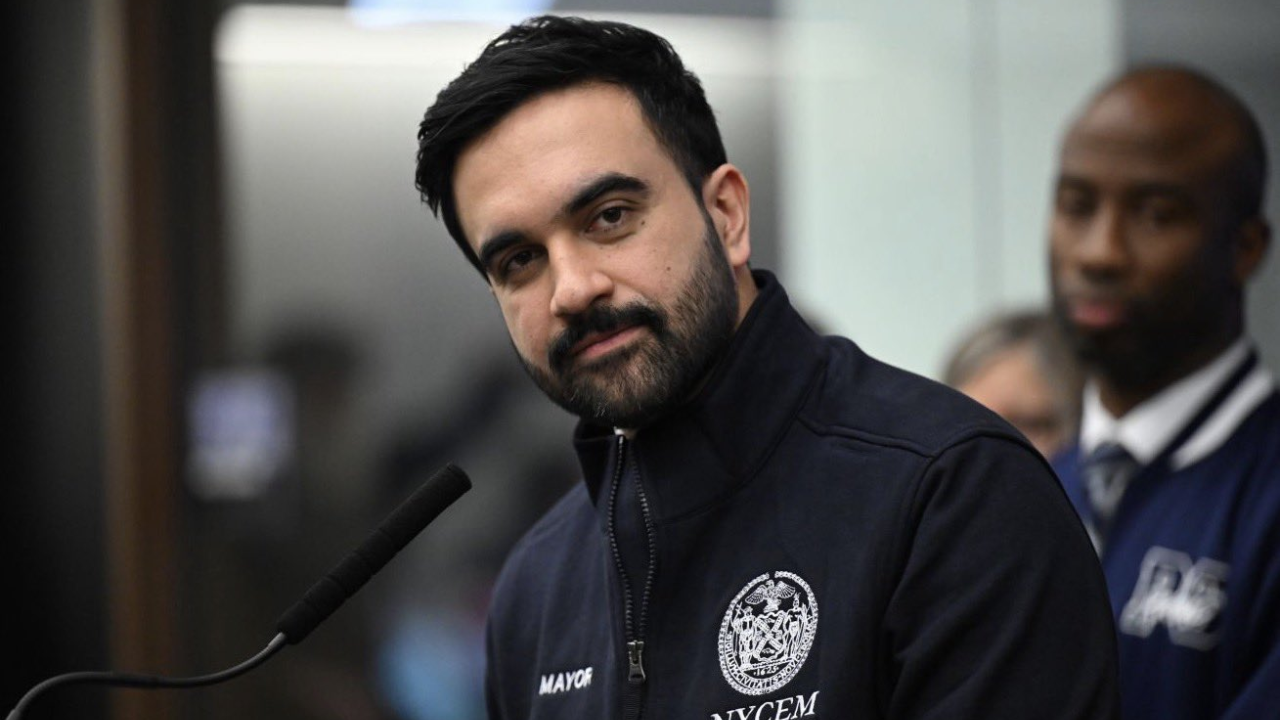
Political communication relies on the conversion of latent cultural assets into active political capital. When New York City Mayor Zohran Mamdani utilized multi-lingual messaging—specifically Bengali, Mandarin, and Spanish—to promote a theatre access initiative, he executed a calculated maneuver in audience segmentation and stakeholder alignment. This is not merely an exercise in personal capability; it is a high-bandwidth strategy to minimize acquisition costs for public engagement while maximizing brand affinity across diverse urban demographics.
The initiative, a partnership with the Theater Development Fund (TDF) to provide over 2,000 free tickets for high school students, serves as the operational anchor. In public policy, "access" is the primary driver of program participation. By removing the financial friction of Broadway tickets—a commodity typically reserved for high-income cohorts—the administration is shifting the demographic composition of the consumer base for the city’s cultural institutions.
The Economics of Audience Expansion
The TDF lottery structure is a mechanism for controlled supply management. With limited inventory, the primary challenge is not interest generation, but targeted distribution. The administration’s multi-lingual outreach serves two distinct functions:
- Information Asymmetry Reduction: By communicating in the primary languages of specific demographic clusters, the administration ensures that information regarding the lottery reaches populations that traditional, English-only municipal outreach often fails to capture.
- Signal Reliability: Language fluency acts as a high-fidelity signal of cultural competence. For a migrant-dense city like New York, a leader demonstrating linguistic range is perceived not just as an administrator, but as a representative of the city’s constituent identities.
The efficiency of this approach is measured by the delta between total addressable market (NYC students eligible for the program) and the actual conversion rate into the lottery. If the multi-lingual campaign successfully triggers a higher participation rate from immigrant-heavy districts, it validates the strategy as a cost-effective alternative to broad-spectrum, high-spend advertising.
Linguistic Fluency as Political Infrastructure
Political actors typically rely on mass-media surrogates for outreach. Mamdani’s decision to bypass these filters by recording direct, native-level messaging shifts the burden of delivery to his own personal brand. This creates a feedback loop: the linguistic skill generates viral social media engagement, which subsequently lowers the cost of promoting the underlying policy.
The mechanism here is the exploitation of "social currency." When constituents share, comment, or react to the mayor’s linguistic capability, they are participating in a distribution network that the administration does not need to pay for. The objective function for this administration is to increase the stickiness of its policy rollouts by embedding them within performances of identity that command high organic reach.
Risks and Systemic Constraints
The strategy carries inherent risks, specifically the potential for "performance-policy decoupling." If the actual outcomes of the Broadway ticket initiative—measured by the ease of the lottery process and the diversity of actual attendees—do not match the intensity of the promotional effort, the political capital generated will erode.
Furthermore, over-reliance on individual-driven messaging creates a "key-man risk." If the mayor’s persona is the primary vehicle for policy awareness, the institutional stability of the program remains fragile. Scaling such efforts requires shifting the infrastructure from the individual (the Mayor speaking) to the system (institutional multi-lingual outreach protocols across all municipal agencies).
The success of this pilot rests on the intersection of three variables:
- The Friction Quotient: The ease with which a student can navigate the TDF portal and claim a ticket.
- Audience Resonance: The degree to which the target demographic feels "seen" by the tailored linguistic approach.
- Operational Scalability: The ability of the TDF partnership to maintain the ticket pipeline without degrading the quality of the student experience.
The administration’s next logical step is to formalize the linguistic outreach strategy as a standardized municipal asset. Rather than relying on the Mayor’s personal proficiency, the City should codify multi-lingual communication into the operational manual for all youth-facing programs. This transitions the strategy from a viral marketing event to a durable institutional capability, ensuring that accessibility—not just visibility—remains the baseline for public service.
NYC Mayor Zohran Mamdani Broadway Ticket Initiative
This video provides an unfiltered view of the linguistic outreach strategy employed by the Mayor, illustrating the mechanism of direct communication used to maximize engagement with the TDF partnership.
http://googleusercontent.com/youtube_content/1