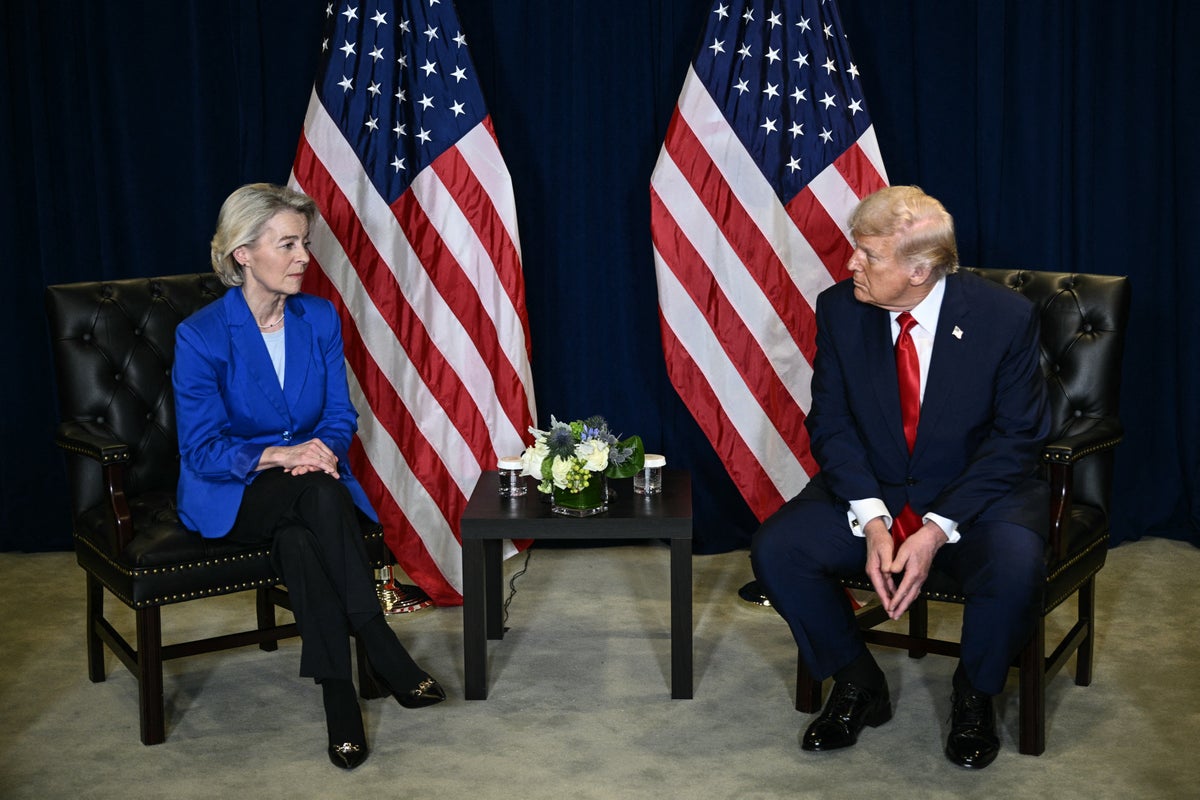
A profound shift is fracturing Western geopolitics. For decades, Washington assumed Western Europe would remain a permanent, compliant junior partner in global affairs. That assumption is dead. Recent polling data reveals that a mere 11% of Europeans now view the United States as an allied power that will reliably defend European interests. The remaining vast majority see America either as a necessary but untrustworthy partner, or an outright systemic competitor. This erosion of trust is not a temporary blip caused by a single election cycle. It represents a structural decoupling driven by years of economic divergence, conflicting foreign policy objectives, and the stark realization that Washington’s priorities have permanently shifted toward the Pacific.
Europeans are waking up to a cold reality. The security umbrella they took for granted since 1945 is fraying at the seams, leaving a continent economically vulnerable and militarily unready to defend itself.
The Illusion of a Shared Security Guarantee
For generations, the North Atlantic Treaty Organization functioned on a simple premise. The United States provided the nuclear deterrent and conventional military muscle, while Europe built generous welfare states and integrated its economies. This arrangement required deep, unquestioning trust.
That trust has evaporated.
The turning point did not happen overnight. It built up through years of observing Washington's shifting focus. When American administrations repeatedly signaled that the Asia-Pacific region was the primary theater of importance, European capitals heard the message loud and clear. The war in Ukraine briefly simulated a return to the old Cold War dynamic, but the underlying friction never disappeared. European policymakers watched with growing panic as American domestic politics repeatedly paralyzed vital security assistance packages.
They realized that European security had become a bargaining chip in domestic American political warfare.
This realization changed everything. It transformed the way European citizens view their primary benefactor. When only about one in ten people in major European economies trust America to have their back, the alliance is no longer a living treaty. It is a legal ghost.
The decline in trust is particularly acute in the traditional engine rooms of the European Union. In Germany and France, the skepticism is palpable. Berlin spent decades tying its economic model to cheap Russian energy and its security to Washington. Both pillars collapsed simultaneously. Now, the German public views American LNG exports not as a gesture of alliance solidarity, but as an expensive, opportunistic economic exploitation of their energy crisis.
Economic Warfare Under the Guise of Partnership
To understand why European sentiment has soured so dramatically, one must look past the diplomatic rhetoric and examine the economic balance sheet. Washington has increasingly pursued economic policies that actively harm European industries.
Consider the massive subsidies embedded in recent American industrial legislation. The Inflation Reduction Act was marketed as a green energy initiative, but its structural mechanisms offered massive incentives for companies to relocate their manufacturing facilities from Europe to the United States. European officials privately viewed this as a predatory strike against their industrial base at a time when Europe was already reeling from soaring energy costs.
The numbers tell a grim story of divergence.
Economic Performance Comparison (GDP in Trillions USD)
Year | European Union GDP | United States GDP
------------------------------------------------
2008 | $16.2              | $14.7
2023 | $18.3              | $27.3
In 2008, the economy of the European Union was slightly larger than that of the United States. By 2023, the American economy had surged to over $27 trillion, while the EU stagnated at just over $18 trillion. Europeans see this widening chasm and draw a straight line between American economic dominance and their own relative decline. They see a partner that uses its financial hegemony to shield itself while exporting inflation and industrial pain across the Atlantic.
Weaponized interdependence has become standard practice. When Washington imposes secondary sanctions on foreign nations, European corporations are forced to comply, destroying billions of dollars in European trade agreements overnight. From the perspective of an ordinary European worker or business owner, an ally does not systematically dismantle your economic sovereignty to achieve its own foreign policy goals.
The Strategic Autonomy Mirage
In response to this growing estrangement, French intellectuals and European Union bureaucrats have championed a concept known as strategic autonomy. The idea is simple on paper. Europe must develop its own independent military capabilities, intelligence networks, and industrial supply chains so it no longer relies on the whims of voters in American swing states.
The execution, however, has been an absolute disaster.
Europe remains deeply divided on what independence actually means. The Baltic states and Poland, living in the immediate shadow of a hostile Russia, do not have the luxury of waiting decades for Europe to build a credible army. They still view American military hardware as their only viable shield, even if they distrust American political stability. Meanwhile, nations further west prefer diplomatic solutions and economic hedging.
The Fragmented Defense Market
Europe spends billions on defense, but it does so in the most inefficient way possible. The continent's defense sector is plagued by duplication, national protectionism, and a lack of standardization.
- Tank Systems: The United States military relies primarily on one main battle tank variant, the M1 Abrams. European armies currently operate more than a dozen distinct tank types, creating a logistical nightmare for any unified command structure.
- Fighter Jets: European nations split their resources across competing domestic programs like the Eurofighter, the French Rafale, and the Swedish Gripen, while simultaneously buying American F-35s.
- Ammunition Stockpiles: Production lines across Europe use different specifications for basic artillery shells, making it incredibly difficult to share supplies effectively during a high-intensity conflict.
This fragmentation ensures that Europe gets a fraction of the capability for every euro spent. It is an industrial policy disguised as a defense strategy, designed to protect domestic jobs rather than project credible military power. Until Paris, Berlin, and Rome agree to surrender national control over their defense champions, strategic autonomy will remain a hollow slogan whispered in Brussels corridors.
The Divergent Worldviews on Global Conflict
The psychological rift between Europe and America is widened by fundamentally different interpretations of global stability. Washington increasingly views the world through the lens of a great power confrontation. This binary worldview demands that allies pick a side, cut economic ties with rivals, and prepare for prolonged containment strategies.
Europeans generally reject this black-and-white framework. Their economies are structural exporters that rely heavily on open global markets. A forced economic decoupling from Asian markets would mean absolute ruin for the European industrial model, particularly for Germany’s export-driven automotive and machinery sectors.
Export Dependency (Exports as a % of GDP)
Germany: 50%
United States: 11%
Germany exports roughly half of its GDP. The United States exports closer to 11%. This single metric explains the entire geopolitical divide. America can afford to build economic walls and engage in trade wars because it possesses a massive, self-sustaining domestic market and abundant natural resources. Europe cannot. Forcing Europe to adopt a hardline isolationist trade stance is asking the continent to commit economic suicide for the benefit of American grand strategy.
When European citizens watch Washington use tariffs as a blunt instrument of foreign policy against friends and foes alike, they do not see an ally. They see an empire protecting its own interests at anyone's expense.
The Weaponization of the Global Financial System
Nothing illustrates the underlying tension better than the absolute dominance of the US dollar. European leaders have watched with growing alarm as Washington uses the global financial architecture as a political weapon. The freezing of foreign central bank assets and the exclusion of nations from the SWIFT messaging network were historic actions. While European governments publicly supported these measures, the long-term systemic implications terrified their financial establishments.
If Washington can unilaterally disconnect countries from the global financial system, then every nation’s sovereignty exists at the pleasure of the American Treasury Department.
Europe tried to create an alternative payment mechanism, known as INSTEX, to bypass American sanctions and facilitate trade with restricted markets. It failed miserably. American financial power is so absolute that no major European bank or corporation dared to use the system, fearing they would be barred from the US financial system. It was a humiliating demonstration of Europe's total financial subservience.
This systemic vulnerability fuels the deep resentment found in public opinion polls. People instinctively understand that their economic destiny is controlled by a foreign power that does not answer to them. The 11% figure is not an indictment of American culture or the American people. It is a calculated assessment of a structural power imbalance that leaves Europe exposed and helpless.
The Broken Blueprint of European Defense
To survive in a world where American support is an unreliable variable, Europe must completely overhaul its approach to security. The current path of incremental budget increases and high-minded speeches is a recipe for irrelevance.
The first step requires an immediate end to national defense protectionism. European countries must stop treating defense procurement as a domestic jobs program. They need to pool their resources, standardize their equipment, and create a single, unified European defense market. This means making painful political decisions, such as allowing inefficient domestic shipyards and aerospace factories to close in favor of centralized, continent-wide production facilities.
Furthermore, Europe must build its own independent intelligence, surveillance, and reconnaissance networks. Currently, European commanders rely almost entirely on American satellite constellations and high-altitude drones for actionable intelligence. A military that cannot see the battlefield without foreign assistance is not an independent force. It is a subsidiary.
Building these capabilities will cost hundreds of billions of euros. It will require cutting funding from popular social programs or raising taxes on an already overburdened populace. It is a bitter pill that European politicians have avoided prescribing for thirty years.
The comfortable era of hitchhiking on American military might has reached its logical conclusion. The data shows the European public already senses the shift, even if their leaders refuse to act with the necessary urgency. The old alliance is gone, replaced by a transactional relationship defined by suspicion and divergent goals. Europe can either fund its own defense and emerge as a genuine, independent pole in a multipolar world, or it can continue its slow slide into industrial decay and geopolitical servitude. The clock is ticking, and Washington is no longer waiting for Brussels to catch up.