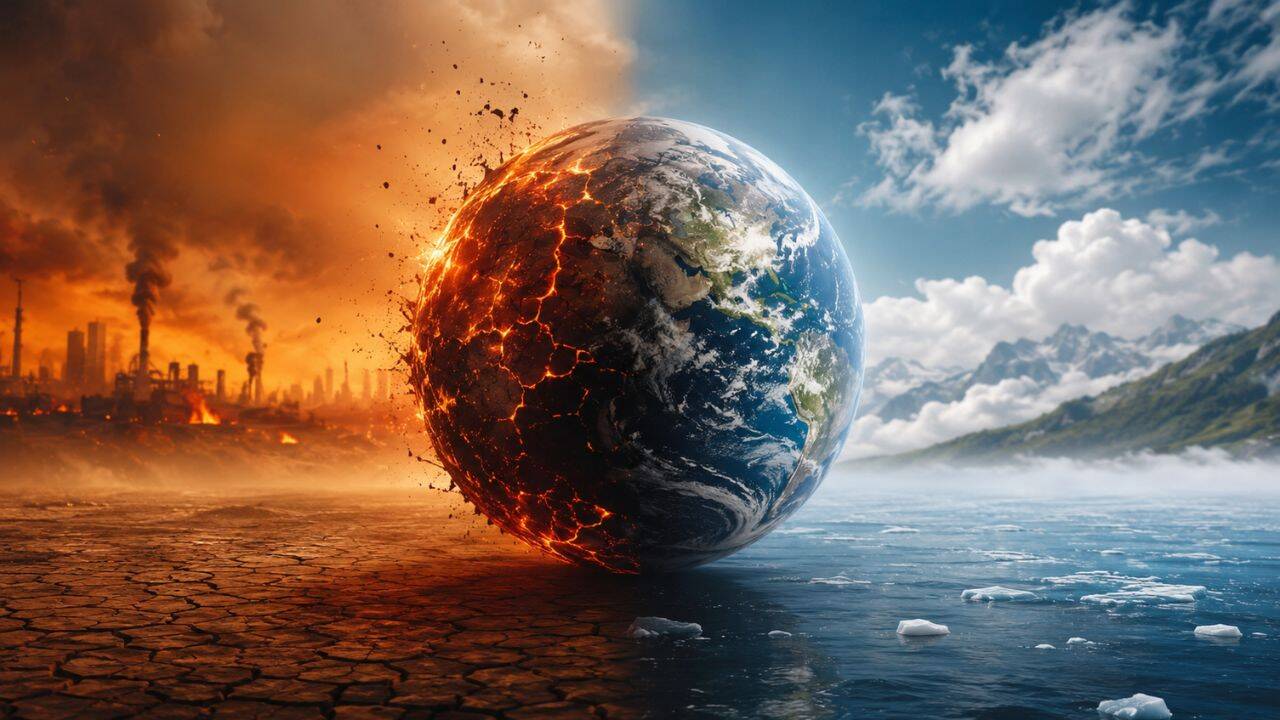
The 1.5 degree Celsius warming threshold isn't just a random number scientists threw onto a PowerPoint slide. It’s the red line. It’s the point where ecosystems start flipping like dominoes, and honestly, we’re hurtling toward it way faster than anyone expected.
If you've been paying attention to weather reports lately, you know things feel off. Summers are brutal. Wildfires swallow entire towns. Storms pack a punch that leaves municipal budgets completely shattered. Scientists keep sounding the alarm because the data doesn't lie. We are running out of runway.
The Reality Behind the Numbers
Back when the Paris Agreement was signed, world leaders acted like 1.5 degrees was a distant hazard. It felt like something future generations would have to deal with in the 2030s or 2040s. They were wrong. Recent climate assessments from organizations like the Intergovernmental Panel on Climate Change (IPCC) show that human-induced warming has already surged past historical baselines at an alarming rate.
We aren't talking about a smooth, predictable climb either. Climate systems operate on tipping points. Once you push a system past a certain heat tolerance, it stops absorbing carbon and starts releasing it. Think about permafrost thawing in the Arctic. It locks away ancient methane for millennia, but once the soil warms up, it belches that greenhouse gas straight into the atmosphere.
That creates a feedback loop. Warming causes thawing, thawing causes more emissions, and more emissions cause faster warming. You can't negotiate with physics.
What Most People Get Wrong About Global Temperature Targets
A lot of folks think hitting 1.5 degrees means the world instantly ends on a specific Tuesday. That's not how it works. It's a sliding scale of increasing misery and economic chaos.
When researchers talk about breaching this limit, they mean temporary overshoots or permanent shifts where average global temperatures stay above that pre-industrial baseline for decades. Even a temporary breach triggers irreversible damage to coral reefs. Marine heatwaves bleach vast stretches of ocean habitat, wiping out fisheries that millions of coastal communities rely on for food and income.
Another common misconception is that wealthy nations can simply buy their way out of the problem. Concrete walls don't stop rising sea levels from ruining coastal real estate values or contaminating freshwater aquifers with saltwater intrusion. Insurance companies are already pulling out of high-risk wildfire and flood zones because the math no longer works for them. When the insurance industry panics, the rest of the economy feels it immediately.
Why Speed Matters More Than Ever
We love talking about targets set for 2050. Net-zero by 2050 sounds great in a corporate press release. It gives executives plenty of time to retire before anyone holds them accountable.
The harsh truth is that emissions cuts made between now and 2030 dictate the entire outcome. Every fraction of a degree matters. Pausing warming at 1.6 degrees is vastly better than letting it run away to 2.0 degrees. Every tenth of a degree avoided saves thousands of lives from extreme heat stress and prevents millions of people from facing acute water shortages.
[Image of renewable energy wind turbines and solar panels]
You don't have to be a climate scientist to take practical action in your daily life. Stop waiting for governments to fix everything top-down. Electrify your home heating if you can, reduce food waste, and support local policy changes that prioritize public transit over car dependency. Vote with your wallet by backing companies that transparently reduce their supply chain emissions rather than hiding behind clever marketing tricks.
The window to avoid the worst-case scenarios is closing fast. Stop treating climate change like a distant abstraction. It's happening right outside your window.

.png?itok=1mb05mKJ)

