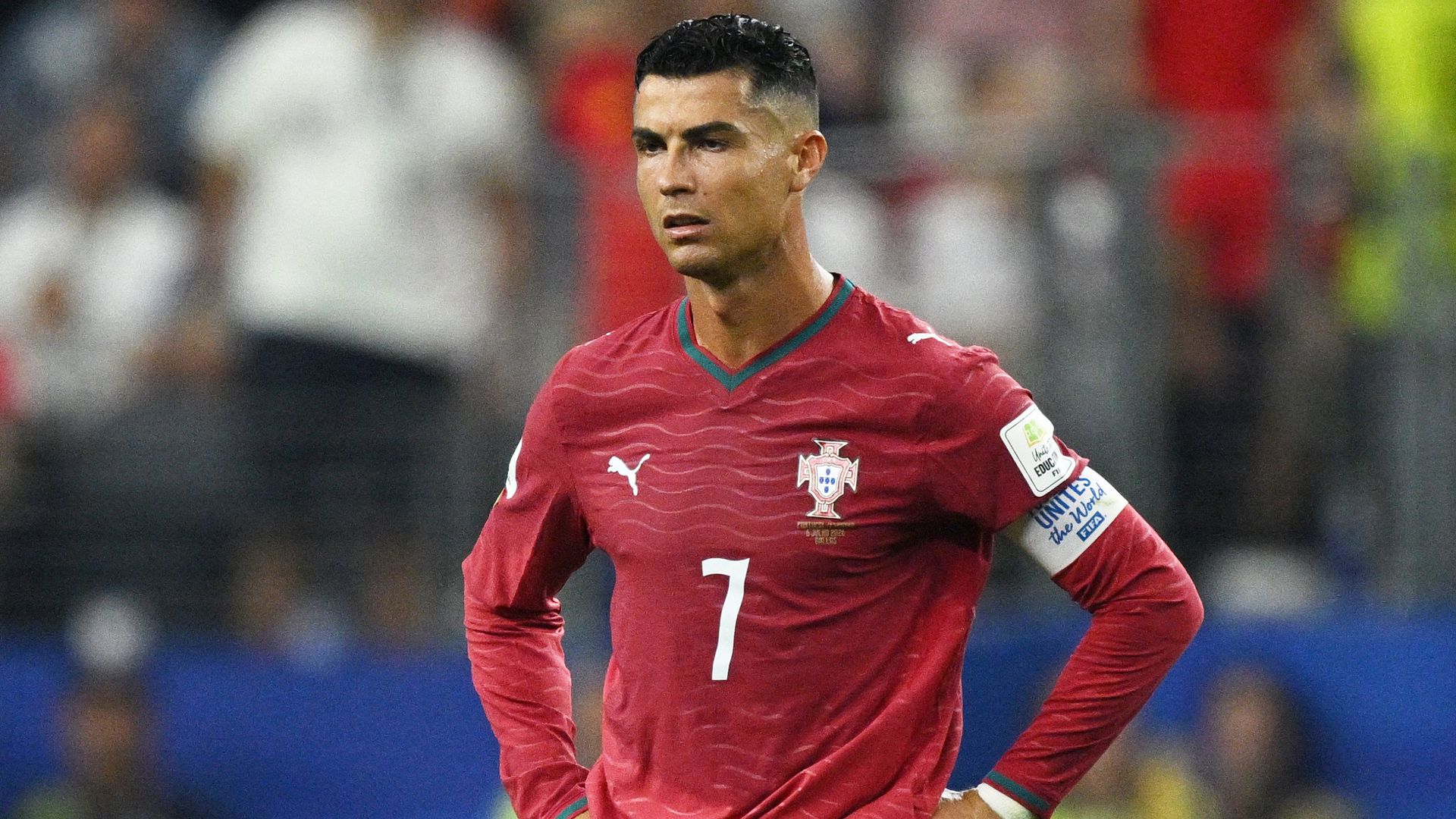
Everyone is falling for the retirement bait. When Cristiano Ronaldo mentions that a specific campaign is probably his last, the sports media machine instantly shifts into nostalgic eulogy mode. Pundits dust off career highlights, compile the montage reels, and start measuring his legacy for a bronze plaque. They treat his career like an expiring lease.
They are dead wrong.
Ronaldo is not winding down. He is rewriting the economic and biological rules of modern athletics. The lazy consensus assumes athletes hit an arbitrary expiration date around forty and quietly shuffle off into retirement. That narrative is for mortals. Ronaldo operates in a different bracket entirely, driven by an industrial-scale obsession that defies standard athletic aging.
Stop asking when he will hang up his boots. Start asking why anyone expects a relentless machine to turn itself off voluntarily.
The Myth of the Athletic Expiration Date
For decades, sports science preached a rigid gospel. Muscle mass peaks in your late twenties, reflexes slow down in your early thirties, and by thirty-five, you belong on a pundit's couch. This timeline was built on generations of footballers who treated their bodies like rented equipment rather than high-performance assets.
Ronaldo shattered that baseline a decade ago.
Look at the underlying biomechanics. While traditional strikers lose their acceleration and become stationary targets, Ronaldo engineered a transition from explosive winger to ruthless penalty-box predator. He optimized his jump, preserved his aerial dominance through meticulous core conditioning, and adapted his movement patterns to conserve energy for high-impact moments.
I have watched elite clubs spend millions on sports science departments that still rely on lagging indicators. They measure fatigue after the damage is done. Ronaldo built a private infrastructure of recovery, sleep optimization, and hyper-targeted nutrition long before it became a Silicon Valley trend. He did not beat aging by accident. He hacked the variable.
When critics point to a dip in defensive pressing metrics, they miss the entire point. You do not pay a player of his caliber to press center-backs in the seventy-fifth minute. You pay him to finish chances that ordinary forwards miss. Efficiency replaced volume. Longevity is not about running more; it is about wasting zero movement.
The Saudi Pro League Is Not a Retirement Home
The popular narrative paints his move to Al Nassr as a lucrative golden parachute, a soft exit into the footballing sunset where records come cheap against inferior opposition.
That perspective betrays a profound misunderstanding of modern sports geopolitics and personal branding.
Saudi Arabia is not a retirement community. It is the epicenter of a massive, state-backed push to reshape global sports media rights and entertainment hegemony. Ronaldo did not move there to relax. He moved there because he positioned himself as the primary shareholder in a new football frontier. He is playing for stakes that matter far beyond three points on a weekend.
When you look at the numbers, his goalscoring output has not cratered. He continues to find the back of the net with terrifying regularity, breaking international and domestic scoring records with the same ruthless efficiency he displayed at Real Madrid and Manchester United. The standard of defending might differ from the English Premier League, but putting the ball in the net eighty yards from home under a global microscope requires the exact same psychological armor.
Retirement implies a loss of purpose. Ronaldo's purpose is expansion. As long as records remain unbroken and markets remain unconquered, walking away is an irrational economic and psychological choice.
The Narcissism of Greatness
We live in a culture that demands humility from its legends. We want them to fade away gracefully, to acknowledge their decline with a self-deprecating smile, and to step aside to make room for the next generation.
Ronaldo rejects that social contract entirely.
His supreme, unyielding self-belief is often labeled as arrogance by critics who confuse insecurity with ambition. True greatness at this level requires a pathological refusal to accept obsolescence. He does not care about your comfort or your desire for a neat narrative arc. He wants every record, every trophy, and every headline.
Imagine a scenario where every elite athlete possessed his level of pathological accountability. Locker rooms would mutiny, training grounds would resemble war zones, and careers would stretch across two decades of dominance. Most players slow down because their internal drive evaporates after their first major contract or Ballon d'Or. Ronaldo treats every match like a trial for a rookie trying to earn a permanent squad number.
This relentless drive has a downside, of course. It creates friction. It demands total submission from teammates and tactical setups tailored to a single focal point. It can alienate managers who want democratic dressing rooms. But history does not remember harmony. History remembers numbers, medals, and survivors.
The Uncomfortable Truth About the Next Generation
The media desperately wants to crown a successor. Every time a young winger scores a hat-trick, columnists rush to declare the dawn of a new era.
Yet, when the biggest matches arrive, when the pressure reaches a boiling point, who commands the room? Who still dominates the global conversation?
The younger generation of superstars possesses breathtaking technical skill, but many lack the monomaniacal discipline that separates great players from immortals. They juggle brands, social media presences, and lifestyle commitments that would have horrified the old guard. Ronaldo spent his entire life in the gym while his peers were out enjoying their twenties.
Until a teenager emerges who matches his terrifying work ethic and refusal to compromise, Ronaldo will remain relevant simply by default of outworking everyone else in the room.
The Final Unyielding Metric
The retirement conversation is driven by observer fatigue, not player decline. Fans and journalists get tired of writing about the same dominant figure for twenty years. They crave novelty. They want a new protagonist.
Ronaldo does not care what the audience wants to read. He plays to the scoreboard.
He will stop playing when his body completely gives out or when scoring goals no longer feeds his insatiable appetite for dominance. Neither of those conditions has been met.
Do not hold your breath for a farewell tour. He is just getting warmed up for the next record.