Mainstream financial media loves a predictable failure narrative. For months, Brussels corridors and Sunday papers have echoed the same lazy consensus: Italy’s massive slice of the European post-pandemic recovery fund—the Piano Nazionale di Ripresa e Resilienza (PNRR)—is a historic flop because GDP growth numbers look sluggish.
They look at the €194.4 billion package, glance at the Eurostat charts, and declare that the money hasn't triggered an immediate economic miracle.
They are measuring the wrong things, during the wrong timeframe, while fundamentally misunderstanding how structural state transformation actually works.
The premise that a massive, multi-year sovereign investment program should yield instant, spectacular GDP spikes within the first twenty-four months is economically illiterate. If you are judging the PNRR solely on short-term macroeconomic cycles, you are missing the real shift happening beneath the surface.
The Blind Spot of Short-Term GDP Metrics
The current critique of Italy's recovery plan relies on a basic analytical flaw: treating long-term structural investment like short-term Keynesian demand stimulus.
When a government passes a temporary tax cut or hands out consumer vouchers, money enters the velocity of circulation instantly. GDP numbers tick up in the next quarter. Everyone applauds. Then, six months later, the effect vanishes, leaving behind nothing but debt.
The PNRR is the exact opposite. It is a supply-side overhaul disguised as a recovery fund.
When billions are allocated to digitalizing public administrations, overhauling the high-speed rail network across the Mezzogiorno, or upgrading deep-water ports like Genoa and Trieste, you do not see that reflected in the Q3 growth figures. You see it in bureaucratic delays, procurement friction, and upfront capital expenditure.
I have watched public sector infrastructure rollouts derail across Europe for two decades. The initial phase is always ugly. It is a mess of administrative bottlenecks, legal challenges from disappointed bidders, and compliance hurdles. To look at this inevitable friction and declare the entire initiative a failure is a textbook example of premature evaluation.
The real return on investment for infrastructure projects of this scale has a gestation period of five to ten years. The success of the PNRR will not be judged by Italy’s growth rate right now, but by its structural productivity ceiling in 2032.
The Myth of the Administrative Black Hole
A favorite talking point of northern European skeptics is that Italy’s public administration is an unfixable black hole incapable of absorbing this volume of capital. The narrative claims that Rome is simply throwing billions into a bureaucratic abyss.
The data tells a completely different story.
Italy has consistently hit the grueling milestones and targets set by the European Commission to trigger each funding tranche. By early 2024, Italy had already secured its fourth and fifth payment installments, outpacing nearly every other major Eurozone economy in administrative execution.
The issue isn't that Italy cannot spend the money; it is that the money is being spent on structural foundations rather than superficial economic paint jobs.
Consider the "Milano-Cortina" infrastructure corridor or the ultra-broadband optical fiber rollouts in rural areas. These projects require complex environmental assessments, public tenders, and engineering phases. The capital is locked up in execution, not lost in corruption.
If the Italian state were truly as incompetent as the consensus suggests, the European Commission would have frozen the fund disbursements quarters ago. Instead, Rome has institutionalized a rigorous monitoring system that has actually forced a level of administrative modernization that decades of domestic political promises failed to achieve.
Dismantling the People Also Ask Nonsense
Look at what the public is asking about this situation, and you will see how deeply the flawed media narrative has penetrated. Let’s correct the record directly.
Is Italy going to default because of its PNRR debt load?
This question completely misunderstands the financial architecture of the NextGenerationEU program. The PNRR is split between grants (€68.9 billion) and low-interest loans (€122.6 billion). The loan component is backed by the financial muscle of the European Union, meaning Italy is borrowing at rates significantly lower than its own sovereign bond yields would normally dictate. This is not reckless debt accumulation; it is an aggressive debt-refinancing and modernization play that lowers Rome's long-term borrowing costs for capital projects.
Why hasn't the PNRR fixed Italy's unemployment problem?
Because the PNRR was never designed as a short-term public works employment scheme. It is targeting highly specialized sectors: green transition technologies, advanced manufacturing infrastructure, cyber-security, and high-speed logistics. The bottlenecks in the Italian labor market today are not a lack of job creation, but a severe skills mismatch. The country needs structural educational reforms and technical training to catch up with the infrastructure being built, which takes years, not months.
Did Italy waste the recovery money on useless projects?
Every massive government program has inefficiencies, but the vast majority of the PNRR funding is tied to legally binding European green and digital targets. Over 40% is dedicated to climate objectives and over 25% to digital transformation. These are not vanity projects; they are the baseline requirements for remaining a competitive G7 economy over the next thirty years.
The Real Risk Nobody Is Talking About
To be absolutely clear, the PNRR is not without danger. But the threat isn't the lazy media narrative of "sluggish growth" or "bureaucracy."
The real danger is crowding out.
By pouring nearly €200 billion of state-directed capital into the economy simultaneously, the government risks driving up the cost of raw materials, construction labor, and engineering talent. Private sector companies are suddenly finding themselves competing with state-backed mega-projects for concrete, steel, and technical expertise.
This creates localized inflation within the industrial supply chain. It makes it harder for small and medium-sized enterprises (SMEs)—the actual backbone of the Italian economy—to expand because their input costs are being artificially inflated by the state’s massive purchasing power.
This is the genuine contrarian critique. The risk isn't that the plan will fail to change Italy; the risk is that the sheer volume of state intervention will distort the private market to the point where independent industrial growth is stifled in the medium term.
Stop Demanding Miracles from a Construction Site
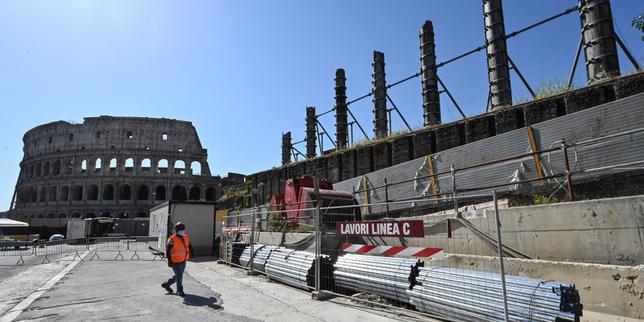
You cannot judge the structural integrity of a building while the scaffolding is still up and the concrete is pouring.
The commentators declaring the Italian recovery plan a disappointment are looking at a massive, active economic construction site and complaining that they can't sit in the lobby yet.
The PNRR is forcing a notoriously rigid European economy to undergo an aggressive, legally mandated modernization process. It is updating judicial systems, streamlining public procurement laws, and installing 21st-century digital infrastructure across regions that have been neglected since the post-war boom.
If you want quick spikes in GDP, look elsewhere. Go track consumer credit cycles or speculative real estate bubbles. But if you want to understand whether Italy is positioned to survive the secular stagnation of the European continent over the next two decades, stop reading quarterly growth updates and start looking at the structural foundations currently being laid.
The media consensus wants an easy story of southern European failure. The reality is far more complex, far more dangerous for private sector costs, and far more successful in its structural execution than anyone cares to admit.


