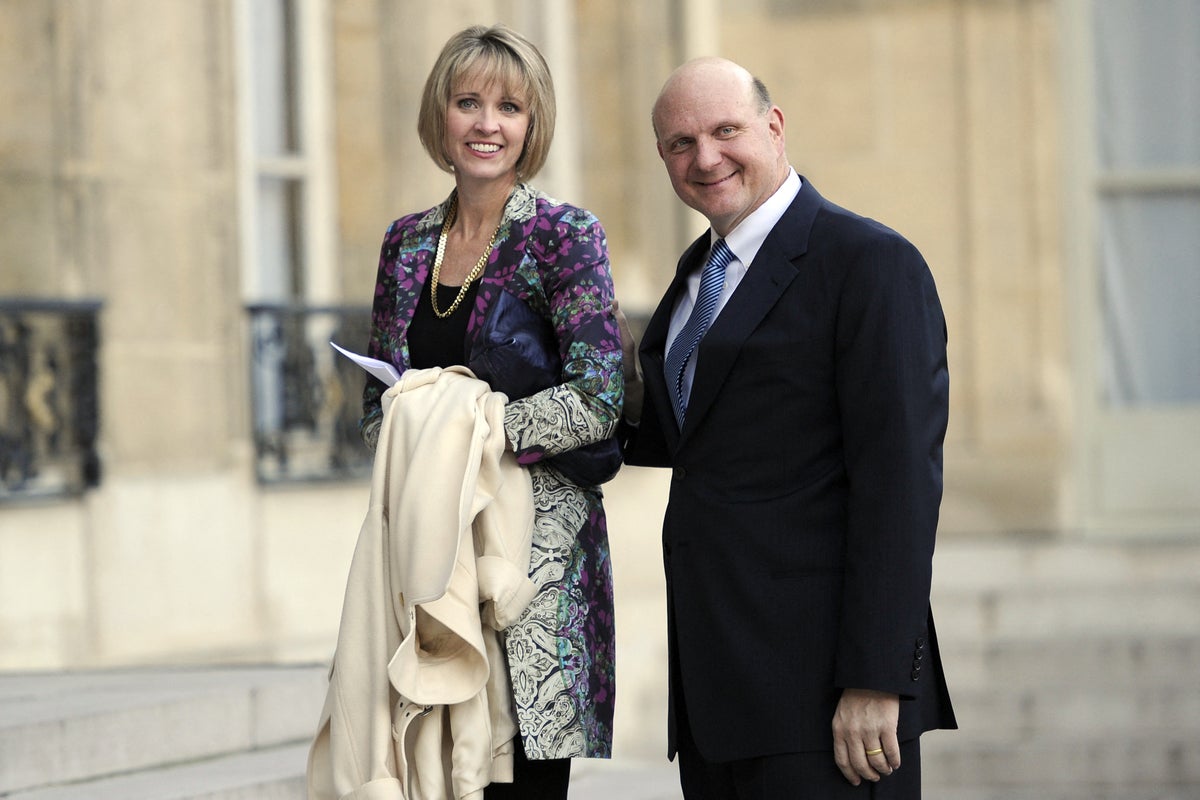
Public radio is not dying, but it is certainly starving. In a move that sent shockwaves through the non-profit media sector, Connie Ballmer, via Ballmer Group, committed $80 million to NPR. This is not just a donation. It is a strategic intervention designed to provide a floor for an institution that has spent the last year falling through the ceiling. While the headlines focus on the staggering wealth of the former Microsoft CEO’s wife, the real story lies in the structural decay of the public media model and why a single check from a billionaire is both a lifeline and a warning.
NPR recently faced a $30 million budget shortfall that resulted in a 10% staff reduction and the cancellation of several beloved podcasts. The audience is migrating to on-demand platforms where NPR lacks the same monopolistic footprint it once enjoyed on the FM dial. By injecting this capital over five years, Ballmer is attempting to buy NPR the one thing it cannot generate on its own: time.
The Mechanics of a Strategic Bailout
This $80 million gift is not intended to cover the light bill. According to internal sources and public filings, the funds are earmarked for digital transformation and the expansion of NPR’s reach into underserved communities. For decades, the public radio business model relied on a "circle of life" where local member stations paid dues to the national body in exchange for programming like Morning Edition. That circle is breaking.
Local stations are struggling. When the local station bleeds, NPR National loses its primary revenue stream. Ballmer’s capital serves as a bridge, allowing the network to build out its NPR Network initiative, which seeks to unify the fractured digital presence of hundreds of independent stations into a single, powerhouse app and web ecosystem.
Why Philanthropy is Chasing Journalism
We are seeing a shift in how the ultra-wealthy view the press. Ten years ago, billionaires bought newspapers as vanity projects. Today, they fund non-profits to preserve "civic infrastructure." Connie Ballmer has spent years focusing on economic mobility. Her thesis is clear: people cannot improve their lives if they do not have access to reliable, local information.
However, this reliance on massive individual gifts creates a precarious dependency. If the public perceives NPR as a ward of the billionaire class, its brand of "independent" journalism faces a new kind of scrutiny. The Ballmer Group has been careful to state that the gift is unrestricted regarding editorial content, but in the world of high-stakes media, perception often dictates the reality of trust.
The Revenue Crisis Beneath the Surface
The math for public radio has become brutal. Corporate sponsorship—NPR’s version of advertising—has plummeted as brands tighten belts and move money toward targeted social media ads. At the same time, the "Drive Way Moment" is disappearing.
With the rise of integrated car dashboards featuring Spotify, Apple Music, and YouTube, the traditional radio button is no longer the default. NPR used to own the commute. Now, it has to fight for a spot in a digital queue against every creator on the planet. Ballmer’s $80 million is specifically targeted at this "platform friction."
Diversifying the Portfolio
To survive, NPR must move away from its reliance on "listeners like you" and corporate underwriters. The Ballmer injection allows for several high-risk, high-reward moves:
- Podcast Monetization: Moving beyond simple mid-roll ads into premium subscription tiers.
- Data Aggregation: Understanding who is listening across different platforms to better pitch to sponsors.
- Local Journalism Hubs: Funding regional newsrooms that provide content back to the national feed, reducing redundant costs.
The Counter-Argument to Billionaire Benchmarking
Critics of this deal argue that a massive infusion of cash masks the need for radical internal reform. NPR has been plagued by internal debates over its ideological direction and its ability to attract a younger, more diverse audience. Some veterans within the industry worry that the Ballmer gift will allow leadership to avoid making the hard choices necessary to trim a bloated bureaucracy.
There is also the question of the "donor's shadow." Even with the best intentions, large-scale philanthropy can steer an organization’s priorities. If the Ballmer Group prioritizes "economic mobility" stories, does NPR's newsroom subconsciously shift its resources to align with the benefactor's worldview? It is a subtle gravity that every non-profit journalist understands.
The Local Station Dilemma
While $80 million sounds like an infinite pool of money, it is a drop in the bucket when spread across the entire public radio ecosystem. There are over 1,000 public radio stations in the United States. Many of them are in rural areas where the local station is the only source of news.
These stations are often wary of NPR National’s digital ambitions. If a listener switches from the local FM station to the national NPR app, the local station loses its connection to that donor. The Ballmer gift must fund a technological solution that shares the wealth, rather than centralizing it in Washington D.C. and Los Angeles.
The Competition for Attention
The real threat to NPR isn't just a lack of money; it's the fragmentation of the truth. In an era of "alternative facts" and hyper-partisan news, NPR’s slow, methodical style of journalism is expensive to produce. It requires fact-checkers, legal reviews, and multiple editors.
A single YouTuber in a basement can reach millions for the cost of a microphone. NPR’s overhead is its greatest strength—ensuring quality—and its greatest weakness—ensuring insolvency. Ballmer is betting that quality will eventually win out if the delivery system is modernized.
Moving the Needle on Economic Mobility
Connie Ballmer’s interest in NPR is rooted in the idea of the "information desert." When local newspapers die and radio stations go dark, the first thing to vanish is government accountability. School board meetings go uncovered. Local corruption goes unchecked.
By stabilizing NPR, the Ballmer Group is attempting to keep the lights on in newsrooms that provide the basic facts people need to navigate their communities. This isn't about entertainment; it is about the functional utility of the American citizen.
The grant is structured to roll out over several years, preventing a "sugar high" followed by a crash. This phased approach forces NPR to hit specific milestones in its digital growth. It is a business-minded approach to a traditionally art-minded institution.
The Impact on the Media Industry
Other philanthropic organizations are watching this closely. If the Ballmer gift successfully pivots NPR toward a sustainable digital future, it will provide a blueprint for saving other legacy media institutions. If the money is swallowed by the existing deficit without moving the needle on audience growth, it will signal the end of the "billionaire savior" era for journalism.
We are currently in a period of extreme consolidation. Large media conglomerates are cutting newsrooms to the bone to satisfy shareholders. NPR, as a non-profit, has the unique ability to prioritize the mission over the margin, but only if its base of support is wide enough to resist any single point of failure.
The New Standard for Public Giving
This move sets a high bar for other wealthy families who have expressed concern about the state of American democracy. It moves the conversation away from small, one-off grants toward significant, institutional-scale investments. It also signals that the tech-wealth of the Pacific Northwest is increasingly interested in the cultural and informational health of the East Coast establishment.
The challenges ahead for NPR remain daunting. No amount of money can force an audience to listen if the content doesn't resonate. The network still needs to solve its "personality" problem, finding new voices that can compete with the charisma of independent creators while maintaining the rigorous standards of the brand.
The Future of the Public Square
The $80 million from Connie Ballmer is a temporary shield. It protects NPR from the immediate wolves of the market, but it does not change the fact that the forest is changing. The listeners of tomorrow do not own radios. They do not wait for the news at the top of the hour. They expect information to be available, accurate, and tailored to their specific needs.
NPR must use this window to stop acting like a broadcaster and start acting like a technology company that happens to produce world-class journalism. The hardware of the past is obsolete; the software of the story is all that remains.
Stop looking at the $80 million as a gift. It is a venture capital investment in the survival of the American public square. If NPR fails to innovate with this level of support, it won't be because of a lack of resources—it will be because the institution was too heavy to lift, even for a billionaire.