Another Senate committee hearing, another round of political theater pretending that swapping out a bureaucrat will fix an entirely broken federal health apparatus.
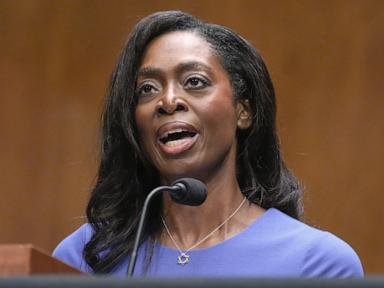
The political commentariat is currently hyperventilating over the advancement of Dr. Erica Schwartz’s nomination to head the Centers for Disease Control and Prevention. The consensus narrative is predictable. One side views the appointment through a lens of existential dread, assuming every public health measure is an authoritarian plot waiting to be launched. The other side hails it as a triumphant return to science-based governance. Both sides are peddling utter nonsense. For another view, read: this related article.
Focusing on who sits in the director's chair at the CDC misses the entire point of why the agency fails. I have watched billions of dollars in public health funding get swallowed by institutional inertia, bureaucratic self-preservation, and an operational framework that was outdated by the end of the twentieth century. Changing the figurehead at the top does not alter the machinery. It just gives a new person a louder microphone to issue confusing guidance when the next crisis hits.
If you want to understand why Dr. Schwartz's confirmation is a non-event disguised as major news, you have to look past the political posturing and examine the structural rot underneath. Similar insight on this trend has been provided by WebMD.
The Illusion of Executive Control in Federal Health Agencies
Let us define what the CDC actually is. It is not a nimble tactical strike team of epidemiologists operating out of a high-tech bunker. It is a massive, calcified bureaucracy composed of career civil servants, regional offices, and grant-dependent researchers.
The lazy assumption in Washington is that an agency director can walk into the Atlanta headquarters on day one, crack a whip, and redirect the entire ship. That is a fantasy. I have seen corporate CEOs with decades of turnaround experience get chewed up and spit out by entrenched middle management in organizations a fraction of this size.
When a nominee faces the Senate health committee, senators grill them on their personal views regarding vaccines, mandates, transparency, and federal overreach. It makes for good television, but it completely misunderstands the mechanics of the institution. An agency director operates within guardrails set by statutory law, Office of Management and Budget funding allocations, and interagency friction with the Department of Health and Human Services and the Food and Drug Administration.
Dr. Schwartz could be the most brilliant physician administrator on earth. It will not matter if the underlying data pipelines feeding the agency are archaic, slow, and heavily politicized. The CDC does not generate all of its own primary intelligence. It relies on state and local health departments, many of which still track critical metrics using systems that look like they were built during the Clinton administration.
When your data inputs are delayed by weeks and formatted in a dozen incompatible ways, brilliant leadership at the top cannot manufacture real-time situational awareness. You just get polished press releases masking systemic blindness.
The Credibility Deficit Cannot Be Appointed Away
Public health lives and dies by trust. Once that capital is burned, you cannot replenish it simply by putting a fresh face behind the podium and promising to follow the science.
The institutional damage done to federal health agencies over the past several years was not caused by any single individual. It was caused by a systemic failure of communication. Bureaucrats fell in love with absolute certainty. They treated provisional, rapidly shifting hypotheses as immutable laws of nature, punishing dissent and labeling legitimate scientific debate as misinformation.
When the guidance changed overnight without transparent explanations of why the data shifted, the public noticed. Trust plummeted.
Now, the debate surrounding Dr. Schwartz focuses on whether she will restore institutional integrity. This is the wrong question entirely. The right question is whether the CDC is structurally capable of admitting when it is wrong without political blowback.
History suggests the answer is no. Federal agencies are designed to project authority, not vulnerability. Admitting error is treated as an existential threat to funding and jurisdiction. Until that incentive structure is inverted, any director will be forced to defend institutional consistency over empirical truth.
Imagine a scenario where a CDC director holds a press conference to announce that a major policy implemented six months prior was a complete failure based on new data, details the exact bureaucratic missteps that led to the error, and outlines how the agency is changing its internal culture to prevent a recurrence.
It sounds refreshing. It also sounds like career suicide in modern Washington. Until a leader is willing to risk immediate termination and congressional crucifixion to force structural honesty, changing the director is just rearranging deck chairs on a sinking vessel.
What the Confirmation Hearing Missed Entirely
If you watched the confirmation proceedings, you heard endless debates about administrative background, past policy stances, and general philosophy. What you did not hear is a serious plan to overhaul the agency's surveillance architecture or decouple scientific communication from political optics.
Let us look at the actual mechanics of how the CDC functions during a public health emergency.
- The State-Federal Bottleneck: The federal agency has limited direct enforcement power over local health jurisdictions. It relies on voluntary reporting. If a state decides to drag its feet on sharing epidemiological trends, the CDC is flying blind.
- The Grant Industrial Complex: A massive percentage of the CDC budget flows directly out to academic institutions and state agencies via grants. This creates a constituency of external stakeholders who depend on agency funding, making independent, objective critique of CDC policies from the academic sector exceedingly rare.
- The Communications Myopia: Public health messaging is increasingly designed by communications strategists whose primary goal is risk mitigation for the administration rather than clear, calibrated risk assessment for the citizen.
Dr. Schwartz inherits all three of these structural cancers on day one. None of them will be solved by a Senate confirmation vote, a confirmation hearing soundbite, or a congressional mandate.
The Uncomfortable Truth About Federal Public Health
The honest reality—one that neither political party wants to admit—is that centralized federal health agencies are poorly suited for managing localized public health crises in a diverse, polarized nation of three hundred million people.
A one-size-fits-all directive issued from Atlanta makes zero sense for a rural county in Montana and the same amount of sense for a dense neighborhood in Manhattan. When the CDC attempts to enforce uniformity where variability is required, it breeds resentment and non-compliance.
The smartest thing an incoming director could do is aggressively decentralize power, strip away bloated administrative layers, and pivot the agency back to its core historical mission: providing raw data, technical support, and epidemiological muscle to local authorities, while letting local communities make their own calibrated risk calculations.
Will Dr. Schwartz do that? There is no evidence in her professional background to suggest she views the problem through that radical lens. She is a product of the system, endorsed by the system, to manage the system.
Stop treating the confirmation of a federal bureaucrat as a referendum on the future of human health. The real work of fixing public health will never happen inside a Senate hearing room or a corner office in Atlanta. It happens when citizens stop looking to Washington for permission to think critically about their own well-being.