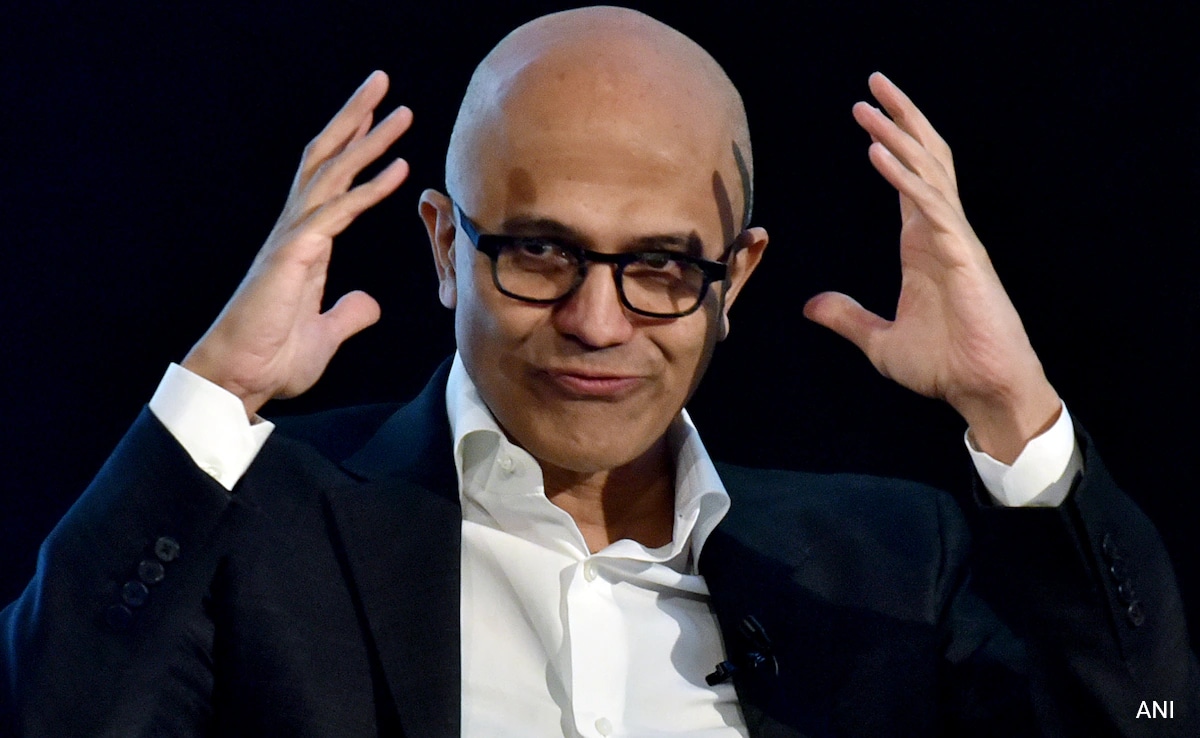
The summons was inevitable. Satya Nadella, the man who turned Microsoft from a stagnating software relic into a $3 trillion cloud and AI powerhouse, is now slated to testify in the sprawling legal battle between Elon Musk and OpenAI. This isn’t just another corporate deposition. It is a high-stakes interrogation into the soul of the modern tech economy. Musk’s lawsuit alleges that OpenAI, a company he helped found as a non-profit dedicated to the "benefit of humanity," has effectively become a closed-source subsidiary of Microsoft. Nadella’s testimony represents the moment the industry finally stops whispering about the "partnership" and starts answering under oath whether the most influential AI startup in history has been structurally captured by Redmond.
The central conflict focuses on a 2015 founding agreement that Musk claims has been shredded. He argues that the transition of OpenAI from a non-profit lab to a multi-billion-dollar commercial entity—deeply intertwined with Microsoft’s Azure infrastructure—is a betrayal of its original mission. Microsoft has poured an estimated $13 billion into OpenAI, securing a 49% stake in its for-profit arm. While Microsoft executives often describe this as a supportive alliance, Musk’s legal team views it as a backdoor acquisition designed to monopolize the next generation of computing. Nadella must now defend the legality and ethics of a deal that gave Microsoft early access to GPT-4, effectively letting it bypass years of internal research and development failure.
The Infrastructure Trap and the Illusion of Independence
To understand why Nadella’s testimony matters, you have to look at the "compute" problem. Artificial intelligence at this scale does not exist in a vacuum. It requires massive amounts of specialized hardware and electricity. When OpenAI needed to scale from a research lab to a global service provider, it faced a choice: spend years building its own data centers or plug into an existing giant. Microsoft didn't just give OpenAI cash; it gave them the keys to the Azure kingdom.
This creates a circular economy that Musk’s lawyers are eager to pick apart. Microsoft provides "credits" to OpenAI to use Microsoft’s servers. OpenAI uses those servers to build models that Microsoft then licenses to sell to its own enterprise customers. It is a closed loop. The "independence" of OpenAI becomes a legal fiction if they cannot survive without the physical hardware owned by their primary investor. Nadella will likely be asked to clarify the exact nature of the governance "checkpoints" that supposedly prevent Microsoft from dictating OpenAI’s product roadmap. If the non-profit board at OpenAI cannot fire Microsoft as a provider, do they actually have control?
The tension reached a breaking point during the chaotic ousting and subsequent reinstatement of Sam Altman in late 2023. While the world watched the drama on social media, Nadella was the one who stabilized the situation by offering to hire every single OpenAI employee. It was a masterclass in power. In one weekend, Nadella showed that while OpenAI has the intellectual property, Microsoft has the gravity. Musk’s suit argues that this event proved OpenAI is no longer an independent entity but a "de facto" division of Microsoft. Nadella’s testimony will have to navigate the thin line between being a "helpful partner" and being a puppet master who stepped in to protect a $13 billion investment.
The Profit Cap and the Definition of AGI
One of the most technical and volatile aspects of the lawsuit involves the concept of Artificial General Intelligence (AGI). Under the current contracts, Microsoft’s license to OpenAI’s technology applies only to "pre-AGI" software. Once OpenAI achieves AGI—defined loosely as a highly autonomous system that outperforms humans at most economically valuable work—the exclusive rights for Microsoft are supposed to expire.
This creates a massive financial incentive for both parties to keep the "pre-AGI" label on their products for as long as possible. If OpenAI builds a system that is arguably as smart as a human, but refuses to call it AGI to keep the Microsoft money flowing, is that a breach of their founding charter?
The Regulatory Shadow
Nadella isn't just fighting Musk in a courtroom; he is fighting regulators in Brussels, London, and Washington D.C. The Federal Trade Commission (FTC) is already investigating the "investments and partnerships" between big tech firms and AI startups. They are looking for "stealth acquisitions"—deals that look like partnerships but function like mergers to avoid antitrust scrutiny.
If Nadella’s testimony reveals that Microsoft has more influence over OpenAI’s board or its technical choices than previously disclosed, it could trigger a massive antitrust crackdown. This puts the Microsoft CEO in a defensive crouch. He has to prove that Microsoft is a minority investor with no control, while simultaneously reassuring his own shareholders that Microsoft "owns" the future of AI through this very same partnership. You cannot have it both ways, yet that is exactly what the legal strategy requires.
The Problem of Open Source
Musk’s personal grievance is rooted in the "Open" in OpenAI. He argues that by making the models closed and proprietary, the company has hindered global safety and progress. Microsoft, historically an opponent of open-source software under Steve Ballmer, has rebranded itself as a developer-friendly champion under Nadella. However, when it comes to GPT-4, the "black box" approach remains.
The defense will likely argue that open-sourcing such powerful technology is a safety risk—a "dual-use" threat that could be weaponized by bad actors. But this argument rings hollow to those who see the billions in revenue being generated by the closure. Nadella will be forced to explain why a non-profit’s mission is best served by keeping the weights of its models behind a corporate firewall.
The Financial Mechanics of a Non-Profit Pivot
The shift from a 501(c)(3) to a "capped-profit" entity is a move almost unique in the history of Silicon Valley. It allowed OpenAI to raise billions while technically maintaining a mission to serve humanity. However, the "cap" on profits is remarkably high—often cited as 100 times the initial investment for early backers. For a $1 billion investment, that’s a $100 billion ceiling. In practical terms, for the next decade, there is no difference between OpenAI and a standard for-profit corporation.
- Equity vs. Economic Interest: Microsoft does not technically "own" shares in the traditional sense; they have a right to a share of the profits.
- The Board Dilemma: Microsoft’s observer seat on the board was a direct result of the Sam Altman firing crisis. It provides visibility without "control," a distinction that Musk’s team calls a legal gimmick.
- IP Transfer: The lawsuit seeks to understand if OpenAI’s core research is being siphoned off into Microsoft’s proprietary products like Copilot before it is even peer-reviewed.
The trial will likely dive into internal emails and Slack logs that show how Microsoft engineers interacted with OpenAI researchers. If the relationship looks like a manager-subordinate dynamic rather than a collaboration between two separate firms, the "independent" argument collapses.
What the Industry Is Actually Afraid Of
While the headlines focus on the clash of personalities—Musk’s chaotic brilliance versus Nadella’s disciplined execution—the real anxiety in the industry is about the "moat." If the most advanced AI is permanently tethered to the largest cloud providers, then the dream of a decentralized, democratic AI is dead. We are moving toward an era of "Cloud Feudalism," where every startup must pay a "compute tax" to either Microsoft, Amazon, or Google just to exist.
Musk is positioning himself as the disruptor of this feudal system with his own company, xAI, and his Grok model. Critics point out the hypocrisy: Musk is also building a closed-source, for-profit AI company that uses data from his own social media platform. But in a court of law, the plaintiff’s hypocrisy doesn't necessarily absolve the defendant. If Microsoft and OpenAI violated their contracts, the court could theoretically force OpenAI to open its models or restructure its relationship with Microsoft.
The impact of such a ruling would be seismic. It would jeopardize Microsoft's entire product roadmap, which has been rebuilt from the ground up around OpenAI’s tech. From Word and Excel to the Windows operating system itself, everything is now a vehicle for GPT.
The Deposition as a Turning Point
When Satya Nadella sits down for his testimony, he won't just be answering for Microsoft. He will be answering for the entire logic of the current AI boom. The industry has operated on the assumption that as long as the technology is "cool" and the stock prices are up, the messy details of non-profit charters and founding promises don't matter. Musk is betting that the law still cares about the fine print.
The veteran analyst knows that these cases are rarely about a single "smoking gun" email. They are about the accumulation of evidence that shows a shift in intent. The intent at OpenAI was clearly to build a transparent, altruistic organization. The reality is a dominant market force that is deeply integrated with one of the most powerful corporations on earth.
Nadella’s job is to convince a judge—and the public—that this transformation was a necessary evolution rather than a calculated heist. He must argue that the only way to save the world with AI was to sell it. It is a precarious position for a man who has spent his career avoiding the kind of public, bruising legal battles that defined the Bill Gates era of Microsoft. Now, thanks to Elon Musk, he is right back in the center of the storm.
The trial will move forward regardless of the PR spin. The discovery process is already unearthing documents that suggest OpenAI leadership was aware of the optics of their pivot long before it happened. As the CEO of the company providing the oxygen for this entire operation, Nadella cannot remain a bystander. He is the architect of the deal that changed the world, and he is about to find out if that deal was built on a legal foundation of sand.
The focus now shifts to the specific dates and meeting minutes where the decision was made to keep GPT-4 closed. If those discussions were driven by Microsoft’s commercial needs rather than safety concerns, Musk wins the narrative, if not the entire case. The tech industry has spent years moving fast and breaking things. In this courtroom, they might finally find that the thing they broke was a legally binding promise.
Check the court dockets for the specific scheduling of Nadella's appearance, as the legal teams are currently haggling over the scope of the questioning. This isn't just a tech story; it's a contract law thriller that will define the boundaries of corporate influence for the next thirty years.