The coffee in the ready-room is always bad. It tastes of styrofoam and scorched beans, a bitter necessity at four in the morning when the world outside is nothing but ink and freezing mist. Somewhere off the coast of Fukuoka, a young Japanese fighter pilot adjusts the straps of his G-suit. He is twenty-six. His heart rate is a steady, practiced sixty beats per minute, but his skin feels cold.
A red light pulses on the wall. The klaxon doesn't blare like it does in the movies; it is a dry, electronic chirp that cuts straight through the brain.
Two minutes later, the tarmac explodes with the scream of twin-turbofan engines. An F-15J Eagle tears into the black sky, its afterburners leaving two violent, orange scars in the darkness. The pilot is not flying toward a war, at least not a declared one. He is flying toward a routine. But in the crowded airspace of East Asia, routine is the most dangerous game on earth.
The Weight of the Aluminum Cloud
To understand why four heavy strategic bombers flying over the Sea of Japan matters, you have to stop looking at the map as lines on paper. Look at it as a crowded room where everyone is holding their breath.
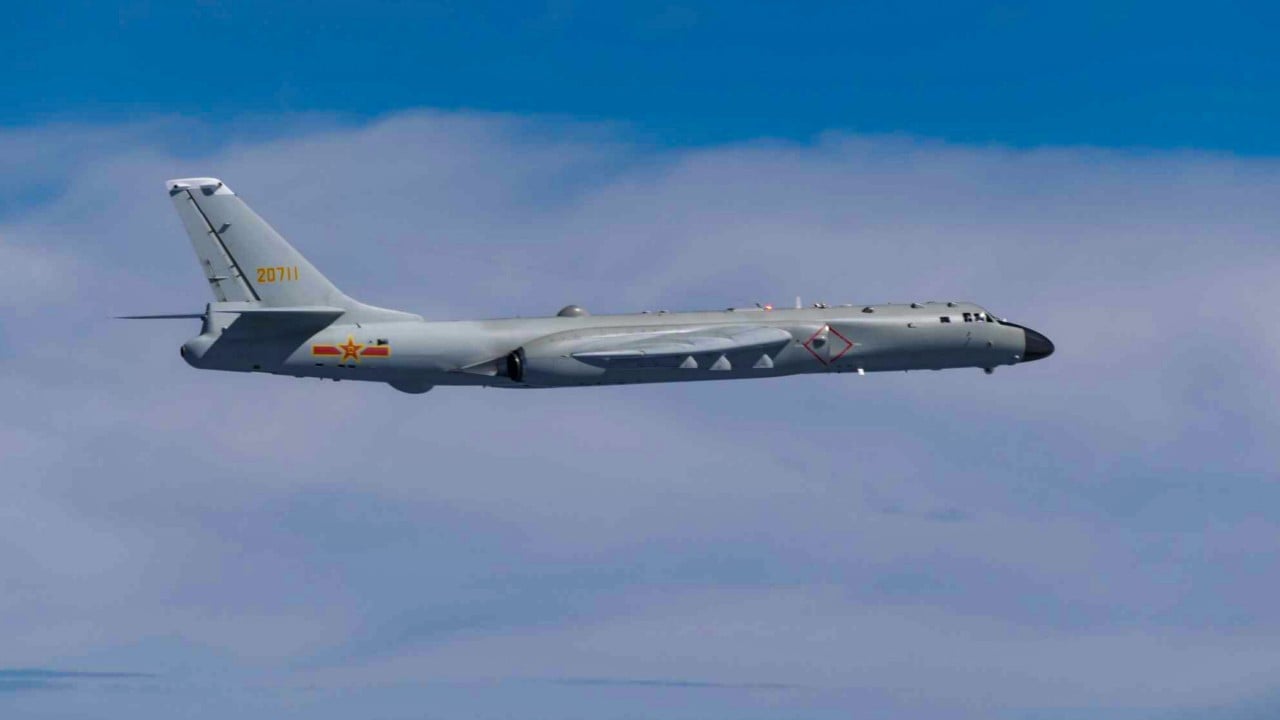
When a Chinese H-6K bomber locks into formation with a Russian Tu-95, it is not a casual training exercise. It is a flying fortress composed of aging but lethal aluminum, packed with cruise missiles and shielded by electronic jamming suites. The Tu-95 Bear is a relic of the Cold War, yet its massive turboprop engines churn the air with a vibration so violent that western submarine crews can sometimes hear them through the water below.
When these machines move in unison, they create a shadow that stretches from the borders of Siberia down to the subtropical waters of the East China Sea.
They do not turn on their transponders. They do not file flight plans. They move through international airspace like ghosts with loaded guns, skirting just outside the territorial limits of neighboring nations. They are testing the tripwire.
Consider the response on the ground. In Tokyo and Seoul, radar screens light up with unidentifiable tracks. The response must be instantaneous. If you wait to see if the bombers will turn toward your sovereign airspace, you have already lost the advantage of interception.
So, you scramble.
South Korea launches its F-15K Slam Eagles. Japan sends its own fighters. Within minutes, the empty sky becomes a high-speed choreography of multi-million-dollar machinery. Pilots look across the void, staring through thick cockpit glass at men wearing different flags. They are close enough to see the color of each other’s helmets. They flip switches. They track each other with radar. One twitch of a finger, one mechanical failure, one miscalculated turn in the clouds, and the narrative changes from a routine intercept to an international crisis.
The Choreography of Friction
This is the reality of the Air Defense Identification Zone, or ADIZ. It is a concept that causes even seasoned military analysts to squint in frustration.
An ADIZ is not sovereign airspace. It is a buffer zone, a self-declared perimeter where a country demands that foreign aircraft identify themselves. Think of it as the sidewalk right outside your front door. If someone is walking past your house, that is their right. If they are pacing back and forth on the pavement wearing a mask and carrying a baseball bat, you are going to stand by the window with your hand on the lock.
China and Russia know exactly where the locks are.
By flying through the overlapping zones where the Japanese and South Korean identification sectors meet, the joint bomber patrol forces a logistical nightmare. The radar operators in Daegu and Kasuga must coordinate in real-time, sharing data across historical and political divides that are often strained. The bombers act as a physical wedge, testing not just the hardware of the fighter jets, but the diplomatic glue holding the regional alliances together.
The statistics are dizzying. In recent years, Japan’s Air Self-Defense Force has scrambled jets hundreds of times annually against Chinese and Russian aircraft. That is multiple times a day. Every single scramble wears down the airframes of the jets. It burns thousands of gallons of fuel. Most importantly, it exhausts the human beings inside the cockpits and maintenance bays.
The strategy is one of slow attrition. It is water dripping on stone.
The View from the Cockpit
Imagine the cockpit of a fighter jet at forty thousand feet. The world below is a quiet patchwork of blue water and white foam. Inside, the noise is a constant, low roar of rushing air and life-support systems.
The pilot’s world is shrunk to the instrument panel, the HUD reflecting green numbers onto his visor, and the massive, rumbling shape of a Russian bomber hovering just a few hundred yards away. The bomber’s tail gunner might be looking right back at him. Sometimes, western pilots report Russian or Chinese crew members holding up their smartphones to take pictures of the intercepting jets.
It is a bizarre, surreal intimacy.
The danger here isn't a sudden, unprovoked missile launch. The real terror is the invisible physics of the sky. When a heavy bomber flies, it leaves behind a wake of turbulent air called wake vortex. If a smaller fighter jet gets caught in that invisible horizontal tornado, it can suffer an engine flameout or a sudden, violent loss of control.
There is also the psychological weight. A pilot knows that their actions are being monitored by commanders thousands of miles away in underground command centers. Every radio transmission is recorded. Every radar lock is analyzed. The pressure to remain entirely neutral—to show no fear, no anger, and no hesitation—is immense. You are a sovereign nation compressed into a single human body, traveling at nine hundred miles per hour.
The Shadow Play of Great Powers
Why do this now? The timing of these patrols is never accidental. They coincide with diplomatic summits, joint naval exercises between the United States and its allies, or domestic elections.
The joint flight is a loud declaration. It says that the partnership between Moscow and Beijing is not merely economic; it is operational. It projects a reality where the Western-aligned nations of the Pacific are hemmed in by a united northern front.
But for the people living beneath these flight paths, the grand strategy translates into a quiet, simmering anxiety. In places like Okinawa or Hokkaido, the roar of scrambles is the background noise of daily life. Children look up from schoolyards to see fighters climbing vertically into the overcast sky. Fishermen in the Sea of Japan watch the gray shapes of maritime patrol planes skimming the waves.
The conflict feels distant until it suddenly isn't.
The world watches large-scale troop movements on land because they are easy to see via satellite. Tanks leave tracks in the mud. Ships leave wakes in the ocean. But the air is different. The sky resets itself every second. A formation of strategic bombers leaves nothing behind but a temporary trail of condensation that dissolves in the wind.
Yet, the impact of these flights remains. They rewrite the rules of engagement without a single law being passed. They normalize the presence of hostile strategic forces at the threshold of democratic nations. They turn the extraordinary into the mundane.
The real danger is that the world gets used to it. We look at the headlines, see the word "scramble," and turn the page because nobody died. We treat it like a minor traffic delay in the sky. But every flight is a roll of the dice. Every intercept is a high-stakes negotiation where the participants speak only through the bank of their wings and the flash of their radar signatures.
The F-15J lands back at its base as the sun finally clears the horizon. The engines whine down to a halt, the heat waves shimmering off the metal skin of the jet. The pilot climbs down the ladder, his muscles aching from the constant pull of gravity, his eyes bloodshot. The ground crew is already moving in, refueling the tanks, checking the electronics, preparing the weapons.
The hangar doors stay open. The red light on the wall remains dark for now. But everyone in the room knows that somewhere over the horizon, the engines are already starting again.