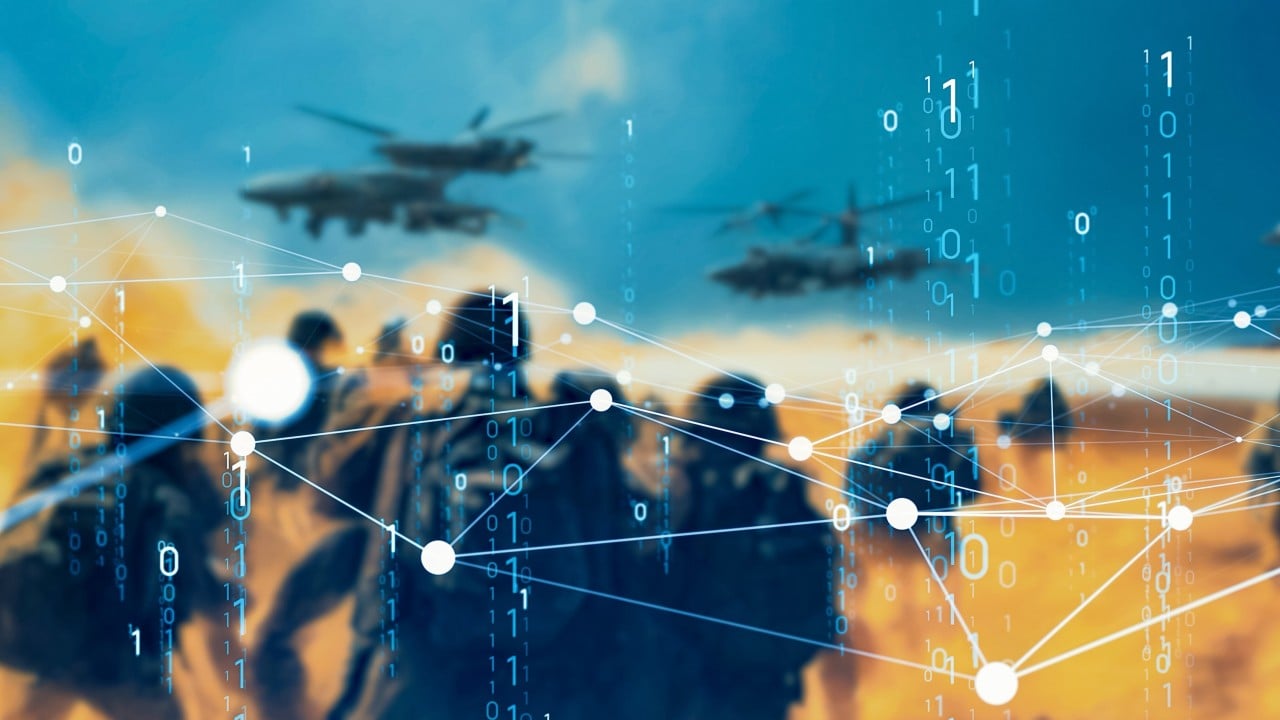
The screen in front of the cadet does not glow with the neon blue of Silicon Valley startups or the friendly green of automated inventory systems. It pulses with a cold, unforgiving amber.
Lieutenant Chen sits in a dimly lit lecture hall at China's National University of Defense Technology, staring at a neural network model designed to predict human panic. He is twenty-four years old. His fingers hover over a keyboard, not to build a tool that diagnoses diseases or writes poetry, but to refine an algorithm that decides when a formation breaks.
For years, the technology sector sold a comforting myth. We were told that artificial intelligence was a neutral tide lifting all digital boats. Code was poetry. Pixels were art. Optimization meant faster delivery trucks and sharper photographs. But mathematics has no political allegiance, and software obeys whoever writes the compilation script.
Now, the mask has slipped entirely.
Behind closed doors in Changsha, military educators have received a stark directive. The curriculum must change. The equations taught to the next generation of officers cannot merely mimic civilian advancements; they must be sharpened into instruments of combat. To educate for war means stripping away the pleasant fiction of neutrality. It means teaching young minds that every line of code either secures an advantage or invites a catastrophic vulnerability.
Silence settles over the classroom.
Consider what happens next. Chen does not type a command to optimize supply chains. Instead, he adjusts the weight of a variable representing electronic jamming in a contested strait. The machine learning model absorbs the data, recalculates, and spits out a probability curve. Ninety-four percent chance of command-and-control collapse within three minutes of signal degradation.
He feels a knot tighten in his stomach.
This is the hidden gravity of modern software development. We spend our lives worrying about what algorithms know about our shopping habits or our music preferences, rarely pausing to look at what they are learning about our capacity to destroy one another. When a university shifts its entire educational compass toward active conflict, it sends a signal that echoes far beyond any single campus. It tells the world that the digital arms race has entered a new classroom.
History is heavy with precedents. A century ago, universities in every major industrial power quietly pivoted their physics departments from pure inquiry to the mechanics of ballistics and metallurgy. Chemists traded medicine for propellants. The ivory tower was conscripted long before the soldiers were.
We are watching that exact script run again, only this time the currency is not steel or gunpowder. It is compute.
The mechanics of this shift are deceptively simple and terrifyingly effective. In a standard civilian computer science curriculum, students learn to optimize for user retention, engagement, or cost reduction. They study gradient descent to find the lowest point on a cost curve. But when the objective function changes, everything shifts. The cost function is no longer dollars saved. It is latency reduced in a missile defense grid. It is the resilience of a swarm drone network under heavy kinetic attack.
To understand this transition, imagine teaching a musician to play only in minor keys, stripping away every joyful chord until the instrument becomes a weapon of pure dissonance. That is what is happening to computer science behind the red brick walls of military academies.
The debate over military AI ethics often sounds like a polite seminar in a damp conference room. Experts in suits talk about guardrails, human-in-the-loop protocols, and international norms. They draft treaties that feel fragile, parchment shields thrown up against a hurricane of pure velocity.
But Lieutenant Chen does not care about treaties tonight. He cares about convergence.
He knows that algorithms do not wait for diplomats to finish their coffee. Machine learning models iterate faster than human institutions can legislate. If a university fails to train its officers to command autonomous systems, those officers will enter a battlefield blind, rendered obsolete by adversaries who embraced the machine long before the first shot was fired.
This is the grim pragmatism driving the curriculum revision. It is not born out of a sudden bloodlust, but out of a paralyzing fear of falling behind. In the calculus of national security, hesitation is extinction. If your enemy uses a neural network to coordinate battalion movements at lightning speed, your manual radio dispatchers are already ghosts.
Yet, stepping back into the cool night air outside the lecture hall, the absurdity of it all strikes home. The stars overhead remain indifferent to neural weights and loss functions. The asphalt is quiet.
We have built a world where the sharpest mathematical minds on earth are quietly huddled over terminals, teaching machines how to outthink human panic. We have turned the most profound intellectual achievement of our century into a crucible for the next great conflict.
Chen looks up at the sky once more, pocketing his keys, knowing that the code he compiled today will long outlive him, waiting silently for the moment it is finally told to strike.