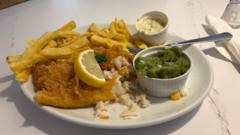
The British fish and chip industry is panicking over the soaring cost of Atlantic cod, blaming everything from geopolitical tariffs to climate shifts. The lazy consensus among commentators and trade groups is that chip shops must desperately hunt for direct, cheaper substitutes like hake or pollock to keep the traditional menu intact.
They are entirely wrong.
The obsession with finding a direct cod clone is exactly what is killing the independent chippy. Trying to trick consumers with a slightly softer, slightly flakier white fish clone at a marginally lower price point is a race to the bottom. It fails to solve the margin crisis, and it alienates the customer. The survival of the chippy relies not on finding cheaper versions of the same old commodity, but on dismantling the outdated, low-margin business model that cod built.
The Flawed Premise of the "Cheap Substitute"
When wholesale cod prices spiked, the immediate industry reflex was to look at alternative white fish. Operators treat the menu like a math equation: if Fish A costs too much, swap it for Fish B, keep the batter the same, and hope the customer doesn't notice the difference in texture.
This strategy fails fundamentally on consumer psychology and supply chain economics.
- The Imitation Trap: When you market hake, pollock, or coley as "just like cod, but cheaper," you immediately frame the new product as an inferior consolation prize. You are telling the customer, "You can't afford what you actually want, so eat this instead."
- The Volatility Echo: Commodity white fish markets move in tandem. When the entire industry shifts demand from cod to pollock, pollock prices inevitably spike due to sudden demand pressure. You haven't fixed your supply chain vulnerability; you have just moved your vulnerability to a different line item.
- The Quality Degradation: Cod has a specific flake structure and moisture content that holds up beautifully to the high-heat environment of a commercial beef-dripping or vegetable-oil fryer. Shifting to species with higher water content results in a soggy, disintegrating product that ruins the British chippy’s primary competitive advantage: the perfect crunch.
I have spent years analyzing food service margins and supply chains. I have watched independent operators destroy their local reputation by quietly swapping species while maintaining the old menu descriptions. Customers aren't stupid. They notice the texture shift, they sense the drop in quality, and they simply don't come back.
Stop Fighting the Commodity Trap
The real problem isn't the price of cod. The real problem is that the traditional chip shop operates on a broken volume-based model inherited from the mid-20th century.
Historically, fish and chips was cheap, blue-collar fuel. Profits were made on massive volume with razor-thin margins. Today, property costs, energy bills, and labor compliance mean you cannot survive on volume alone unless you are a massive corporate franchise.
[Traditional Model] -> Low Margin + High Volume + Commodity Fish = Financial Vulnerability
[Modern Viable Model] -> High Margin + Controlled Volume + Premium Diversity = Financial Resilience
By treating fish as a generic, interchangeable white slab, chippies have commoditized their own offering. When you commoditize your product, you lose all pricing power. You become a victim of global shipping lanes and international fishing quotas.
The solution is radical menu diversification and the premiumization of local species. Instead of sourcing frozen-at-sea blocks of generic white fish from international waters, the modern chippy needs to look at what the local coastline actually yields, even if it requires re-educating the consumer.
The Brutal Reality of What People Also Ask
Look at the questions consumers and desperate shop owners are asking right now. The premises are completely backward.
"How can chippies keep prices low for families?"
They shouldn't. The assumption that the chippy must remain the cheapest takeout option on the high street is a death sentence. High-quality fish, sustainably caught and properly prepared, is a premium protein. If a chip shop tries to compete on price with ultra-processed chicken nuggets or mass-produced frozen burgers, it will lose every single time. Stop trying to keep prices low. Start making the quality justify the premium.
"Will consumers accept alternative species?"
Not if you present them as cheap substitutes. If you put "Coalfish (Cod Substitute)" on your menu, it will sit there until it rots. But if you style the menu around high-flavor, distinct alternatives like local gurnard, sea bass, or even sustainably caught blue whiting—and prepare them with distinct batters and targeted seasonings—the conversation changes from "saving money" to "exploring flavor."
The Blueprint for the Post-Cod Chippy
Shifting away from the cod dependency requires an aggressive overhaul of preparation, sourcing, and marketing.
1. Ditch the "One-Size-Fits-All" Batter
The standard flour, water, and raising agent batter was engineered for the dense, resilient flesh of cod and haddock. It does not work on oily or highly delicate local fish.
- Delicate Fish (e.g., Plaice, Dab): Requires a light, tempura-style starch batter that crisps instantly without trapping excess steam that turns the flesh to mush.
- Oily Fish (e.g., Mackerel, Herring): Requires an acidic or spiced element within the batter—or a cornmeal dusting—to cut through the natural fat profile.
2. Implement Dynamic Daily Pricing
The fixed-menu era is over. Restaurants have used market-price menus for decades; chip shops must adopt the same agility. If the catch of the day is landed cheaply at the local docks on Tuesday, that is your feature item at a highly profitable price point. If cod is astronomical on Friday, it shouldn't even be on the board.
3. Exploit the "Trash Fish" Premium
Species previously discarded as bycatch—or exported entirely to continental Europe—represent the highest margin potential for British operators. Megrim sole, spurdog, and pouting are structurally excellent for frying but carry a fraction of the wholesale cost of cod. The margin isn't improved by buying cheaper versions of expensive fish; it is improved by buying premium versions of undervalued fish.
The Risks You Must Accept
Let's be completely transparent: this strategy is not a magic bullet, and it comes with severe operational friction.
- The Nostalgia Backlash: A segment of your customer base will walk out the door the moment they realize they cannot get a standard, foot-long piece of pale cod. You must be willing to lose the stubborn, low-spend traditionalist to win the higher-margin, food-focused demographic.
- Staff Skill Requirements: Frying variable species requires actual culinary skill. You cannot just throw a random fillet into a basket for six minutes and walk away. Staff must understand fish thickness, moisture levels, and how to adjust frying times on the fly. That means higher labor costs and more rigorous training.
The Final Reckoning
The independent chip shops currently whining about cod prices are the ones that will be out of business within twenty-four months. They are trapped in a nostalgia loop, praying for global commodity prices to magically drop to 2015 levels so they can continue selling cheap food for micro-profits.
The market does not care about your nostalgia.
The future belongs to the operators who treat fish and chips as a culinary asset rather than a cheap tradition. Stop hunting for a cheaper cod clone. Kill the cod entirely, buy what the local boats actually land, and charge what the food is actually worth.