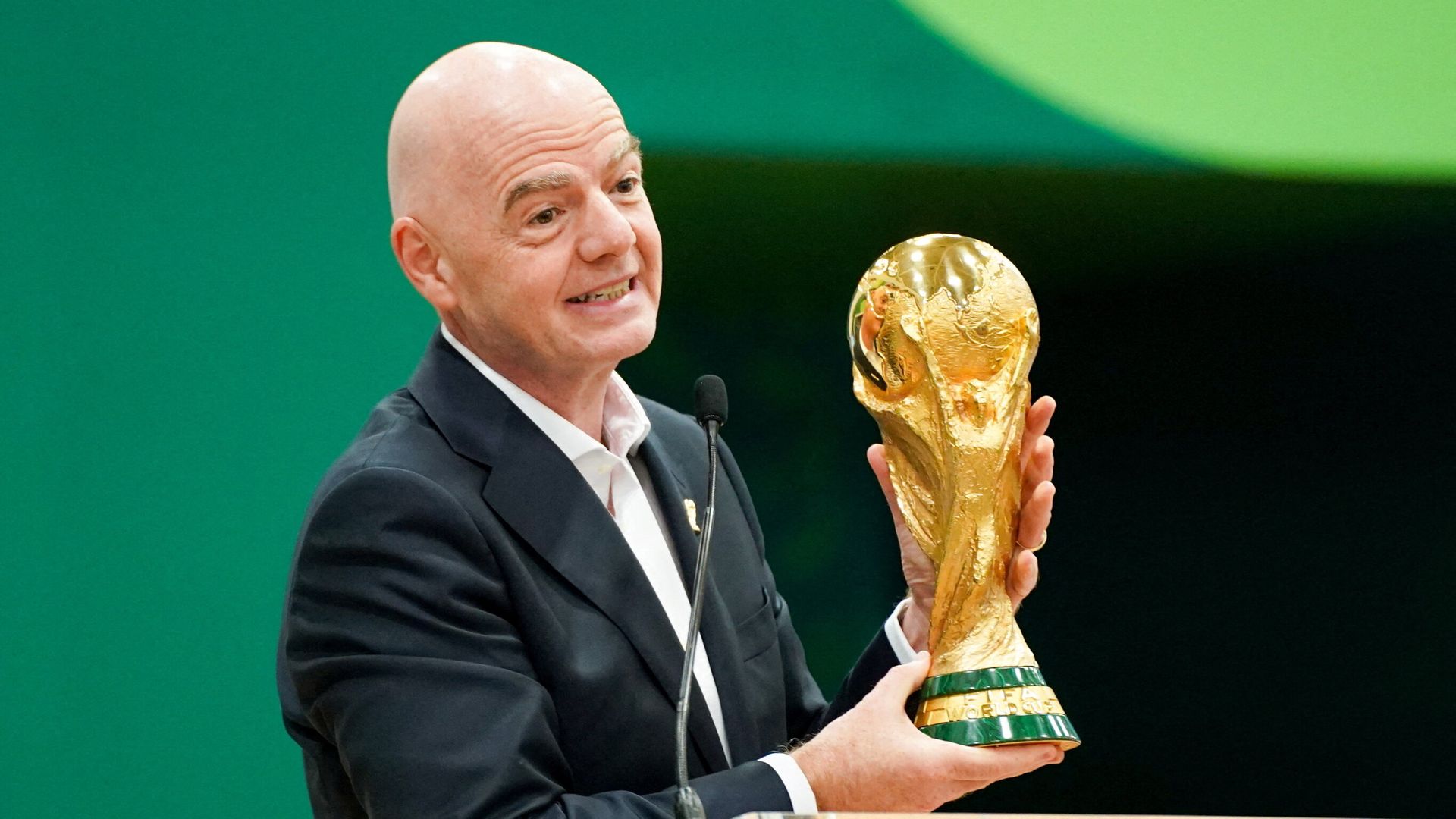
The air inside a packed stadium smells like damp grass, cheap popcorn, and pure electricity. Under the floodlights, twenty-two players chase a leather sphere, carrying the hopes of millions on their shoulders. For four long years, humanity pauses for this exact spectacle. The FIFA World Cup is not merely a tournament; it is a global heartbeat.
Syncopated drums echo from Cape Town to Buenos Aires. Flags wave in Tokyo. Tears fall in London. For a different view, read: this related article.
Yet, behind the confetti and the glittering trophies, a different kind of machinery hums quietly in executive boardrooms. It is cold. It calculates. It looks at the four-year wait between tournaments and sees a missed opportunity. A gap in the revenue stream. A pause in the attention economy.
FIFA wants to move faster. Related reporting regarding this has been provided by NBC Sports.
Consider Mateo, a twelve-year-old kid living in a cramped apartment in São Paulo. His bedroom walls are plastered with faded posters of legendary strikers. To Mateo, football is not a business model. It is religion. When he wakes up on a Saturday morning, he does not check stock market tickers or broadcasting rights agreements. He grabs a worn-out ball, runs down to the concrete pitch in his neighborhood, and tries to bend a shot past a rusted goalpost.
Mateo represents the emotional core of the sport. But the people steering global football are looking at a very different set of metrics. They see a digital generation whose attention fragments across TikTok feeds, video game streams, and endless short-form entertainment. To keep eyes locked on the screen, the calendar must change.
Speed is the new currency.
Rumors have circulated for years, but recent movements suggest an acceleration. FIFA is planning to speed up the launch of new tournament structures, expanding formats and introducing fresh spin-off competitions designed to fill the calendar. They want more matches, higher frequency, and constant engagement.
Why? Because empty months equal lost revenue.
Let us break down the underlying mechanics without drowning in corporate jargon. Traditional football operates on scarcity. The rarity of the World Cup is precisely what gives it weight. When a moment happens only once every four years, it becomes historic. Every missed tackle, every penalty kick, and every glorious victory etches itself permanently into cultural memory.
If you flood the market with spin-offs, what happens to the magic?
Imagine pouring water into fine wine. At first, you might not notice the difference. Pour a little more, and the flavor softens. Keep pouring, and eventually, you are left with something ordinary. Something forgettable.
The architects of these new competitions argue differently. They point to the sheer volume of talent globally. They argue that rising nations deserve more exposure, that fans crave continuous high-stakes drama, and that the financial health of lower-tier federations depends on the redistribution of tournament wealth. There is truth in that argument. Not every football association swims in cash. Many struggle to pay their youth coaches or maintain basic facilities. More tournaments mean more TV rights, more sponsorship deals, and more money flowing down the pyramid.
Money talks.
But players scream.
Look at the physical toll. Elite footballers are not machines. They are flesh, bone, and muscle. Over the course of a single grueling season, top-flight athletes run thousands of miles, absorbing countless high-impact collisions. Hamstrings snap. Knees buckle. Mental burnout creeps in during long flights across continents.
When organizations cram more matches into an already overflowing calendar, the human cost skyrockets. Star players miss crucial fixtures. National teams field exhausted squads. The quality of the spectacle degrades because the performers are running on fumes.
We have seen this script before. Whenever an industry prioritizes rapid expansion over sustainable pacing, the foundation shakes.
Football stands at a fascinating crossroads. On one side sits tradition, breathing the heavy air of nostalgia, arguing that some things take time to grow. On the other side sits aggressive modernization, fueled by digital urgency and financial ambition, pushing to launch new formats before the current generation of fans even catches its breath.
The timeline is accelerating. Announcements that might have taken a decade to materialize are now being rushed through committee approvals. The new spin-offs are coming, and they are coming fast.
Will fans embrace the constant stream of matches? Or will they experience fatigue, turning their backs on a bloated calendar that demands too much and offers too little soul?
The floodlights continue to glare down on the pitch. The whistle blows. Mateo runs harder, chasing a dream that cannot be packaged, monetized, or scheduled into a faster quarterly report.
Somewhere in the distance, the clock keeps ticking.