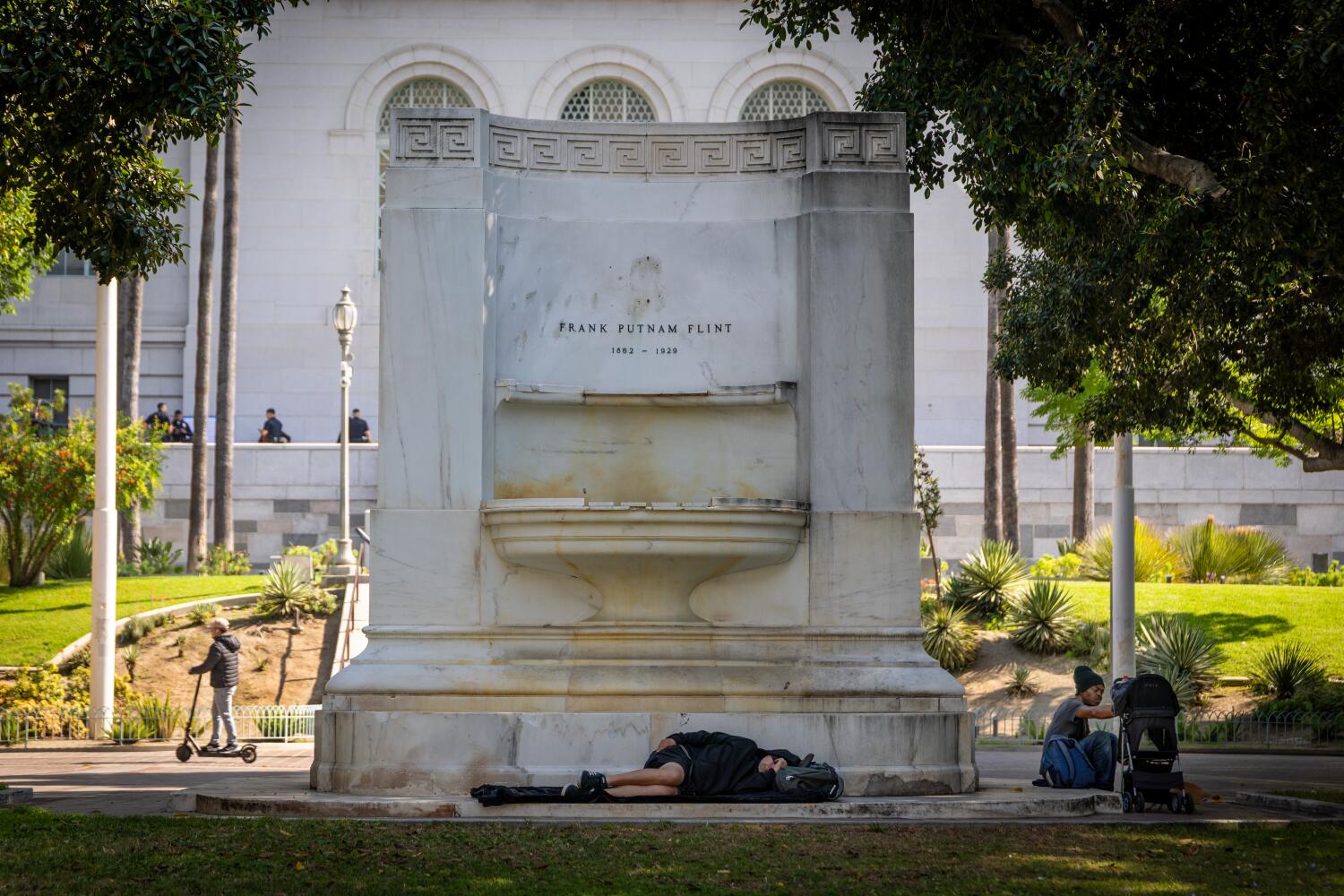
Walking past City Hall shouldn't feel like a trip through a post-apocalyptic movie set. You expect the seat of local power to be the heartbeat of the community. Instead, many urban centers across the country, especially around Los Angeles and other major hubs, are struggling with a persistent, ugly reality. We're talking about boarded-up windows, trash-strewn sidewalks, and a general sense of decay that makes you wonder if anyone is actually in charge. It’s a mess.
If you take a stroll around the blocks surrounding these civic landmarks, the disconnect is jarring. Inside the buildings, officials talk about revitalization and multi-billion dollar budgets. Outside? The reality is crumbling concrete and "For Lease" signs that have been faded by the sun for five years. This isn't just about aesthetics. It's a failure of governance that people see every single day on their way to work or the subway.
The core issue isn't just a lack of money. It’s a lack of basic maintenance and a refusal to address the visible signs of urban blight that drive away foot traffic and small businesses. We need to stop treating these areas like temporary transit zones and start treating them like the front porch of our democracy.
The Broken Window Theory Is Real and We Are Ignoring It
You've probably heard of the "Broken Windows" theory. It's the idea that visible signs of disorder—like broken windows or uncollected trash—encourage more serious crime and neglect. While it’s been debated in policing circles, in the world of urban planning and property value, it’s practically law. When a city allows the area immediately surrounding its own headquarters to fall apart, it sends a loud, clear message to every developer and resident: We don't care about this neighborhood.
Walking near City Hall in Los Angeles, for instance, you’ll see historic storefronts covered in plywood. Why? Some of it is holdover from the 2020 protests, but most of it is just inertia. Property owners find it cheaper to board up a window than to fix it and risk it being broken again. The city, meanwhile, seems hesitant to enforce blight ordinances on its own doorstep. It's a cycle of low expectations.
When you walk these streets, you aren't just seeing trash. You're seeing a loss of "pride of place." A study by the University of Pennsylvania found that "greening" vacant lots and cleaning up trash significantly reduced gun violence and improved mental health in surrounding neighborhoods. If a bit of grass and a trash bag can do that, imagine what a fully functional, clean civic center could achieve. But right now, we’re doing the opposite. We’re letting the center rot while hoping the edges stay pretty.
Why Public Spaces Around Government Buildings Fail
Most people assume the blight is just a byproduct of homelessness or the "death of retail." Those are factors, sure. But the real culprit is often bad design and bureaucratic red tape. Government buildings are often designed as fortresses. They have massive setbacks, cold concrete plazas, and very little "active frontage."
Active frontage is urban-speak for "stuff people actually want to visit." Think cafes, bookstores, or even a decent newsstand. When a city block is just a giant wall of gray granite, nobody wants to walk there. It becomes a dead zone. Once a street loses its "eyes," as Jane Jacobs famously put it in The Death and Life of Great American Cities, it becomes a magnet for illegal dumping and vandalism.
Check out the area around the Civic Center in San Francisco or the administrative districts in Philadelphia. You’ll see the same pattern. These areas are designed for people who drive in, work 9-to-5, and leave. They aren't designed for people who live there. When the office workers go home, the area becomes a void. Retailers can’t survive on lunch hour traffic alone. They need a 24-hour economy, and you don’t get that without residents who feel safe walking their dogs at 10 PM.
The Cost of Looking the Other Way
We pay a high price for this neglect. Blight isn't just an eyesore; it’s a massive drain on the economy. According to data from the National Vacant Properties Campaign, properties located near abandoned or blighted buildings can see their value drop by up to 20%. That’s tax revenue disappearing into thin air.
When a city allows its own backyard to become a "blight side," it loses its moral authority to tell private homeowners to mow their lawns or fix their fences. It creates a culture of "why bother?" honestly. Small business owners who try to make a go of it near City Hall often find themselves fighting a losing battle against graffiti and public urination. They eventually move to the suburbs or "trendier" neighborhoods where the city actually bothers to sweep the streets.
We also have to talk about the psychological toll. Living or working in a place that looks like it’s being abandoned by its leaders is depressing. It erodes trust in public institutions. If the mayor can't get the sidewalk fixed outside their own office window, how are they going to fix the schools or the power grid? It’s a visual representation of institutional incompetence.
Real Solutions That Go Beyond Paint Jobs
Fixing this doesn't require a decade-long master plan or a $500 million bond measure. It requires a "tactical urbanism" approach. Start with the small stuff that actually matters to the person walking on the street.
- Mandatory Storefront Activation: Cities should pass ordinances that forbid permanent boarding of windows in high-traffic civic zones. If a shop is vacant, the owner should be required to put in a "pop-up" gallery or at least keep the windows clean and lit.
- Micro-Parks and Pedestrian Plazas: Take those cold, empty concrete slabs around City Hall and turn them into something useful. Add seating, shade, and maybe a few food trucks. Give people a reason to stay instead of just passing through.
- Dedicated Cleaning Crews: Civic centers need 24/7 maintenance. Not just a guy with a broom once a week. We need specialized teams that remove graffiti within hours, not months.
- Adaptive Reuse of Government Land: If a city-owned building is half-empty, turn part of it into affordable housing or artist studios. Get people living in the district.
Look at what some cities have done with "Business Improvement Districts" (BIDs). These are areas where local stakeholders pay an extra fee for enhanced cleaning and security. It’s sad that we need a private layer of governance to do what the city should already be doing, but BIDs often work because they have a singular focus on the street-level experience.
The Myth of the "Insurmountable" Problem
People love to blame the "current climate" for the state of our downtowns. They say it’s too hard, too expensive, or that the problems are too systemic to solve with a power washer. That’s a cop-out.
The blight around City Hall is a choice. It’s a choice to prioritize back-office bureaucracy over the public realm. It’s a choice to ignore code enforcement for the "big guys" while hammering small residents for minor infractions.
Go look at the civic centers in cities like Copenhagen or even parts of New York. They aren't perfect, but they feel alive. They feel cared for. There is no reason why the seat of power in any American city should be a place where people are afraid to linger.
It’s time to stop asking "can’t we do better?" and start demanding it. You shouldn't have to navigate a maze of decay just to go pay a parking ticket or attend a public hearing. The "blight side" isn't an inevitability. It's a failure of imagination and a lack of basic respect for the citizens who pay for those buildings in the first place.
If you’re tired of seeing your city’s heart looking like a wreck, call your council member. Ask them why the city’s own neighborhood is exempted from the standards they expect from everyone else. Show up to a meeting. Take photos and post them. Public shame is a powerful tool for civic improvement. Let's use it. We deserve a City Hall that looks like a place of progress, not a monument to neglect. Keep the pressure on until the plywood comes down and the lights come back on.