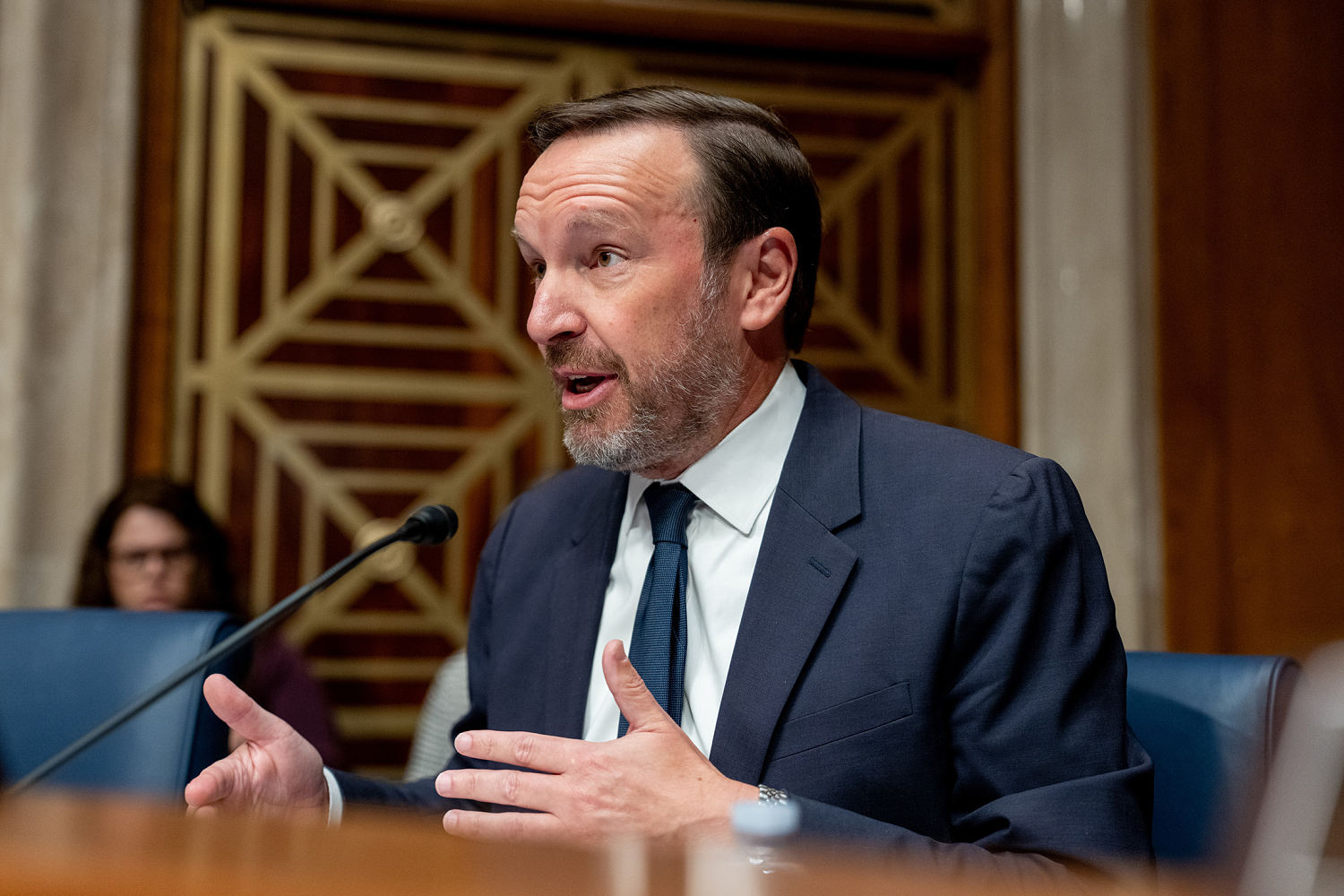
The press release read like a victory lap. Senator Chris Murphy walks out of the hospital following a stroke, smiling for the cameras, promising a swift return to the legislative grind. Within hours, the cable news chyrons and legacy wire reports fell right into line. They framed the discharge as a triumphant sign of resilience. A clean bill of health. A crisis averted.
They are completely wrong. For another look, consider: this related article.
In political journalism, walking out the front doors of a hospital is treated as the finish line of a medical crisis. In neurology, leaving the acute care ward is merely the starting gun of a grueling, unpredictable marathon. By treating a hospital discharge as proof of full recovery, the media is peddling a dangerous medical myth—one that misunderstands how strokes actually work, confuses survival with restoration, and ignores the structural incentives that push high-profile politicians back into the spotlight long before their brains are ready.
The Dangerous Illusion of the Hospital Discharge
When a major public figure suffers a medical emergency, reporters fall back on a lazy, comforting script. Step one: express shock and offer thoughts and prayers. Step two: wait for the official office statement. Step three: treat the moment the patient leaves the building as proof that everything is back to normal. Further analysis on the subject has been provided by BBC News.
This narrative is built on a fundamental ignorance of modern stroke care.
Over the past two decades, acute stroke interventions have become remarkably fast. If a patient reaches a comprehensive stroke center within the golden window, neurologists can administer thrombolytics like tissue plasminogen activator (tPA) or tenecteplase to dissolve a clot, or perform a mechanical thrombectomy to physically pull the blockage out of a cerebral artery. These procedures save lives. They prevent catastrophic, permanent paralysis. They allow a patient to stand up, speak clearly, and walk out of the building days later.
But saving brain tissue from immediate necrosis is not the same thing as returning a brain to peak cognitive performance.
I have watched high-performing executives, trial lawyers, and senior policymakers make this exact mistake for twenty years. They survive a minor ischemic stroke or a severe transient ischemic attack, pass the basic bedside neurological exam—touch your nose, squeeze my fingers, repeat this sentence—and immediately demand to be discharged so they can get back to work. They equate the absence of a limp with the presence of full mental stamina.
Then, three weeks later, they hit a wall they never saw coming.
What Actually Happens to a Post-Stroke Brain
To understand why a quick discharge is a trap, you have to look at the mechanics of cerebral ischemia. When blood flow to a region of the brain is interrupted, even briefly, the damage isn't confined to a neat, isolated spot.
The brain operates as an intricate network of electrical and chemical pathways. When neurons die or suffer hypoxic stress, the surrounding tissue experiences swelling, inflammation, and disrupted neurotransmitter signaling. Neurologists call this the ischemic penumbra—the area of stressed, stunned brain tissue surrounding the core injury. Even when blood flow is restored, that tissue remains metabolically fragile for weeks or months.
This leads to the single most underestimated symptom in all of neurology: post-stroke fatigue.
Unlike normal tiredness, which improves with a good night's sleep or a double espresso, post-stroke fatigue is a profound, systemic depletion of neurological energy. Because damaged neural pathways are operating inefficiently, the brain has to recruit secondary circuits to perform routine cognitive tasks. Reading a dense legislative brief, tracking multiple arguments during a committee hearing, or managing the sensory overload of a chaotic Senate hallway requires exponentially more metabolic energy than it did before the event.
According to research published by the American Heart Association and the Stroke Association, severe post-stroke fatigue affects anywhere from 40% to 70% of survivors—including those whose physical deficits completely disappeared before they left the hospital. You cannot see it on a television camera. A politician can look crisp in a tailored suit, deliver a sharp thirty-second soundbite, and still be experiencing severe cognitive exhaustion behind the scenes.
The Myth of the "Mild" Stroke
Journalists love the phrase "mild stroke." It sounds reassuring. It implies the medical equivalent of a fender bender.
In clinical reality, there is no such thing as a mild stroke. A stroke is a vascular event that proves the plumbing in your brain has failed. Whether the resulting deficit is massive or subtle, the underlying pathology—atherosclerosis, atrial fibrillation, arterial dissection, or a patent foramen ovale—is a flashing red warning light on the dashboard.
Imagine a scenario where a commercial airline pilot experiences a sudden, unexplained engine flameout mid-flight, manages to restart the turbine, and lands the plane safely. Nobody in the aviation industry would celebrate the landing and immediately clear the pilot to fly a transatlantic route the next morning. They would ground the aircraft, tear down the engine, and figure out why the fuel line failed in the first place.
Yet in Washington, we do the exact opposite. We applaud the safe landing and immediately hand the controls back over.
Why Politicians Rush Back (And Why It Backfires)
If the medical science is so clear on the need for prolonged, quiet neurological recovery, why do politicians consistently sprint back to Capitol Hill?
The answer lies in the brutal incentives of modern politics. In Washington, physical absence is treated as political weakness. The moment a senator steps away for medical reasons, the whisper networks start churning. Donors get nervous. Primary challengers start measuring the curtains. Rival factions within the party begin jockeying for committee assignments and leadership slots.
We saw this play out in painful, public detail with Senator John Fetterman, who returned to the campaign trail and the Senate floor while still deep in the throes of auditory processing recovery, eventually requiring inpatient treatment for severe clinical depression—another well-documented, physiological consequence of stroke-induced brain changes. We saw it with Senator Mark Kirk, whose staff tightly stage-managed his public appearances to project a level of physical autonomy that masked the reality of his ongoing rehabilitation.
A politician's staff is paid to project strength, continuity, and invincibility. Their job is to minimize the crisis, assure constituents that the office is functioning smoothly, and get the principal back in front of cameras as quickly as possible.
The press corps, starved for access and conditioned to accept official readouts at face value, plays right along. By reporting the discharge as the end of the story, reporters abdicate their responsibility to ask the harder, more uncomfortable questions about what comes next.
The Questions Nobody Is Asking
When a public official leaves the hospital after a stroke, the media usually focuses on superficial trivia: What did they eat for breakfast? When will they cast their next vote? How upbeat did they sound on the phone?
If journalists actually wanted to serve the public interest, they would be asking entirely different questions:
- What was the exact etiology of the stroke? Was it cardioembolic, large-artery atherosclerosis, or a cryptogenic event? The cause dictates the recurrence risk. A stroke caused by an undiagnosed hole in the heart (PFO) carries a vastly different prognosis than one caused by systemic vascular disease.
- What secondary prevention protocol is now in place? Is the senator on dual antiplatelet therapy, direct oral anticoagulants, or high-intensity statins? Blood thinners carry significant bleeding risks, especially for someone maintaining a grueling travel schedule.
- What does the neurorehabilitation schedule look like? Physical therapy, occupational therapy, and speech-language pathology aren't just for people who can't walk or talk. Cognitive rehabilitation is essential for rebuilding executive function, working memory, and stress tolerance.
- How is the office restructuring its workflow? You cannot return to a 70-hour workweek of nonstop fundraisers, constituent meetings, and late-night floor votes without spiking cortisol and blood pressure—the exact physiological triggers that cause secondary strokes.
The Hidden Risk of the Second Event
Here is the brutal statistical reality that gets buried beneath the feel-good discharge headlines: the highest risk of a recurrent stroke occurs in the first 90 days following the initial event.
During this window, the vascular endothelium is still inflamed, plaques may remain unstable, and newly prescribed medications are still being calibrated to the patient's specific metabolic profile. Stress isn't just an emotional inconvenience during this period; it is a direct mechanical threat to the cerebrovascular system. Acute psychological stress triggers surges in catecholamines, elevates systolic blood pressure, increases platelet aggregation, and promotes vasoconstriction.
The United States Senate is an environment engineered to maximize acute stress. It is an institution built on sleep deprivation, erratic meal schedules, constant public scrutiny, and high-stakes conflict. Dropping a recovering stroke patient back into that pressure cooker two weeks after discharge isn't a sign of toughness. It is medical roulette.
What Real Recovery Actually Looks Like
Let's be fair to the other side of the argument. There is a psychological benefit to returning to meaningful work. Prolonged isolation can breed anxiety, and early mobilization is a cornerstone of modern stroke rehabilitation. Nobody is arguing that a senator who suffers a minor stroke should be locked in a dark room for a year or forced into immediate retirement.
The problem isn't the return to work. The problem is the refusal to admit that recovery requires a fundamentally different pace.
If you want to know what smart, sustainable post-stroke management looks like, stop listening to political communications directors and start listening to sports neurologists and executive health specialists. When an elite athlete suffers a concussion—a far less severe brain injury than an ischemic stroke—they are placed in a strict, graduated return-to-play protocol. They start with light aerobic activity. They progress to non-contact drills. If symptoms return at any stage, they step back down. No amount of fan pressure or media speculation overrides the protocol.
Politicians deserve the exact same standard, and voters should demand it. A truly transparent, responsible approach to a senator's stroke recovery would look like this:
- A mandatory 30-to-60-day modified duty schedule. No red-eye flights, no marathon fundraising dinners, and no late-night procedural votes. Delegate routine appearances to senior staff and focus exclusively on high-priority legislative decisions.
- Publicly disclosed cognitive and physical pacing. Normalize the reality that brain recovery takes months. When a public figure openly states that they are taking afternoons off for neurological rest and rehabilitation, they destigmatize brain injury for millions of working Americans who feel pressured to hide their own recovery.
- Rigorous management of vascular risk factors. Aggressive blood pressure targets (typically below 130/80 mmHg), strict sleep hygiene, and continuous cardiac monitoring to catch silent arrhythmias like paroxysmal atrial fibrillation.
- Honest medical briefings. Replace vague, sunny press releases from press secretaries with direct, transparent updates from the treating neurologist outlining the specific type of stroke and the realistic timeline for full physiological recovery.
Stop Confusing Survival With Immunity
We live in a culture obsessed with quick fixes and tidy narrative arcs. We want the medical drama to fit neatly into a 24-hour news cycle: crisis on Tuesday, miracle recovery by Friday, back to business as usual on Monday.
The human brain refuses to respect our news cycle. Neurons heal on a biological timeline measured in months, not hours. Vascular tissue remodels slowly. Cognitive stamina rebuilds incrementally, through disciplined rest and targeted rehabilitation—not through sheer willpower or political ambition.
Chris Murphy walking out of the hospital is a testament to rapid emergency medicine and personal good fortune. It is a relief for his family, his constituents, and his colleagues.
But do not mistake the exit door of a hospital ward for the end of the story. The real test of a stroke recovery doesn't happen in front of the cameras on discharge day—it happens six weeks later, behind closed doors, when the adrenaline fades and the brain demands the time it was never given to heal.


