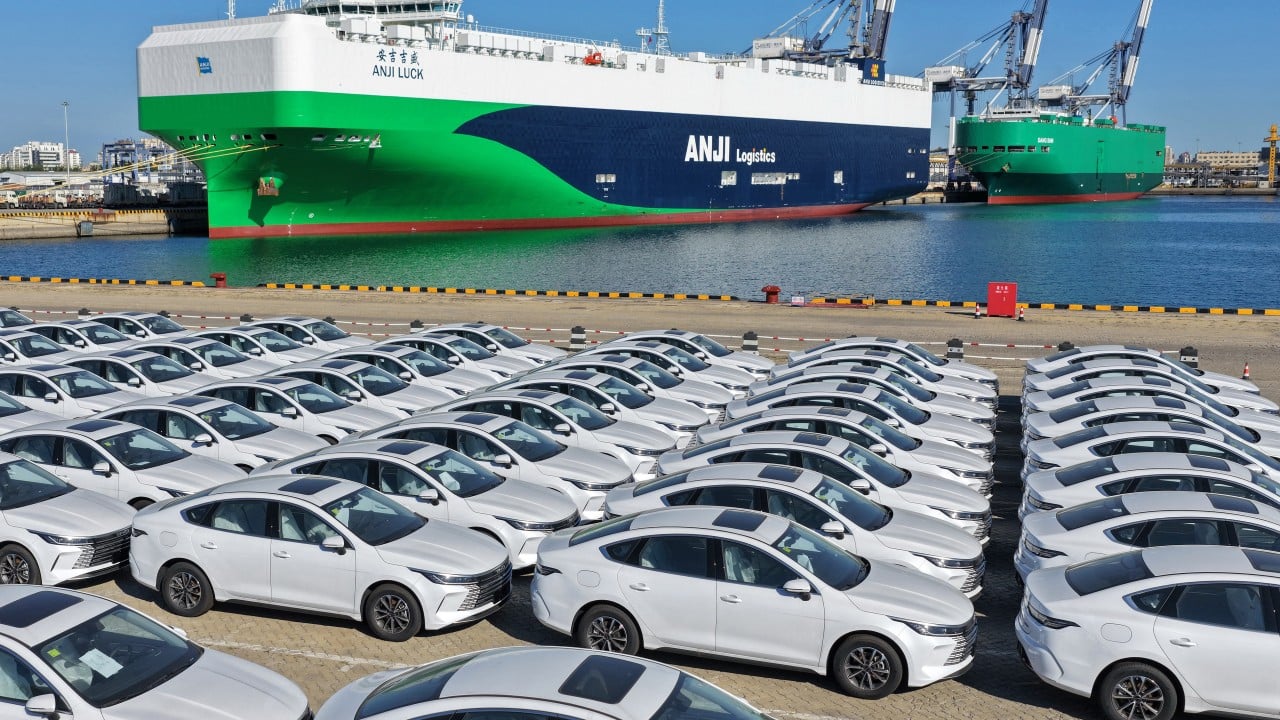
Oil shocks change buying habits overnight. When conflict involving Iran rattled global energy markets and sent crude prices climbing, drivers and fleet operators around the world stopped treating electric vehicles as a long-term climate experiment and started treating them as an immediate hedge against pump prices. That sudden shift in buyer psychology is the primary reason China's EV exports surged 145%, catching legacy automakers flat-footed while Chinese manufacturers already had ships, batteries, and entry-level models ready to move.
I've watched automotive supply chains react to geopolitical shocks for years, and the pattern rarely changes. Western and Japanese automakers spend months debating margin compression and platform delays. Meanwhile, Chinese exporters treat a spike in global fuel anxiety like an open sales window.
How Middle East Instability Rewired Global Car Demand
Most people think EV adoption moves at the speed of charging infrastructure and government subsidies. That's only half true. When gasoline and diesel prices jump because of tanker disruptions around the Strait of Hormuz or broader regional escalation involving Iran, the math on owning an internal combustion car breaks down fast—especially in emerging markets where fuel eats a huge share of household income.
Here's what actually happened across key export destinations when energy risk spiked:
- Fuel-importing emerging markets moved first. Countries across Southeast Asia, Latin America, and parts of the Middle East itself rely heavily on imported refined fuel. A sustained bump in Brent crude translates directly into higher pump prices within weeks, making a $15,000 to $25,000 Chinese electric crossover suddenly cheaper to run on a monthly basis than a comparable gasoline sedan.
- Commercial fleets did the math immediately. Ride-hailing drivers, delivery operators, and municipal bus agencies don't buy cars based on brand nostalgia. They look at cost per kilometer. Once diesel and petrol volatility returned, fleet buyers in markets from Thailand to Brazil accelerated orders for electric vans and compact sedans.
- European buyers looked past tariff threats. Even with European Union anti-subsidy duties weighing on Chinese-built battery electric vehicles, higher energy anxiety kept price-sensitive European commuters shopping for affordable electric and plug-in hybrid options that domestic brands still struggle to produce at scale.
The surge wasn't accidental. It was a textbook collision between a geopolitical supply shock and an industry that had spent the previous five years building massive excess manufacturing capacity.
Why Chinese Automakers Were the Only Ones Ready
You can't increase vehicle exports by 145% in a few months unless the factories, battery supply chains, and roll-on/roll-off car carriers are already sitting on the dock. If you've ever tried sourcing automotive components during a demand spike, you know traditional supply chains take quarters—not weeks—to ramp up.
China's EV sector had three structural advantages that legacy competitors simply couldn't match when the Iran conflict pushed overseas buyers toward electric drivetrains.
Vertical Integration Kept Sticker Prices Low
Companies like BYD, SAIC, Geely, and Chery don't just assemble cars. Many of them control their own lithium refining contracts, battery cell production, power electronics, and even shipping fleets. When global commodity markets get jittery during a Middle East crisis, automakers that buy batteries from third-party suppliers get squeezed on pricing. Vertically integrated Chinese producers absorbed raw material fluctuations and kept export prices aggressive.
Domestic Overcapacity Created an Export Engine
China's domestic auto market has been locked in a brutal price war for years. Factories in Shenzhen, Hefei, and Shanghai were built to produce far more electric and plug-in hybrid vehicles than Chinese consumers could absorb on their own. When overseas demand jumped because of fuel price fears, Chinese brands didn't need to build new plants. They simply redirected inventory from crowded domestic dealer lots onto ocean-going car carriers bound for Antwerp, Laem Chabang, Santos, and Jebel Ali.
Plug-In Hybrids Solved the Charging Anxiety Problem
A common mistake analysts make when looking at China's EV export numbers is assuming every single vehicle is a pure battery electric car. In reality, export tallies frequently group battery electric vehicles (BEVs) and plug-in hybrid electric vehicles (PHEVs) together under "new energy vehicles."
That distinction matters enormously in countries with patchy charging grids. When fuel prices spike in Latin America or Southeast Asia, a buyer who can't rely on public fast chargers won't always buy a pure EV. They will, however, jump at a long-range plug-in hybrid that handles daily commutes on cheap grid electricity while keeping a small gas tank for weekend trips. Chinese automakers dominated that exact niche while Western rivals were still phasing out older hybrids.
The Numbers Behind the 145% Export Surge
Headline percentages can mislead you if you don't look at the baseline and the mix of vehicles leaving Chinese ports. A 145% year-over-year jump reflects both genuine demand acceleration from energy-shocked importers and the rapid expansion of China's dedicated maritime auto-carrier fleet.
According to trade data tracked by the China Association of Automobile Manufacturers (CAAM) and customs disclosures, new energy vehicle shipments have consistently outpaced traditional internal combustion exports whenever global oil volatility rises. Look closely at what drove the volume:
- Compact and subcompact crossovers led volume. Models priced under $30,000 overseas accounted for the bulk of unit growth, directly targeting middle-class commuters squeezed by fuel inflation.
- Right-hand-drive markets expanded rapidly. Aggressive localization in Thailand, Indonesia, Australia, and the UK gave Chinese brands immediate distribution channels without waiting years to build dealership networks from scratch.
- Middle Eastern importers paradoxically bought more EVs. Gulf states and neighboring markets—despite sitting on massive oil reserves—have pushed aggressive national diversification plans and domestic fuel subsidy reforms, turning ports like Dubai into major re-export and retail hubs for Chinese electric models.
It's worth being honest about the limitations of export data, too. Customs figures measure vehicles leaving Chinese ports, not necessarily cars registered by end consumers the next week. Part of any sharp export spike includes inventory stocking by overseas distributors anticipating either higher demand or incoming trade barriers. Still, inventory only moves at that pace when dealers see real foot traffic on showroom floors.
What Legacy Automakers and Investors Keep Getting Wrong
Every time China's EV export numbers jump, the same tired talking points surface in Detroit, Wolfsburg, and Tokyo. Industry executives blame state subsidies, predict an imminent quality backlash, or assume tariffs will wall off their home markets permanently.
That thinking is dangerous if you work in the auto sector or invest in mobility supply chains.
First, tariffs don't stop trade—they reroute it. When North America and Europe raise import duties on Chinese-built EVs, Chinese automakers respond by accelerating knock-down assembly plants in Thailand, Brazil, Hungary, Mexico, and Turkey. They ship battery packs and drivetrains instead of finished vehicles, capturing the margin while bypassing finished-car tariffs.
Second, the quality gap that protected legacy brands a decade ago is basically gone in the entry-to-mid-tier segments. Overseas buyers test-driving a modern Chinese electric crossover notice responsive software, quiet cabins, and strong standard safety tech at a price point where Western rivals still offer cloth seats and dated infotainment screens. Once a commuter experiences instant electric torque and cuts their monthly fuel bill in half, they rarely go back to a gasoline compact.
Third, geopolitical oil shocks leave permanent behavioral scars. Even after tensions around Iran cool off and crude oil retreats from crisis highs, consumers remember how exposed they felt at the gas station. Every major oil price spike since the 1970s has permanently shifted consumer vehicle preferences—first toward compact Japanese sedans in the 1970s, then toward hybrids in the 2000s, and now toward affordable electric and plug-in hybrid vehicles.
How Businesses and Buyers Should Respond Right Now
If you're watching this shift from the perspective of a fleet manager, an auto dealer, or an individual buyer weighing your next vehicle purchase, waiting for the market to "go back to normal" is a losing bet.
- For fleet and logistics operators: Lock in electric or plug-in hybrid commercial vehicles before tariff adjustments and shipping bottlenecks push landed prices higher. Calculate total cost of ownership using stressed fuel scenarios—$90 to $110 per barrel crude—rather than optimistic baseline forecasts.
- For automotive dealers and distributors: Diversify your floorplan toward high-efficiency PHEVs and sub-$30,000 EVs. When fuel volatility hits, high-margin gasoline SUVs sit on lots burning floorplan interest while affordable electrified models turn over in days.
- For individual car buyers: Don't get caught up in brand tribalism or panic-buy at the peak of a fuel spike. Compare local charging rates per kilowatt-hour against regional gasoline prices, verify parts availability and warranty coverage for newer export brands in your country, and prioritize models with established regional parts warehouses.
China's 145% EV export surge isn't a temporary statistical quirk tied to a single news cycle. It's proof that whenever geopolitical conflict threatens global oil supplies, the automaker with the cheapest batteries, the fastest factories, and the ships already waiting at the pier wins the market.