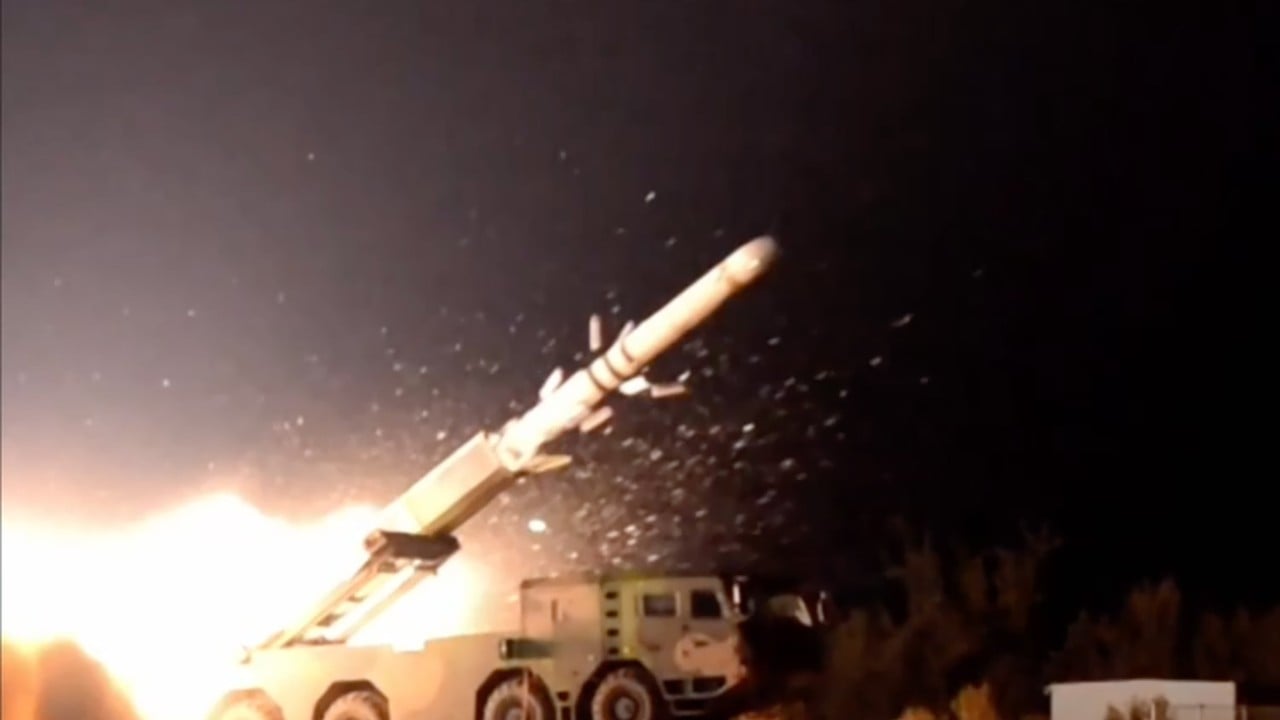
You cannot stop what you cannot track. That single operational reality dictates modern military anxieties over Beijing's fast-expanding rocket arsenal. For years, defense analysts debated whether boost-glide technology was merely an expensive engineering stunt or a genuine operational threat. Those debates ended the moment road-mobile launchers started rolling into active service.
The weapon at the center of this shift is the DF-17 medium-range ballistic missile, paired with its specialized hypersonic glide vehicle. It is designed to bypass traditional missile shields entirely. Understanding what this weapon actually does requires stripping away propaganda and looking closely at the physics of modern flight.
Breaking Down the Mechanics of the DF-17
A standard ballistic missile follows a predictable, arched trajectory. Radar systems calculate that curve seconds after launch, allowing defensive batteries to calculate an intercept point. The DF-17 throws out that rulebook.
Measuring roughly 11 meters long with a launch weight near 15,000 kilograms, the system uses a solid-fueled rocket booster to push its payload into the upper atmosphere. Once it reaches the edge of space, the booster drops away, releasing the DF-ZF glide vehicle.
This is where the engineering gets messy for defense planners. Instead of falling back down in a ballistic arc, the glider skips and maneuvers through the atmosphere at speeds ranging from Mach 5 to Mach 10.
- Speed: Hypersonic velocity means moving faster than 1.6 kilometers per second.
- Maneuverability: The vehicle executes sharp lateral turns mid-flight, destroying predictable trajectory calculations.
- Altitude: It flies at a depressed altitude, staying underneath the optimal detection bands of many legacy radar architectures.
Operational Realities and Regional Range
The system has an estimated operational range between 1,800 and 2,500 kilometers. That range places regional military hubs, airbases, and naval strike groups squarely inside a very tight threat ring.
When you look at regional flashpoints across East Asia, this distance covers critical strategic zones. Ground mobility adds another layer of complexity. Because the entire system sits on a road-mobile transporter-erector-launcher, forces can hide, relocate, and fire with minimal preparation time. Finding a launcher tucked away in mountainous terrain or rural road networks before it fires is an intelligence nightmare.
Defense analysts often point out that hypersonic gliders face extreme thermal stress. Maintaining structural integrity while skimming the upper atmosphere at ten times the speed of sound requires advanced ceramic composite materials and precise thermal protection shielding. Chinese aerospace engineers spent years working through these material science bottlenecks, solving problems that once kept similar programs grounded.
The Interception Problem
Traditional missile defense is built on math. Batteries like the Patriot or Aegis system calculate vectors to smash incoming warheads out of the sky. But when a target changes its flight path unpredictably during terminal descent, interception probability plummets.
Current air defense sensors are optimized for either high-altitude ballistic arcs or low-flying cruise missiles. The DF-17 operates in the space between those two domains. It forces militaries to rethink sensor fusion, investing heavily in space-based infrared tracking constellations just to maintain custody of a maneuvering target.
Mass deployment signals that this technology has moved past the experimental phase. Factories are turning out hardware, and operational training units are integrating these systems into regular brigade exercises.
The strategic balance has shifted. Defending against a weapon that alters its course at terminal velocities demands an entirely new generation of counter-measures that the global defense industry is still scrambling to build.
Take a closer look at the engineering details and strategic breakdowns of these systems in this DF-17 Hypersonic Missile Explained. This resource provides a clear visual breakdown of how solid-fuel boosters and glide vehicles interact during flight.