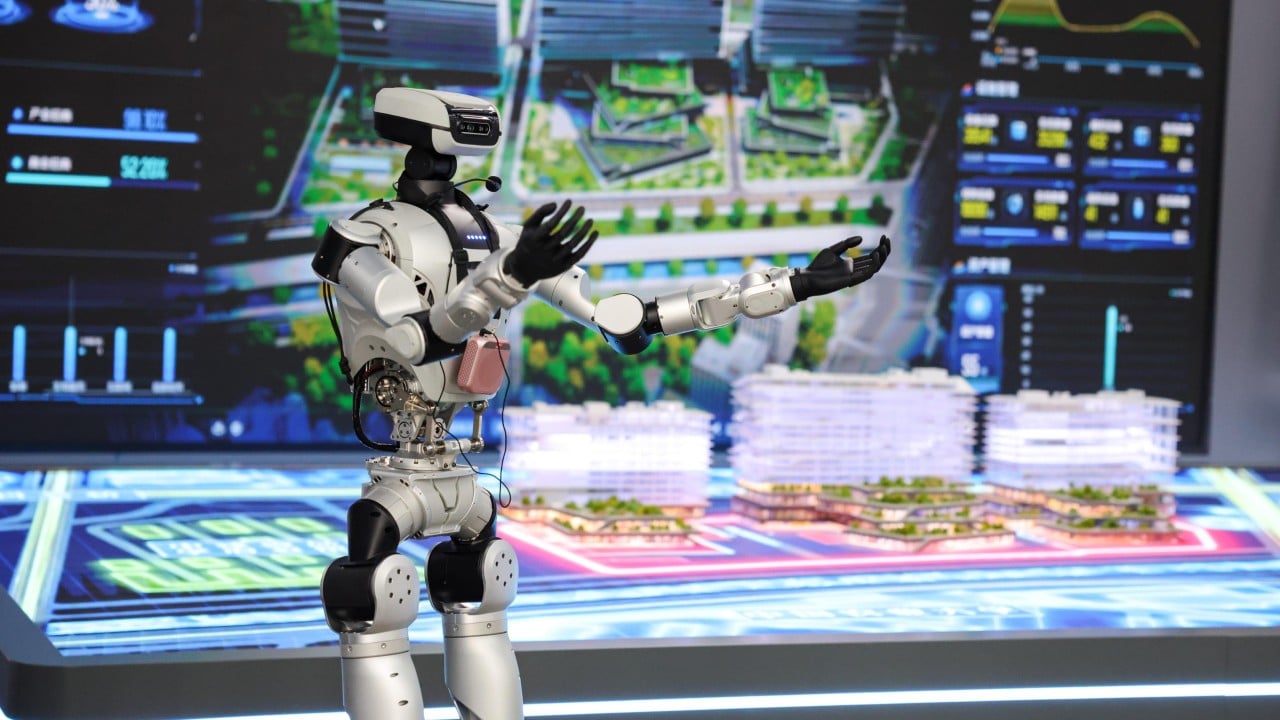
Imagine walking into your home and every single device already knows exactly what you need. Your kitchen appliances coordinate dinner based on your health metrics, an autonomous assistant tidies up your living room, and your whole house acts as a unified organism. This isn't a sci-fi movie preview. It's the immediate, state-mandated goal of the Chinese government.
China just dropped a massive policy shift that flips the script on how we use artificial intelligence. While the West fights over copyright lawsuits and chatbots that summarize emails, Beijing is aggressively pushing AI directly into the physical consumer market. The Ministry of Commerce, alongside seven other government departments, just dropped a 17-point directive called "Implementation Opinions on Accelerating the Development of AI Plus Consumption." Don't miss our recent coverage on this related article.
This policy is designed to solve a massive structural problem: tech companies are building advanced models, but everyday people aren't buying enough AI-driven physical goods. Beijing wants to bridge that gap immediately. By forcing a collision between artificial intelligence and daily retail, hospitality, and home services, they plan to turn abstract software into physical tools you can buy at a store.
The Physical Blueprint For Smart Goods
The plan goes way beyond basic software updates. The government wants an entirely new class of hardware. They are demanding that consumer electronics move away from being merely "functional" tools and become truly intelligent units. To read more about the history of this, Gizmodo provides an excellent breakdown.
Think about your current smartphone or laptop. It waits for you to type a prompt. Under this new initiative, the goal is to standardize next-generation AI phones, PCs, and smart TVs that anticipate actions. The directive explicitly targets several high-tech consumer areas:
- Brain-computer interfaces (BCIs) and advanced augmented reality (AR) glasses for daily use.
- Smart connected vehicles that communicate seamlessly with your home ecosystem.
- Humanoid, quadruped, and companion robots built specifically for childcare, eldercare, and home assistance.
The hardware advantage here is real. According to data from the Mercator Institute for China Studies (MERICS), China controls roughly 63% of the key companies in the global supply chain for humanoid robot components, including essential actuators and rare-earth magnets. Companies like Unitree are already pumping out physical platforms at a fraction of Western manufacturing costs. By using this existing hardware dominance, the new 17-point plan aims to scale these machines from industrial pilot plants straight into ordinary living rooms.
Breaking The Labor Bottleneck In Services
The most fascinating part of this strategy is how it handles service consumption. For years, service industries have been notoriously difficult to scale because they rely on human hours. Lin Jian, Deputy Director of the International Trade Cooperation Institute under the Ministry of Commerce, pointed out that service growth has been chronically bottlenecked by high labor costs and low standardization.
The state's solution is simple: swap human friction for algorithmic precision across five major everyday arenas.
+-------------------------------------------------------------------+
|                     THE 5-SCENARIO SERVICE PUSH                   |
+-------------------------------------------------------------------+
|  1. HOME SERVICES     | Smart kitchens and "whole-house" custom    |
|                       | automation systems.                       |
+-----------------------+-------------------------------------------+
|  2. ELDERLY CARE      | Nationwide networks featuring smart       |
|                       | nursing and rehabilitation robots.        |
+-----------------------+-------------------------------------------+
|  3. TOURISM & CULTURE | AI-guided travel planning and smart       |
|                       | glasses providing live translations.       |
|                       | and historical context.                   |
+-----------------------+-------------------------------------------+
|  4. HOSPITALITY       | Fully automated check-ins and smart        |
|                       | canteens in schools and hospitals.        |
+-----------------------+-------------------------------------------+
|  5. EDUCATION         | Large-model-powered smart classrooms with |
|                       | persistent AI teaching assistants.        |
+-----------------------+-------------------------------------------+
Take a look at retail and logistics. The document outlines a massive upgrade for pedestrian streets, malls, and even traditional wet markets using smart retail systems. On the digital side, expect an explosion of virtual livestreaming hosts and automated AI content generation tools to dominate e-commerce platforms. Distribution networks will rely on autonomous warehouses, rural delivery networks, and real-world trials for delivery drones.
Subsidies, Infrastructure, And The Safety Guardrails
A policy paper means absolutely nothing without cash and infrastructure. Beijing understands this, which is why the 17-point plan includes direct financial support. We are talking about trade-in subsidies for smart devices, consumer loan interest subsidies, and direct backing from the massive National AI Industry Investment Fund.
They are also changing the actual physical landscape to make these consumer devices work. The directive calls for widespread installation of roadside sensors and edge computing nodes to support autonomous vehicles and rolling delivery robots.
But it's not a complete free-for-all. The government is simultaneously setting up a classification and standards system to ensure different brands can talk to each other. They are also implementing strict security safeguards that track the entire lifecycle of an AI model to prevent data leaks. More importantly for the shopper, the plan outlines consumer protection rules specifically aimed at curbing algorithmic abuse, pricing fraud, and digital scams.
What This Means For The Global Market
If you think this is just a local regulatory update, you are missing the bigger picture. This policy is an absolute warning shot to global consumer tech brands.
When a massive manufacturing superpower decides to turn its entire domestic market into a testing ground for consumer robotics and integrated AI, scale happens fast. Western tech firms are currently hyper-focused on corporate enterprise software and subscription models. Meanwhile, China is building the physical infrastructure, supply chains, and consumer habits for a world where robots clean your house, drive your packages, and monitor your health.
If you are an entrepreneur, product designer, or tech investor, your next steps are clear. Stop looking at AI as just a browser window or a chat box. Start analyzing how your products interact with the physical world. The future of consumer tech isn't an app on your phone; it's a machine in your kitchen.
To see exactly how these physical machines are transitioning from factory floors into living rooms, you can watch how developers are testing China's Plan to Put an AI Robot in Every Home, which breaks down the real-world prototypes rolling off assembly lines right now.


:max_bytes(150000):strip_icc()/GettyImages-700832601-5bb602c0c9e77c002609fe08.jpg)