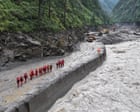
A massive wall of water and ice tore through the Himalayas, yet the outside world barely knows what happened on the Chinese side of the border. When a glacier snapped and triggered devastating flash floods across the Nepal-Tibet border region, the contrast in transparency was immediate. In Nepal, journalists rushed to the front lines, interviewing survivors and documenting minute-by-minute accounts of the disaster. But across the border in Tibet, a heavy informational blackout settled over the region.
Official numbers tell a bizarre story. While the death toll in Nepal climbed past five hundred, Beijing insisted that only five people died on its side. This makes little sense given that thousands of residents live around the heavily affected Gyirong border crossing. Independent verification is nearly impossible because the region operates under strict security protocols.
The National Security Prism
Everything in Tibet gets filtered through a security lens. Local sources and international monitoring groups note that videos and firsthand accounts uploaded to Chinese social media platforms are scrubbed rapidly. Teahouses, shops, and restaurants near the border were flattened, yet reporting a higher casualty figure than the state-sanctioned baseline is forbidden.
Steve Tsang, director of the China Institute at SOAS University of London, points out that nobody on the ground will risk reporting a higher death toll until an official directive changes the narrative. Beijing's instinct is total control, even when dealing with a natural catastrophe.
State media broadcasts have heavily featured rescue narratives, showing the People's Liberation Army and emergency services deployed to the area. Yet these broadcasts carefully avoid showing the true scale of destruction or interviewing displaced residents. By prioritizing message management over transparency, authorities often miss the chance to showcase their genuine rescue capabilities.
Managing the Narrative at All Costs
Information control during crises isn't new. During past incidents like the Dingri earthquake, access was tightly restricted, leaving humanitarian organizations guessing about actual community needs. Grassroots documentation is treated as a threat rather than a useful tool for disaster relief.
Top leadership has acknowledged the event. Xi Jinping called for intensive search operations for missing people, and Premier Li Qiang traveled to oversee response efforts. Yet local officials remain paralyzed by the fear of overstepping guidelines. When survival depends on quick information sharing, bureaucratic secrecy makes recovery slower and harder to track.
Watch The Nepal-Tibet Disaster Overview to learn more about the flash floods and missing warning signs.
http://googleusercontent.com/youtube_content/1