The lazy consensus across every financial terminal and wire service is that Chevron getting the green light to pump more crude in Venezuela represents a major win for Western energy security. Watchers point to depressed global supply, high refining margins, and the sheer volume of heavy sour crude sitting idle in the Orinoco Belt. The narrative writes itself: American pragmatism meets South American reserves, resulting in lower pump prices and a stabilized geopolitical footing.
It is a completely surface-level fantasy.
I have watched majors throw billions at ghost assets in unstable jurisdictions, mistaking temporary Washington waivers for permanent legal certainty. Let us look past the headline cheers and confront the mechanics of this expansion. Chevron is not executing a masterclass in opportunistic resource capture. They are walking into a structural quagmire where capital gets permanently trapped, infrastructure actively destroys balance sheets, and political risk renders every barrel produced an expensive liability.
The Myth of Cheap Heavy Oil
Standard market commentary treats Venezuelan crude as an obvious prize because of its sheer abundance. The Orinoco Belt holds massive reserves of extra-heavy oil. What the talking heads consistently omit is the absolute financial violence required to get that sludge out of the ground and into a catalytic cracker.
Venezuelan heavy crude does not flow on its own. It requires continuous, massive inputs of imported diluents—typically light naphtha—to reduce its viscosity enough to move through a pipeline. Because domestic Venezuelan refining capacity is a non-functional disaster zone, those diluents have to be sourced externally, shipped in, and meticulously managed under strict sanctions compliance.
When you factor in the energy penalties, the heavy coking requirements at Gulf Coast refineries designed to process this specific gravity, and the steep depletion rates of neglected reservoirs, the break-even economics are dismal. You are not buying cheap barrels. You are buying expensive, high-maintenance headaches disguised as a bargain.
The Sanctions Rubber Band
The entire thesis rests on the continued goodwill of the Office of Foreign Assets Control. That is not a business strategy; it is a prayer.
Licenses issued under current waivers are deliberately narrow, restrictive, and explicitly designed to prevent the Venezuelan state from pocketing cash windfalls. Chevron is permitted to extract and export oil primarily to recover past debts and dividends owed by state-owned PDVSA. They are barred from paying royalties or taxes directly to the Maduro government.
Imagine a scenario where a foreign administration changes policy overnight, or domestic political pressures in Washington force a snap revocation of the waiver. You are left with billions in sunk capital tied up in immobilized surface assets, abandoned rigs, and unpaid receivables that you can never legally collect. Operating in a jurisdiction where the rules can change on a whim based on election-year optics is not asset growth. It is voluntary corporate hostage-taking.
The Infrastructure Decay Reality
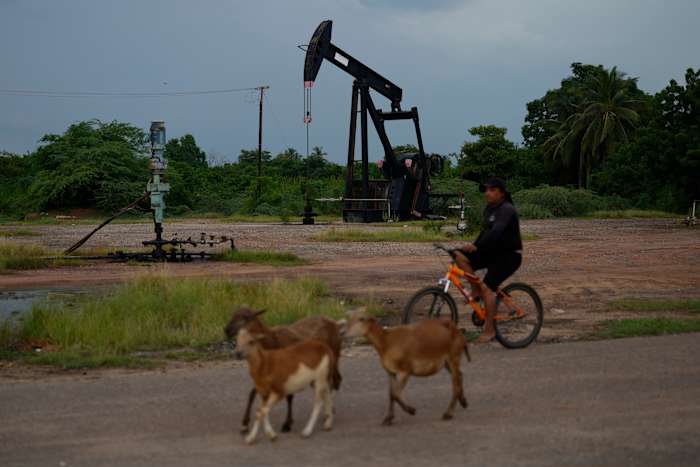
People talk about Venezuela’s oil fields as if they are sleeping giants just waiting for an alarm clock. They are not sleeping. They are rotting.
Decades of brain drain, zero reinvestment, power grid collapses, and rampant equipment cannibalization have turned once-world-class extraction sites into industrial ruins. Substations fail daily. Gas compression plants leak methane into the atmosphere because spare parts are subject to secondary sanctions blockades.
When Chevron engineers step back onto these sites, they are not turning valves; they are rebuilding entire municipal-scale industrial ecosystems from scratch. Every dollar spent on restoring a rusted compressor station or clearing fouled pipelines is capital diverted from high-margin, low-risk domestic shale or deepwater projects in the Gulf of Mexico or the Permian Basin.
The Geopolitical Distraction
Energy executives love to hide behind the flag. They frame these expansions as a patriotic duty to rescue global markets from supply crunches. It is a brilliant PR shield for what is actually an act of desperation for reserve replacement ratios.
Major oil companies struggle to find Tier-1, multi-decade conventional reserves in stable legal frameworks. Permian acreage is maturing, exploration costs are soaring, and regulatory pushback in Western democracies is fierce. Rushing back into Venezuela is a symptom of resource starvation, not strategic brilliance.
By tying up balance sheet capacity in a failed state, management teams are signaling that they would rather chase high-risk political lotteries abroad than optimize capital discipline at home.
Stop treating this expansion as a masterstroke of geopolitical chess. It is an expensive gamble on a rigged board where the house can change the rules between turns.