We are currently living through a mass delusion masked as wellness. Every week brings a fresh wave of data-obsessed optimization gurus telling you to freeze your body, swallow forty supplements a morning, track your sleep stages down to the microsecond, and turn your existence into a sterile spreadsheet. The media loves to parade centenarians across our screens, reducing a century of human life into a neat, marketable soundbite about clean living or positive attitudes.
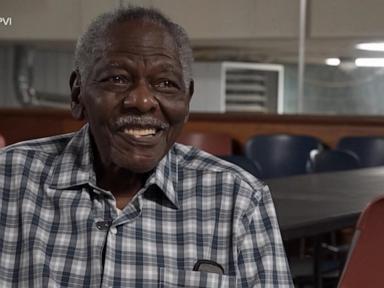
Take the recent viral coverage of William Owen Hanna celebrating his one-hundredth birthday. The headlines and segments follow a predictable script: centenarian spends his special day at his local bowling alley, still throwing strikes, still smiling, still upright. The armchair longevity experts immediately swarm the comments. They attribute his survival to clean habits, regular low-impact exercise, or a miraculous genetic lottery. They want to bottle his routine, sell it as a masterclass, and convince you that if you just walk enough steps and avoid gluten, you too will hit the triple-digit mark. Meanwhile, you can find similar stories here: Stop Slapping Pimple Patches on Your Face You are Treating the Wrong Problem.
It is a comforting lie. And it completely misses the point of being alive.
The lazy consensus in modern health culture is that longevity is a math problem waiting to be solved. We treat the human body like a high-performance engine that simply requires the correct fuel, optimal maintenance intervals, and zero friction. If a man reaches one hundred while bowling, the biohacking industrial complex instantly converts the bowling alley into a prescription. To see the bigger picture, we recommend the recent report by WebMD.
I have watched otherwise intelligent executives spend small fortunes on cellular health panels, wearable rings, and hyperbaric chambers, all while living utterly miserable, isolated lives devoid of spontaneous joy. They are terrified of dying, yet they have managed to successfully postpone actually living.
Let us look at the hard physical reality of aging that the cheerleaders conveniently omit. Owen Hanna did not make it to one hundred because he cracked some secret code of longevity biohacking. He made it because he engaged in a lifelong, friction-filled, analog routine of showing up to a physical place, interacting with real human beings in a noisy, messy environment, and maintaining a grip on a heavy object long after most people would have surrendered to a LazyBoy.
The mechanism at play here is not magical cellular repair driven by aerobic efficiency. It is psychological anchorage.
Modern wellness culture preaches radical individual optimization: isolate yourself, track your macros, optimize your circadian rhythm, eliminate stress. But human physiology does not respond well to clinical sterilization. Decades of epidemiological data show that social isolation carries a mortality risk equivalent to smoking fifteen cigarettes a day. Meanwhile, routine physical participation in community groups—yes, even a senior bowling league—keeps cognitive decline at bay through forced coordination, spatial tracking, and unpredictable social friction.
When you reduce a hundred-year life to a checklist of superfoods and sleep scores, you strip away the very chaos that stimulates neurogenesis. You cannot optimize your way to a century by shrinking your world into a padded cell of safety.
Imagine a scenario where you throw away your sleep tracker, cancel your expensive blood-work subscriptions, and stop treating your daily schedule like a corporate risk-assessment matrix. What happens? You suddenly find yourself with actual mental bandwidth to invest in physical environments that force you to move, speak, and care about external variables outside of your own pulse rate.
The secret that the longevity industrial complex refuses to admit is that health is a byproduct of engagement, not its target. People who live long, vibrant lives usually do not spend their days obsessing over their biological markers. They are too busy arguing about handicap scores, fixing an old car, volunteering at a local parish, or arguing over a split frame at a neighborhood alley. They have external anchors that pull them out of bed when their joints ache.
If you want a shot at a long life, stop trying to hack your biology and start building a life worth sticking around for. Stop looking for the friction-free shortcut. Pick up something heavy, go where people are loud and annoying, and stay in the game.