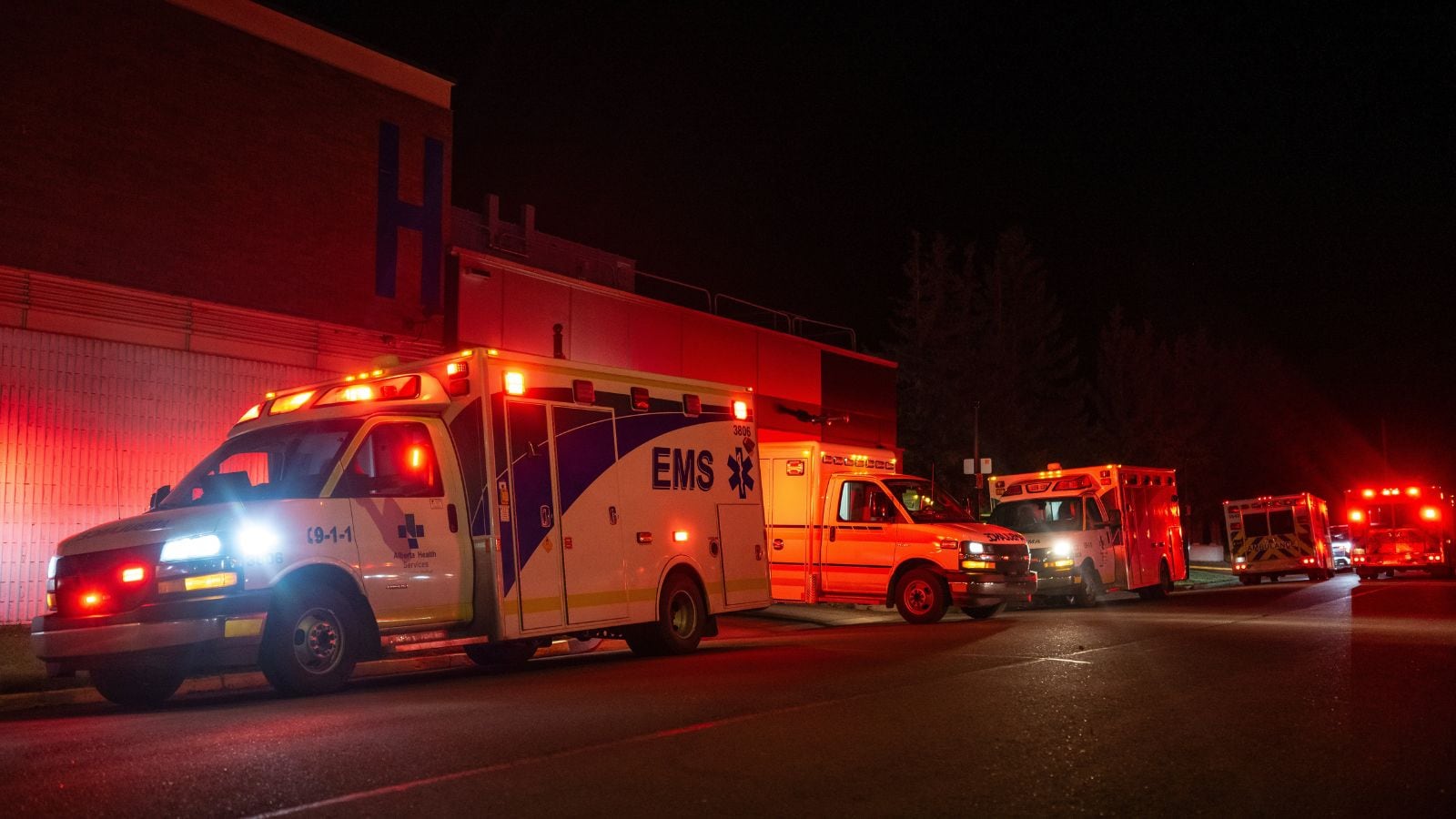
Four Canadian soldiers died on the day the grass fire tore across Canadian Forces Base Wainwright, and 39 others ended up in the hospital with 19 in critical condition. That initial shock made headlines everywhere, yet the story has shifted since October 17, 2026. A fifth soldier has now died from those injuries, and dozens of troops remain under hospital care weeks later as multiple investigations try to piece together how a routine training exercise turned into one of the worst peacetime military tragedies on Canadian soil.
If you only read early dispatches from that weekend, you missed how fast the ground conditions changed. A cold front moved through eastern Alberta around 4 p.m., bringing colder air, strong winds, and a sharp shift in wind direction. What started as a fire during live-fire training—Exercise APOLLO SHOOTER involving troops from the 3rd Battalion, Princess Patricia's Canadian Light Infantry and reservists—pushed rapidly across the terrain and overtook the unit administrative area. Officials noted the blaze jumped roughly a kilometre in a matter of tens of seconds under brutal conditions.
What Changed After the First Headlines
Early reports focused on the four soldiers who died on October 17 and the 39 injured troops rushed to hospitals, including 19 initially listed in critical condition. Those four were identified as Sergeant Morgan Wong of the Loyal Edmonton Regiment, Private Shaun Farrell of Prince Albert, Saskatchewan, Private Hayden Lykkemark of Langley, British Columbia, and Private Aidan Goulding of North Vancouver, British Columbia, all serving with the 3rd Battalion, Princess Patricia's Canadian Light Infantry out of Edmonton.
Weeks later, the toll climbed again. Private Dal Bianco, who had been receiving care in Ontario after suffering injuries in the fire, died on November 13, bringing the number of soldiers killed to five. By November 18, the Department of National Defence reported that 23 soldiers were still hospitalized across Alberta, British Columbia, and Ontario—with 20 in Alberta and seven in critical condition—after more patients were discharged.
Live-fire ranges in dry grass create a double hazard: munitions can spark ignitions, and shifting prairie winds can turn a manageable brush burn into a wall of flame before units pack up.
That shift from immediate emergency response to long-term burn and trauma recovery changes how you look at the incident. Burn care takes months, not days. Moving injured members to facilities in British Columbia and Ontario also shows how stretched local hospital capacity can get when dozens of severe casualties happen at once.
Why Live-Fire Training and Grass Fires Collide at Wainwright
People often ask a pretty basic question after an incident like this: why were soldiers training near an active fire in the first place? Honestly, on active ranges, grass and brush fires are not rare oddities. Chief of the Defence Staff General Jennie Carignan has pointed out that training around fire risks happens in the military and that personnel on the ground judge whether to continue based on conditions.
At CFB Wainwright, range standing orders obtained by CBC News and Global News spell out how fire hazards and range fires are supposed to be managed. The rules cover daily hazard ratings from low to extreme, restrictions on certain ordnance when danger rises, encouragement for early-morning training when conditions are cooler, and immediate reporting of grass fires to Range Control. Reports also noted that range control was aware of a fire for hours before the deadly surge around 4 p.m. and allowed some training to continue for a period, while officials noted munitions on site included a grenade launcher, grenades, and small arms.
Still, having a thick rulebook on paper doesn't guarantee safety when weather turns violent. Global News highlighted that the standing orders on file were dated 2024 even though the document called for annual reviews and reissuing after a change of command, raising fair questions about whether updated directives were in place. That kind of gap—between written protocol, real-time field judgment, and sudden wind gusts—is exactly what investigators look at first.
Three Investigations and What They Will Test
Right now, accountability isn't sitting with a single team. Multiple tracks are running at once, according to CBC News, Global News, and AP News:
- Military police scrutiny: The Canadian Forces National Investigation Service is examining the circumstances surrounding the fire.
- Medical findings: Alberta's chief medical examiner is involved in determining causes of death.
- Operational review: A military board of inquiry is tasked with looking closely at what happened and recommending changes to prevent repeats, while Prime Minister Mark Carney and Defence Minister David McGuinty have offered condolences and pledged transparency as findings emerge.
One thing worth keeping in mind is that early news coverage sometimes mixes up details—like the exact speed at which the fire crossed a kilometre—before official corrections come out. That's normal in fast-moving emergencies, yet it's why waiting for formal investigation findings matters more than relying on day-one rumors.
Practical Ways to Follow the Story and Support Families
If you're tracking developments around CFB Wainwright or looking for ways to help the soldiers and families affected, focus on verified updates and legitimate support channels rather than social media speculation. Check official releases from the Department of National Defence and established national outlets for confirmed casualty counts, hospital discharge numbers, and board of inquiry updates. If you plan to donate money or goods, verify the charity's registration and mandate first so your support actually reaches injured troops and grieving families instead of unverified fundraisers.