The Milken Institute Global Conference serves as a high-frequency trading floor for private capital, where the primary commodity is not information, but the suspension of institutional cynicism. While external markets grapple with inflationary pressures, geopolitical fragmentation, and the erosion of traditional credit cycles, the ecosystem within the Beverly Hills Hilton operates on a logic of insulated optimism. This environment is characterized by a "blissful ignorance" that is actually a sophisticated form of risk-partitioning, where the sheer volume of deployable dry powder creates a temporary reality immune to broader macroeconomic signals.
The Architecture of Synchronized Optimism
The efficacy of high-level financial summits depends on a mechanism known as Preference Falsification. In this framework, participants privately acknowledge systemic risks—such as the precariousness of commercial real estate or the diminishing returns of late-stage venture capital—while publicly projecting a bullish stance to maintain liquidity and investor confidence. The Milken Institute facilitates this through three distinct structural pillars:
- The Proximity Premium: Access to decision-makers within the $12 trillion private equity and private credit space reduces the friction of capital deployment. This creates a feedback loop where the presence of capital justifies the existence of high-valuation deals, regardless of fundamental health.
- Narrative Homogeneity: By curating panels that focus on "secular growth drivers" like Artificial Intelligence and GLP-1 agonists, the conference narrows the cognitive field. This prevents the "contagion of doubt" that typically triggers market corrections.
- The Liquidity Illusion: The concentration of limited partners (LPs) and general partners (GPs) in a single physical space creates a false sense of market depth. It suggests that if an exit is required, a buyer is always within the room, ignoring the reality of the "exit bottleneck" in the broader economy.
The Mechanism of Intentional Ignorance
What critics describe as "ignorance" is better categorized as Strategic Decoupling. Asset managers are not unaware of the risks; rather, they are incentivized to ignore them as long as the cost of capital remains manageable and the fee-generating machinery of fund management persists.
The Cost Function of Cognitive Dissonance
The decision to remain "blissful" is a rational economic choice. If a GP acknowledges the full scale of a market downturn, they must mark their assets to market, which triggers:
- A reduction in management fees based on Assets Under Management (AUM).
- Difficulties in raising subsequent funds (Fund N+1).
- The activation of "key man" or "clawback" clauses in LP agreements.
By maintaining a posture of optimism, the GP protects the fund’s structural integrity. This creates a lag between reality and reporting, allowing the fund to "wait out" the volatility, provided the LPs remain compliant.
The Private Credit Paradox
A significant portion of the current market exuberance is driven by the explosion of private credit. Unlike public debt markets, private credit is opaque and lacks the daily mark-to-market discipline of the bond market. This lack of transparency allows for "extend and pretend" strategies where distressed loans are restructured internally, shielding the broader conference participants from seeing the cracks in the foundation. The risk is not eliminated; it is simply transformed into a long-duration liability with no immediate price signal.
Artificial Intelligence as a Structural Hedge
The obsession with AI at recent summits serves a specific function: it acts as a valuation floor. Even if a portfolio company is underperforming in its core metrics, the integration of an AI narrative provides a justification for maintaining or inflating its valuation.
This is the Optionality Trap. Investors aren't necessarily buying current cash flows; they are buying the "option" that AI will radically compress the company’s operating expenses in the future. In a high-interest-rate environment, this long-dated optionality is the only way to justify the 20x or 30x multiples that remain common in tech-heavy portfolios.
The Geopolitical Disconnect
There is a measurable delta between the "Global" branding of the conference and the increasingly "Regional" reality of capital flows. While the rhetoric emphasizes a unified global market, the data shows a sharp contraction in cross-border investment, particularly between the US and China.
The conference serves as a "neutral zone" where the friction of the real world is replaced by the frictionless exchange of intent. This creates a Sentiment Gap:
- Conference Sentiment: High-level, focused on long-term technological convergence.
- Operational Reality: Supply chain "friend-shoring," increased regulatory scrutiny (CFIUS), and the rising cost of geopolitical insurance.
The divergence between these two states is what allows for the "blissful" atmosphere. As long as the conference attendees are talking to each other rather than their compliance officers, the illusion of a borderless market remains intact.
The Structural Fragility of the "Hot Market" Narrative
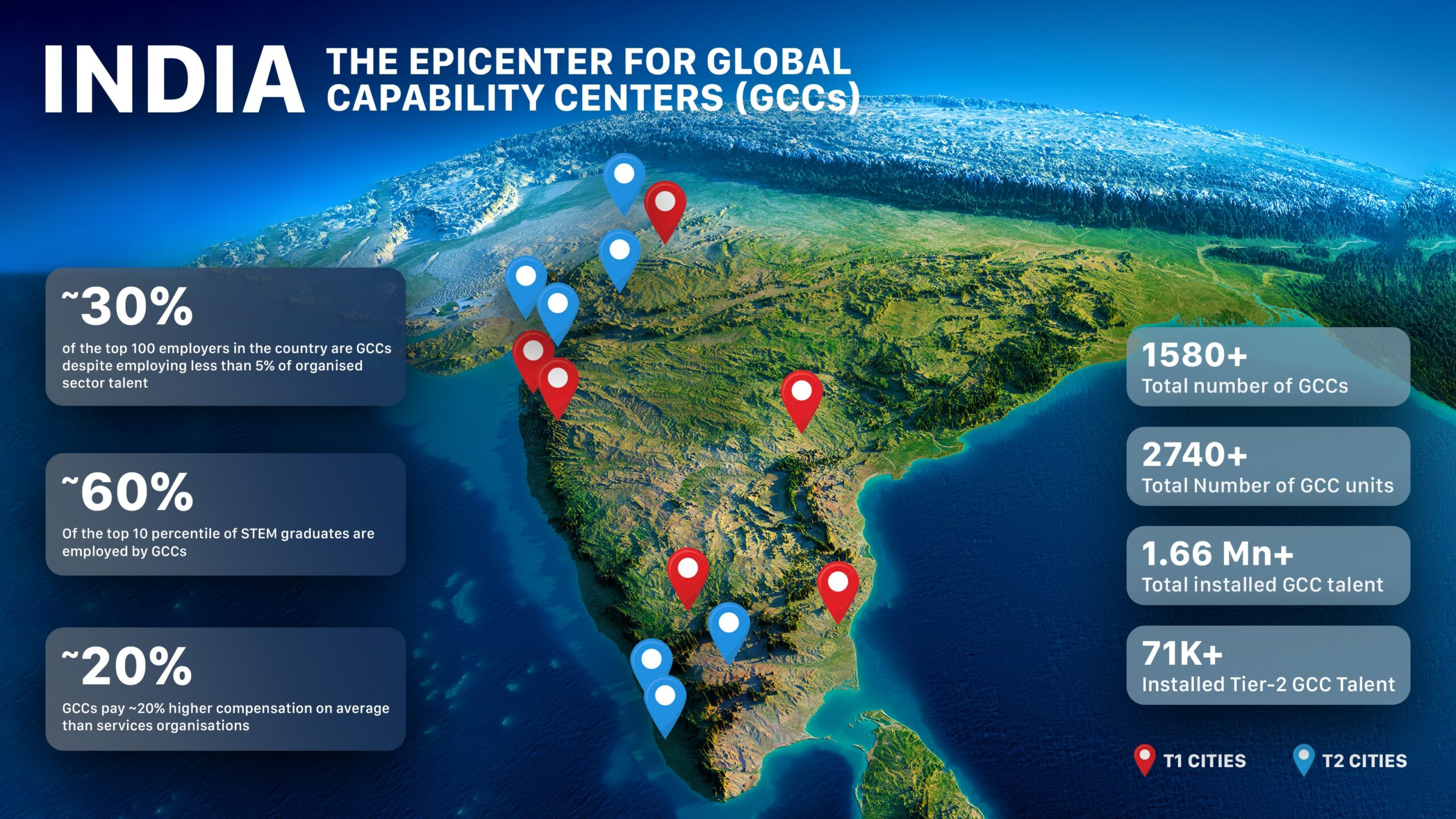
The "hot markets" discussed in these corridors—specifically India, Southeast Asia, and Saudi Arabia—are often treated as monolithic opportunities. This ignores the Institutional Void present in many of these regions. Investing in these markets requires a level of local expertise and political maneuvering that a three-day summit in California cannot provide.
The reliance on "Big Money" to solve these complexities is a fallacy. Large-scale capital infusions without corresponding institutional depth lead to:
- Asset Bubbles: Too much capital chasing too few "bankable" projects.
- Corruption Tax: High entry costs disguised as "consulting fees" or "local partnerships."
- Exit Compression: The difficulty of repatriating capital or finding a public market for an exit in a developing economy.
Strategic Recommendation for Asset Allocation
The current environment demands a pivot from Beta-chasing (relying on the market to rise) to Alpha-generation through Operational Complexity. The "blissful ignorance" observed at Milken is a trailing indicator of a market that has reached its peak saturation of passive optimism.
Investors should prioritize:
- Direct Secondary Market Exposure: Capitalize on the liquidity needs of LPs who are over-allocated to private equity and need to sell at a discount.
- Infrastructure over Software: Shift from the high-multiple "optionality" of AI software to the "physical layer" (data centers, power grids, and cooling systems) where cash flows are contracted and inflation-protected.
- Counter-Cyclical Arbitrage: Identify sectors that the "Milken Consensus" has deemed unattractive, such as traditional energy or legacy manufacturing, which are currently trading at deep discounts despite robust free cash flow.
The disconnect between the Beverly Hills ballroom and the global macro reality is not a bug; it is the product. The most effective strategy is to use the consensus generated in these rooms as a sentiment ceiling. When the "bliss" reaches its maximum intensity, it is time to increase liquidity reserves and prepare for the inevitable re-entry of price signals into an insulated market. Focus on the plumbing of the financial system—the collateral, the covenants, and the cash—rather than the curated narratives of the stage.