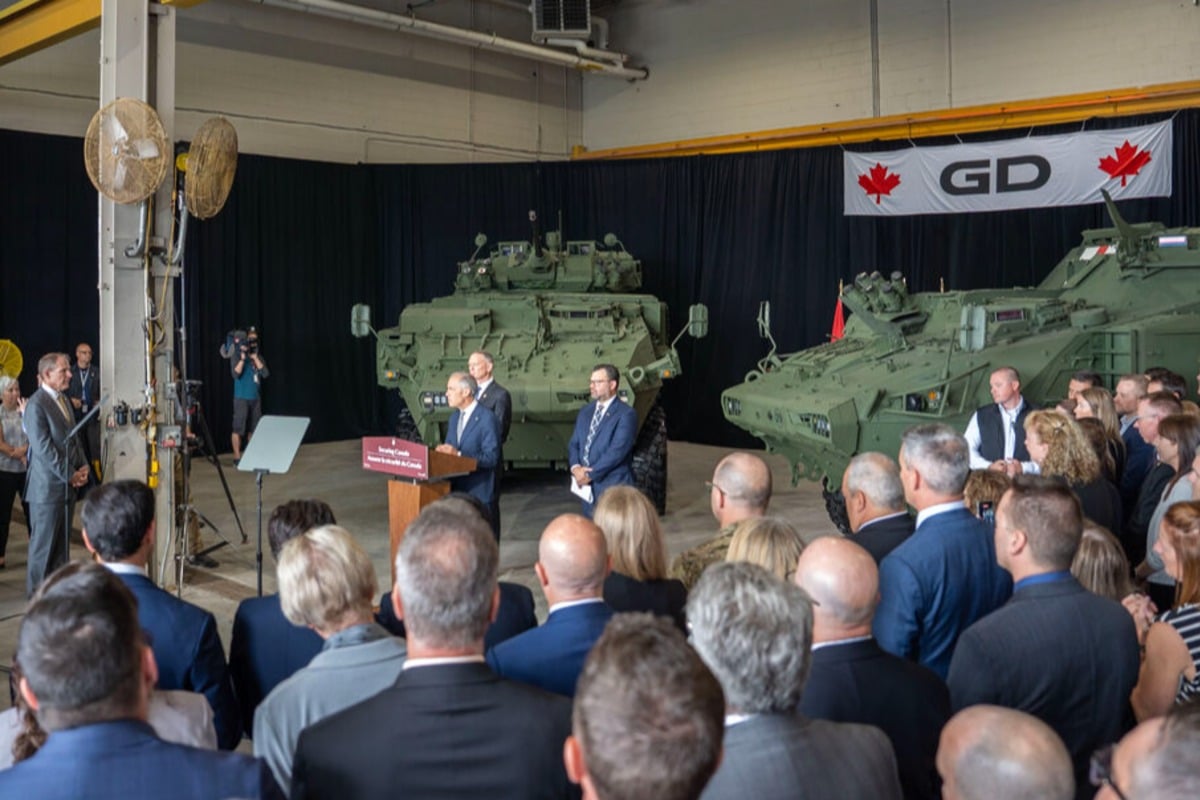
Canada just made a massive move to patch up its long-criticized defense capacity. Prime Minister Mark Carney and Defence Minister David McGuinty walked onto the factory floor at General Dynamics Land Systems-Canada in London, Ontario, to announce a massive shift in military spending. The federal government is dropping nearly $2 billion CAD ($1.4 billion USD) to expand its fleet of Armoured Combat Support Vehicles.
This isn't just a minor top-up. The government is ordering 190 new armored vehicles for the Canadian Armed Forces and throwing in another 35 units specifically earmarked for donation to Ukraine.
For years, critics slammed Ottawa for treating the military like an afterthought. This deal changes that narrative. It signals a major shift in how Canada buys weapons and protects its interests overseas. If you want to understand where Western defense policy is heading in 2026, you need to look closely at what happened in London, Ontario.
The Raw Math Behind The Fleet Expansion
Let's look at the numbers because they tell the real story. Before this announcement, Canada had a standing order for 360 Armoured Combat Support Vehicles. This new influx of cash buys 190 more for domestic use. That pushes the total Canadian fleet from 360 up to 550 vehicles.
Then you have the international side of the ledger. Canada has already sent 89 of these heavy-duty machines to Ukraine. At the 2026 NATO Summit, the government promised 35 more. This new contract secures the production lines for those extra 35 combat support units destined for the front lines in Europe.
Spending $2 billion over four years isn't just about rolling steel off an assembly line. It is a direct response to a more dangerous global environment. Canada operates the NATO Multinational Brigade in Latvia under Operation REASSURANCE. Troops on the ground there need machinery that can survive modern battlefield threats. They need armor that stops improvised explosive devices, mines, and shrapnel.
The vehicles chosen for this task are built entirely on the Light Armoured Vehicle 6.0 platform. That choice matters immensely for logistics.
The Strategy Of Sticking To One Single Platform
Military procurement is notorious for creating logistical nightmares. Governments love to buy shiny new gear from different manufacturers, creating a messy patchwork of parts and training requirements. Canada chose a different path here by sticking strictly to the LAV 6.0 chassis.
The Armoured Combat Support Vehicle comes in eight distinct variations. The fleet includes ambulances, mobile repair vehicles, command posts, troop carriers, electronic warfare units, and engineer support vehicles.
- The Ambulance Variant: Designed with a higher roof to give medical personnel room to treat wounded soldiers under fire.
- The Command Post: Packed with communications gear to act as a rolling headquarters.
- The Mobile Repair Team: Outfitted with tools to patch up broken tanks and trucks right in the mud.
- The Electronic Warfare Unit: Equipped to jam enemy signals and intercept battlefield communications.
Because every single one of these variants shares the same basic mechanical DNA, the benefits are obvious. Mechanized units don't need to carry twenty different types of spare tires or distinct engine belts. A mechanic who knows how to fix the engine on an ambulance can fix the engine on an electronic warfare rig.
This uniformity drives down long-term sustainment costs. It keeps a higher percentage of the fleet ready for combat at any given moment. When you are operating thousands of miles away from home in Eastern Europe, simplicity saves lives.
Changing The Rules Of Military Procurement
This announcement isn't just about buying hardware. It marks the official rollout of Canada's new Defence Industrial Strategy. For decades, the relationship between defense contractors and the Canadian government was transactional and slow. Projects got stuck in bureaucratic mud for years.
By naming General Dynamics Land Systems-Canada as its first official Strategic Partner, the government is shifting to a new procurement model.
Instead of bidding out every single nut, bolt, and minor upgrade through a painful multi-year process, the government and the builder are entering a long-term marriage. The goal is simple. They want to cut out the red tape, reduce corporate risk, and accelerate how quickly new technology makes it to the field.
If troops in Latvia discover a new type of drone threat, the strategic partnership allows the military and engineers in Ontario to immediately design and integrate a fix. It bypasses the traditional bureaucratic hurdles that usually stall these upgrades.
Fueling The Domestic Economy While Arming Allies
Defense spending is always political. Prime Minister Carney made sure to tie this massive military expenditure directly to Canadian workers. The vehicles are designed by Canadian engineers, built using Canadian steel, and assembled by workers in southwestern Ontario.
The economic footprint of this deal is massive.
- Over 6,000 high-paying jobs will be sustained annually over the next eight years.
- The production line relies on a supply chain of more than 600 domestic suppliers.
- The work impacts more than 100 communities across the country.
This domestic focus keeps the money circulating within the local economy. It also ensures that Canada maintains a sovereign capability to build its own armor. Relying entirely on foreign allies for basic combat vehicles is a massive security risk. If a global conflict breaks out, foreign factories will prioritize their own armies first. Having a fully operational, high-capacity plant in London, Ontario, gives Canada a critical safety net.
The Bigger Geopolitical Picture
You can't separate this purchase from Canada's broader international obligations. For years, Washington and other NATO allies openly grumbled about Ottawa's defense spending. The alliance has a strict target requiring member states to spend at least 2% of their Gross Domestic Product on defense. Canada missed that mark consistently for decades.
Things changed recently. This $2 billion investment arrives just as Canada officially hit that 2% NATO target for the first time since the Cold War ended.
The pressure was mounting. With the war in Ukraine dragging on and threats in the Arctic intensifying, hiding behind the American security umbrella was no longer a viable diplomatic strategy. Buying these vehicles shows allies that Canada is willing to put real money behind its geopolitical rhetoric.
Donating another 35 vehicles to Kyiv keeps Canada among the top tier of international supporters for Ukraine. The Ukrainian military already uses the LAV platform heavily. They value its speed, its off-road mobility, and the protection it offers over older Soviet-era personnel carriers. Sending more of the same platform means Ukrainian logistics units don't have to learn how to manage a brand-new supply chain during active operations.
The Next Moves For The Canadian Armed Forces
Now that the cash is committed and the contracts are signed, the real work shifts to the manufacturing floor and training bases. The delivery timeline will stretch out over the next four years.
The immediate next step involves integrating these 190 new units into training rotations across Canadian Armed Forces bases. Troops need to master the different variants before they get shipped off to active deployments. The military will phase out its aging, decades-old LAV II Bison and M113 tracked fleets entirely, replacing them with these modern wheeled variants.
Expect to see production ramp up immediately in London, Ontario. The factory will balance fulfilling the expanded domestic order while simultaneously expediting the 35 units bound directly for the Ukrainian front lines. This contract ensures the factory floor will run at peak capacity through the end of the decade, locking in Canada's defensive capabilities for the foreseeable future.