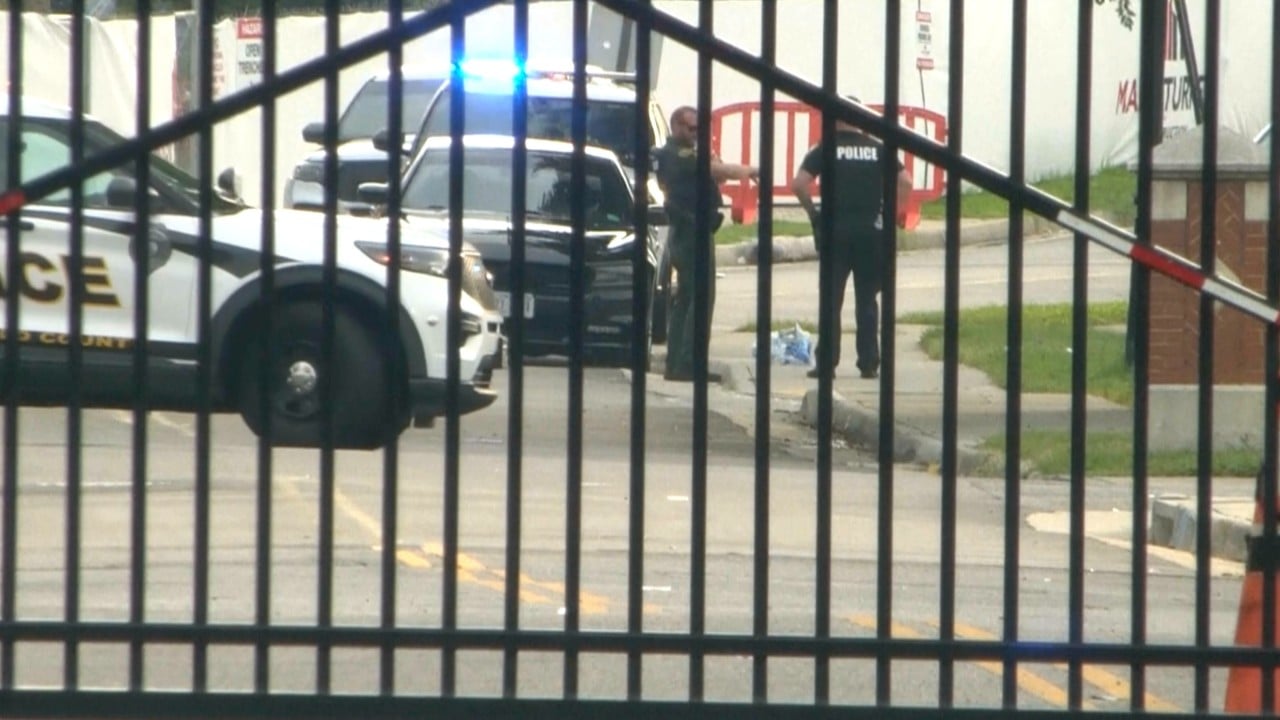
Another headline breaks. Shots fired at an American university. Multiple suspects. Police probing. The public ritual begins immediately.
Pundits demand more funding for campus police departments. Administrators rush to draft tighter perimeter rules. Blue light emergency phones get repainted. Lockdowns become drill-of-the-month routines for freshmen who barely know where the library sits.
Everyone treats the symptom while ignoring the structural architecture of failure.
Every time a shooting occurs on a higher education campus, the institutional reflex is identical. Double down on security theater. Install more cameras. Gate the quads. Turn open seats of intellectual discourse into heavily monitored detention centers.
This approach fails. It fails because it misdiagnoses the pathology entirely. The lazy consensus assumes that violence on campus is an external security breach requiring a harder shell. But universities are not medieval castles under siege. They are hyper-dense, highly porous human ecosystems. Treating them like maximum-security prisons does not stop violence. It merely alters the timeline, heightens the panic, and feeds a multi-billion-dollar security industrial complex that profits off fear.
I have spent over a decade advising institutions on crisis management and physical threat mitigation. I have watched boards of trustees write blank checks for panic buttons and automated gate arms while ignoring the fractured reporting structures and toxic social dynamics rotting their student bodies from the inside out. They spend millions on hardware and pennies on culture.
Let us dismantle the core falsehood driving every major university security policy today.
The Perimeter Fallacy
The fundamental error in modern campus protection is the belief in the hard perimeter.
Urban planners and security consultants love to talk about securing the campus boundary. They draw lines on maps, suggest badge-access turnstiles for academic buildings, and recommend closing public thoroughfares that cut through campus grounds.
It sounds logical in a boardroom. In reality, it is an administrative fantasy.
American universities are deliberately designed to be porous. They are civic hubs. Libraries, student unions, performing arts centers, and open greens draw thousands of non-students every single day. The moment an institution attempts to seal off its campus, it ceases to be a university. It becomes an isolated corporate park.
Worse, hardening the perimeter creates a false sense of security. When a threat originates from within—or bypasses the porous outer layer through standard daily traffic—the entire internal response model shatters.
Data from federal law enforcement databases consistently shows that the vast majority of active threat incidents in educational settings involve individuals with a direct institutional affiliation or prior connection. They are not random commandos scaling a fence. They are students, former students, or individuals with established grievances who walked through the front doors unhindered during regular business hours.
Gatekeepers at turnstiles stop visitors who forgot their IDs. They do not stop determined bad actors carrying concealed weapons into a lecture hall. Relying on perimeter control to prevent targeted violence is like installing a screen door on a submarine and hoping to keep out the ocean.
The Bureaucracy of Silence
If the physical defenses are useless, where does the real failure happen? It happens in the gray space between a warning sign and an intervention.
In almost every post-incident review following a campus shooting, a chilling pattern emerges. Someone knew.
Roommates saw erratic behavior. Professors read assignment papers detailing violent ideations. Peers watched social media feeds spiral into obsessive threats. Yet, nothing happened. Why? Because the reporting mechanisms inside modern universities are broken by design.
Institutions have built towering bureaucracies called Behavioral Intervention Teams or Threat Assessment Groups. On paper, these committees look thorough. In practice, they are bogged down by administrative inertia, liability fears, and systemic fragmentation.
If a student reports concerning behavior about a peer, the report often disappears into a digital black hole run by risk-averse legal departments. Staff members worry about violating privacy regulations like FERPA or triggering a defamation lawsuit. They worry about false positives and reputational damage. As a result, institutional hesitation trumps swift, aggressive intervention.
We have created a system that penalizes proactive intervention while rewarding administrative inaction.
When a crisis hits, the university president stands before reporters and laments an "unprecedented tragedy." But the tragedy was entirely precedented. It was just filed under "pending review" in an office three floors above the quad.
The Myth of the Hardened Classroom
Let us address the tactical equipment narrative.
Following high-profile incidents, boards often debate upgrading classroom hardware. They look at magnetic door locks, ballistic whiteboards, and panic-alert badges.
Imagine a scenario where a lecture hall holds three hundred undergraduates. An active threat enters. The professor hits a panic fob. The automated door locks engage.
What happens next?
In a chaotic environment, locking down a room full of panicked adolescents without a clear tactical plan often creates a fishbowl effect. It traps people in confined spaces with limited exits while emergency responders navigate a massive, unfamiliar campus footprint.
Campus police departments are often understaffed, undertrained for dynamic urban warfare scenarios, and geographically isolated from the specific building where a crisis unfolds. The average response time for law enforcement to arrive at an active scene on a sprawling university campus is measured in critical, bleeding minutes.
Hardware cannot substitute for tactical human awareness. A magnetic lock does not fix a broken reporting culture. A ballistic whiteboard does not teach students how to identify behavioral escalation before it translates into physical violence.
What Actually Works
If perimeter walls and bureaucratic committees are failing, what should universities do instead?
First, dismantle the silos between student mental health services, campus safety, and academic departments. Right now, these entities operate in entirely different orbits. The psychological counselor is bound by strict confidentiality rules that prevent them from sharing critical threat indicators with campus police, even when a student poses an active danger to others.
This privacy wall must be punctured when credible threats emerge. Public safety must supersede administrative privacy paranoia.
Second, shift the budget from passive hardware to active bystander training. But not the useless, checkbox training that universities currently mandate during freshman orientation. I am talking about rigorous, continuous, culturally embedded peer-reporting incentives that remove the social stigma of "snitching." Students need to understand that reporting a troubled peer is not an act of betrayal; it is an act of preservation.
Third, audit the physical environment for natural surveillance and escape velocity, not lockdown capability. Architecture should prioritize clear lines of sight, multiple rapid egress points, and decentralized gathering spaces that do not trap populations in architectural dead ends.
Universities must stop hiding behind security theater. Buying more cameras and gating off the quad does not make students safer. It just makes administrators feel better about their liability exposure while the underlying rot continues to spread unchecked.
Tear down the illusion. Fix the culture. Stop waiting for the next headline to prove that the current system is bankrupt.
```