Political victory speeches are built for domestic applause, not strategic intelligence.
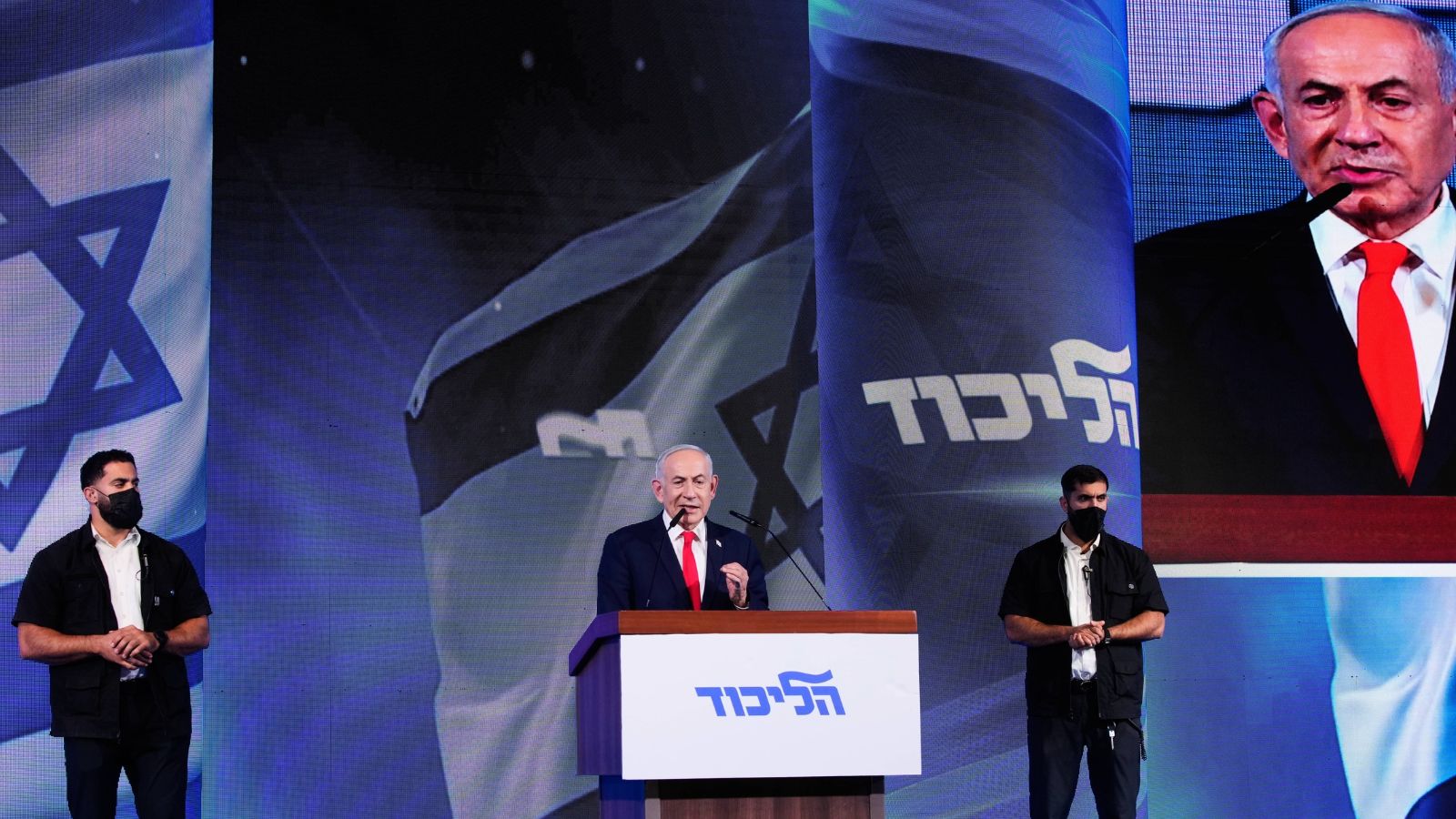
When Israeli Prime Minister Benjamin Netanyahu declared in a post-election address that "Iran is weaker than ever," he was speaking to voters looking for reassurance, security, and a clear narrative of triumph. Mainstream coverage often echoes these statements at face value, framing regional power dynamics as a simple zero-sum scoreboard where one side's electoral celebration equals the other side's terminal decline.
That framing misses the structural reality of Middle Eastern deterrence.
Evaluating the Islamic Republic of Iran solely through the lens of immediate tactical setbacks—or through the rhetoric of an Israeli election cycle—confuses temporary friction with systemic collapse. To understand what is actually happening between Jerusalem and Tehran, analysts have to separate campaign messaging from military, economic, and diplomatic fundamentals.
The Difference Between Tactical Degradation and Strategic Deterrence
In security studies, there is a critical distinction between degradation and deterrence. Degradation measures how much equipment, personnel, or infrastructure an adversary loses in a given timeframe. Deterrence measures whether that adversary retains the capacity and political will to impose unacceptable costs in the future.
Supporters of Netanyahu's assessment point to real, documented pressures on Tehran:
- Proxy Attrition: Extended conflict across multiple fronts has depleted weapons stockpiles and eliminated senior commanders within Hezbollah and Hamas, reducing their immediate operational tempo.
- Air Defense Vulnerabilities: Direct exchanges between Israel and Iran exposed gaps in Iran's Russian-supplied air defense networks, demonstrating that Israeli aircraft can operate with significant freedom.
- Economic Strain: Years of sanctions, high inflation, and currency depreciation have fueled domestic discontent inside Iran, limiting the regime's ability to subsidize regional militias without risking internal unrest.
According to assessments frequently cited by defense analysts at institutions like the International Institute for Strategic Studies (IISS) and the Center for Strategic and International Studies (CSIS), these factors represent genuine operational constraints. Iran cannot project conventional power the way it did prior to recent regional escalations.
Yet equating operational constraints with total weakness ignores how asymmetric states adapt.
Why Asymmetric Powers Thrive Under Pressure
Conventional militaries rely on intact supply chains, air superiority, and centralized command. Asymmetric networks rely on dispersion, redundancy, and low-cost production.
When an asymmetric actor suffers heavy losses at the top, it rarely surrenders. Instead, it decentralizes. Local cells gain autonomy. Procurement shifts from high-profile shipments to smaller, harder-to-track smuggling routes. Production moves deeper underground—literally and figuratively.
Consider how Iran has structured its regional posture over the past four decades:
- Distributed Manufacturing: Rather than relying solely on shipping finished missiles from Tehran to the Levant, Iranian engineers have transferred blueprints and machine tools to local partners, enabling domestic assembly of rockets and drones.
- Low-Cost Saturation: A one-way attack drone costs a fraction of the interceptor missile required to shoot it down. Even when defenses intercept 90 percent of incoming threats, the economic math favors the attacker over a prolonged war of attrition.
- Strategic Ambiguity: Facing conventional military inferiority, states historically accelerate ambiguous deterrence programs—most notably latent nuclear capabilities—to guarantee regime survival.
Military historians and political scientists, including scholars of nuclear proliferation like Kenneth Waltz and Vipin Narang, have long noted that states facing acute conventional vulnerability often view nuclear latency not as an offensive luxury, but as an existential insurance policy. A regime that feels cornered is often more dangerous and unpredictable than a regime that feels secure.
The Domestic Politics Behind Post-Election Rhetoric
Every post-election speech serves a specific political function. Following a hard-fought campaign, a leader must consolidate coalition partners, project strength to skeptics, and signal continuity to international allies.
In Israel, national security is the primary currency of political legitimacy. Claiming that a primary adversary has been reduced to historic weakness validates past military decisions and justifies future policy priorities.
However, opposition figures and former Israeli security officials have frequently argued that declaring premature victory carries severe risks:
- Complacency in Planning: Overestimating an adversary's decline can lead to underinvestment in civil defense, intelligence collection, and long-term diplomatic coalitions.
- Coalition Friction: Triumphalist rhetoric can complicate quiet security cooperation with regional Arab states that prefer discreet containment over public confrontation.
- Escalation Miscalculation: If Tehran believes its deterrence has eroded to zero, hardliners within the Islamic Revolutionary Guard Corps (IRGC) may feel compelled to stage a dramatic demonstration of force to restore credibility.
What Observers Should Actually Watch
Instead of measuring regional stability by the volume of post-election applause, security analysts look at concrete, verifiable indicators that reveal whether Iran's strategic position is genuinely eroding or merely shifting shape.
1. Enrichment Thresholds and Breakout Timelines
International Atomic Energy Agency (IAEA) reports provide the most objective measure of Iran's nuclear posture. Changes in stockpile purity, centrifuge cascades, or inspector access tell a far clearer story than political speeches.
2. Gulf State Diplomacy
Watch how Saudi Arabia, the United Arab Emirates, and Qatar engage with Tehran. Since the China-brokered rapprochement between Riyadh and Tehran, Gulf capitals have hedged their bets, balancing security ties with Washington against diplomatic channels with Iran. If Gulf states suddenly abandon engagement and align openly with an anti-Iran military bloc, Tehran is truly isolated. If they continue hedging, regional actors still view Iran as a permanent neighbor that must be managed rather than defeated.
3. Domestic Regime Cohesion
Authoritarian systems rarely fall because of external military strikes alone; they fracture when the security apparatus loses loyalty or economic elites defect. Tracking strike activity in Iran's energy sector, capital flight, and rial exchange rates reveals far more about regime stability than cross-border exchanges.
The Risk of the Binary Narrative
The flaw in mainstream coverage of post-election speeches is the demand for a binary headline: either Iran is collapsing, or Israel is failing.
Reality is more complicated. Israel has demonstrated decisive tactical and technological superiority, inflicting heavy costs on Tehran's regional network and exposing vulnerabilities inside Iran itself. At the same time, Iran remains a nation of nearly 90 million people with deep strategic patience, entrenched regional alliances, and a threshold nuclear program that no single airstrike or election result can permanently erase.
Treating a campaign victory speech as the final verdict on a multi-decade geopolitical rivalry confuses the end of an election cycle with the end of a conflict.