The Calgary Stampede has always been a loud, sweat-soaked, multi-million-dollar collision of cowboy culture and absolute chaos. If you've ever spent a July night in downtown Calgary, you know the routine. You don't sleep. The bass rattles the glass in the condo towers, the streets smell like mini-donuts and beer, and the party pushes hard straight through until sunrise.
But things are shifting. A recent city memo obtained by local media reveals that Calgary is pulling the reins on the wildest party of the year. Also making headlines in related news: Why Mainstream Entertainment Outlets Keep Killing Living Celebrities For Clicks.
According to the directive issued by Ryan Pleckaitis, Calgary’s Chief of Community Standards, weeknight concerts outside of Stampede Park must shut down live music by midnight. The city is throwing a bone to organizers by allowing "cool-down music" until 12:30 a.m., which they claim will help crowds disperse safely instead of dumping thousands of heavily intoxicated people onto the pavement all at once. If you're looking for those 2 a.m. ragers, you'll have to wait for Friday and Saturday nights, where the weekend curfew remains untouched.
It gets worse for the festival promoters. The city isn't just cutting the clock; they're turning down the volume. Before midnight, allowable noise levels are dropping from 75 dBA down to 70 dBA. The bass limit, measured in dBC, is getting slashed from 85 to 80. After midnight on weekends, the screws tighten further, dropping the ambient noise limit to a quiet 60 dBA. Further information on this are explored by Variety.
If you think a five-decibel drop sounds like minor administrative tweaking, you don't understand acoustics. Decibels are logarithmic. A 5 dB drop represents a massive, noticeable reduction in perceived volume. For festival audio engineers, it completely changes how they mix a live outdoor show.
The Backstory of the Crackdown
This entire policy shift didn't happen in a vacuum. It's the direct result of what happened when massive party tents migrated into residential areas.
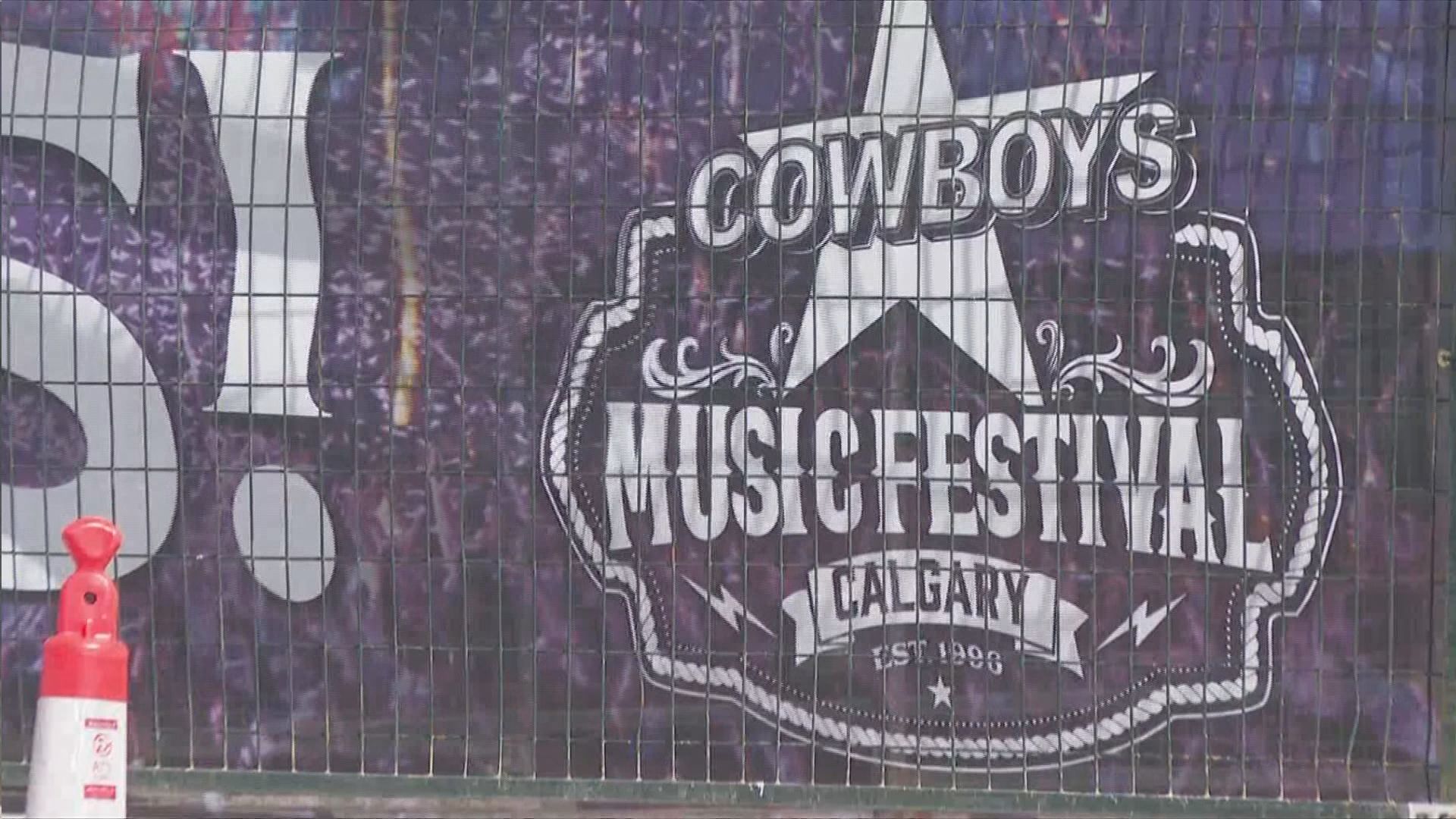
During the 2025 Stampede, the city logged 225 formal noise complaints related to downtown music festivals. A staggering 125 of those complaints targeted a single venue: the Cowboys Music Festival.
For years, Cowboys operated on land adjacent to the actual Stampede grounds. It was noisy, but it was expected. Then it moved to Cowboys Park—formerly known as Shaw Millennium Park—perched right on the western edge of downtown next to the Mewata Armoury. Suddenly, a massive, high-powered sound stage was sitting directly beneath thousands of residential condo windows.
Residents complained that the bass was literally vibrating items off their shelves and coffee tables. Beyond the noise, the neighborhood dealt with a tidal wave of social disorder, public urination, and open intoxication. The city decided it had to act.
Naturally, the festival operators are furious. Penny Lane Entertainment, the group behind Cowboys, fired off a letter to city council claiming the new restrictions were designed without proper consultation and are completely unattainable for an event of this scale. They've warned that the sudden change, coming just weeks before the July 3 kickoff, could force them to lay off hundreds of staff and could lead to major headliners pulling out of their slots.
The Real Cost of Silencing Stampede
There's a delicate economic ecosystem at play here. Promoters budget their entire year around those ten days in July. They pay massive booking fees for international artists who expect to play late, high-energy sets. If an artist can't take the stage until 10:30 p.m. because of summer daylight, a midnight hard stop gives them an incredibly narrow window to perform.
Fewer hours means lower liquor sales. Lower liquor sales mean lower margins. For an industry still finding its footing after years of economic volatility, these lost hours hit the bottom line immediately.
Calgary Mayor Jeromy Farkas has backed the community standards team, stating that the city needs reasonable controls. He pointed out that if a promoter tried to run a festival like this in a suburban neighborhood, residents would never tolerate it. The downtown core shouldn't be treated any differently just because it has higher density.
It's a classic clash of urban realities. Calgary wants to market itself as a vibrant, world-class entertainment destination. The Stampede brings in over 1.4 million visitors and pumps hundreds of millions of dollars into the local economy. But as more people buy condos downtown, those residents expect the city to enforce basic quality-of-life bylaws. You can't easily balance a $250 noise fine against a festival pulling in millions in corporate sponsorships.
If you are heading down to the tents this summer, prepare for shorter sets and quieter nights from Monday to Thursday. Promoters are currently trying to re-work their schedules to get headliners on stage much earlier than usual. Check your ticket details before you head out, because the old days of stumbling out of an outdoor tent at 2 a.m. on a Tuesday are officially over. Get your logistics sorted early, map out your transit options before the midnight mass exodus hits the train lines, and don't expect the bass to shake your teeth loose this time around.