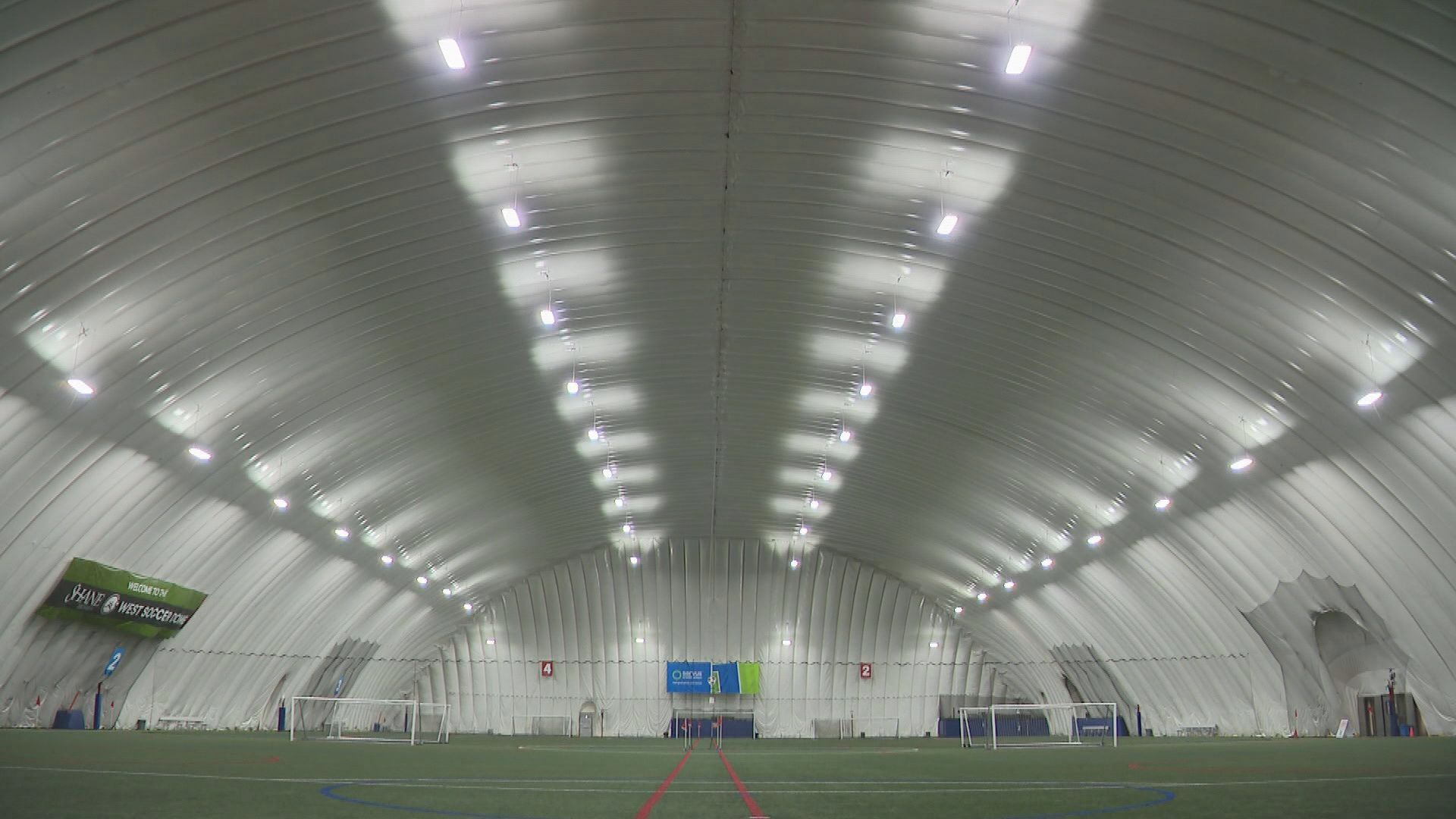
The City of Calgary just rolled out the priority projects for its GamePLAN recreation strategy. You have heard the rhetoric before. The city promises "inclusive spaces," "modernized facilities," and "equitable access." It sounds noble. It sounds responsible. It is, in reality, a blueprint for long-term fiscal decay disguised as civic progress.
I have spent two decades watching municipalities sink billions into these concrete cathedrals. I have seen the construction budgets balloon, the operational deficits spiral, and the inevitable deferred maintenance cycles that turn these gleaming new hubs into crumbling liabilities within two decades.
The consensus among the public and the media is that building more city-owned pools, arenas, and multi-purpose facilities is an absolute good. The premise is that if we build it, community health will follow. This is not just lazy thinking; it is a fundamental misunderstanding of how modern urban recreation actually functions.
The GamePLAN strategy is not a plan for recreation. It is a plan for capital investment theater.
The Infrastructure Trap
City halls have a fetish for "anchor facilities." These are the massive, centralized complexes that take years to design and even longer to build. They are the pride of the local council member who wants a plaque with their name on it to outlast their term.
Here is the inconvenient truth about these facilities: They are obsolete the day they open.
Municipalities are uniquely bad at running high-turnover service businesses. A modern fitness facility requires agility. It needs to pivot based on changing trends—pickleball booms, yoga trends, specialized training. A city-run facility, constrained by unionized staffing, rigid procurement processes, and glacially slow decision-making, cannot compete with the private sector.
When the city builds a massive $100 million rec center, it locks itself into a specific operational model for the next 30 years. You are not buying a flexible community asset; you are buying a fixed-cost monster.
Consider the "lifecycle costing" fallacy. City reports love to highlight the initial capital expenditure. They sell you on the dream of the $80 million center. They ignore the fact that the cost of running that building—the HVAC, the specialized mechanical systems for pools, the labor, the insurance—will dwarf the construction cost within ten years. When the roof needs replacing or the pool filtration system fails, the budget for maintenance isn't there. Why? Because the city spent the maintenance fund on the next shiny new project to chase more political goodwill.
The Equity Myth
The GamePLAN document leans heavily on "equity." They claim we must distribute these assets based on the needs of underserved populations.
This sounds virtuous. It is also an economic disaster.
Placing expensive-to-operate, large-scale facilities in areas with low density or low user-base capacity is a recipe for catastrophic under-utilization. You end up with a facility that requires heavy taxpayer subsidies to keep the lights on, not because the people don't want recreation, but because the facility design is a mismatched scale for the neighborhood.
True equity is not about giving every district a replica of the same massive pool. Equity is about accessibility. If the city really cared about providing recreation to underserved populations, they would stop trying to build cathedrals and start building outposts.
Imagine a scenario where the city stops trying to be the primary operator of every square foot of recreation space. Instead of a $100 million central hub, the city provides $20 million in micro-grants to existing community halls, partners with private sector athletic clubs to subsidize memberships for low-income families, and invests in low-overhead outdoor programming.
Instead of creating one giant, inaccessible building that residents have to commute to, you create fifty small, distributed touchpoints that people can walk to. That is equitable. That is efficient. But it does not offer a ribbon-cutting photo op for the mayor. That is why they will never do it.
The Private Sector Reality Check
The city treats the private fitness and recreation industry as a competitor to be squeezed out. They argue that private gyms "only serve those who can pay."
This is a failure of imagination.
The private sector is where innovation happens. It is where you find the best equipment, the most efficient staffing models, and the highest user satisfaction. When a city enters that space as a dominant player, they crowd out the private operators. Then, the city inevitably fails to provide the same level of service, leaving the public with a stagnant, bureaucratic facility that no one really enjoys, but everyone pays for.
If you want to understand how a city should function, look at the "asset-light" approach. A municipality should focus on the things the private sector cannot do: parks, trails, open spaces, and safety. Leave the swimming lessons, the personal training, and the arena leagues to the entities that actually understand how to balance a ledger.
The Maintenance Debt Time Bomb
The most dangerous part of the GamePLAN strategy is what it ignores. Existing facilities are already rotting. The city has a documented backlog of maintenance for infrastructure built in the 1980s and 1990s.
By prioritizing new projects, the city is engaging in a classic "sunk cost" delusion. They are adding to their inventory while letting their current assets turn to dust. They assume that if they build new, they can eventually decommission the old. But the political reality is that you can never close an old community center. The public will riot. So, the city keeps both the crumbling old facility and the new, expensive one, while the tax base groans under the weight of maintaining two liabilities.
You are being sold a version of the future that is unaffordable.
How To Fix The Thinking
If we actually wanted a healthy city, we would demand a moratorium on new large-scale facility construction. We would force a pivot toward three principles:
- Divestment and Outsourcing: Evaluate every city-owned facility. If it can be run by a private operator or a non-profit organization with a performance-based contract, sell or lease it. Stop being a landlord.
- Agile Infrastructure: Stop building fixed, permanent structures for transient trends. Build modular, adaptable spaces. If a neighborhood needs a pickleball court today but might need a community meeting space tomorrow, build structures that can handle both.
- The Voucher System: If the goal is truly equitable access, stop subsidizing buildings and start subsidizing people. Provide low-income residents with recreation vouchers that can be used at any facility—private or public. This forces the city to compete on quality and forces private providers to lower their barriers to entry.
The current GamePLAN is a relic. It is based on a mid-20th-century model of civic planning where government is the provider of all services. In 2026, this is not just inefficient; it is negligent.
We are living in an era where municipal budgets are stretched to their breaking point by interest rates, inflation, and stagnant tax growth. The last thing a city like Calgary needs is to commit to another two decades of ballooning operating expenses for buildings that will be obsolete before the loans are paid off.
Stop asking for new facilities. Start asking why the city thinks it needs to be in the business of owning them in the first place. Demand an audit of the current operational deficit. Demand a plan that accounts for the maintenance of what we already have before a single shovel touches the dirt for a new, shiny, and ultimately empty monument to municipal ego.
The ribbon will be cut. The politicians will smile. The budget will break. And you will be the one footing the bill for a facility you won't even use.