We used to treat wildfires as a distant problem. They were things we watched on the evening news, chewing up forests in California or turning Greek hillsides to ash. But the massive blaze tearing through the Cairngorms National Park over the last few days has shattered that illusion.
When Scotland's largest national park catches fire, it's not just a local crisis. It's a glaring warning sign about how unprepared the UK is for a drier, hotter world.
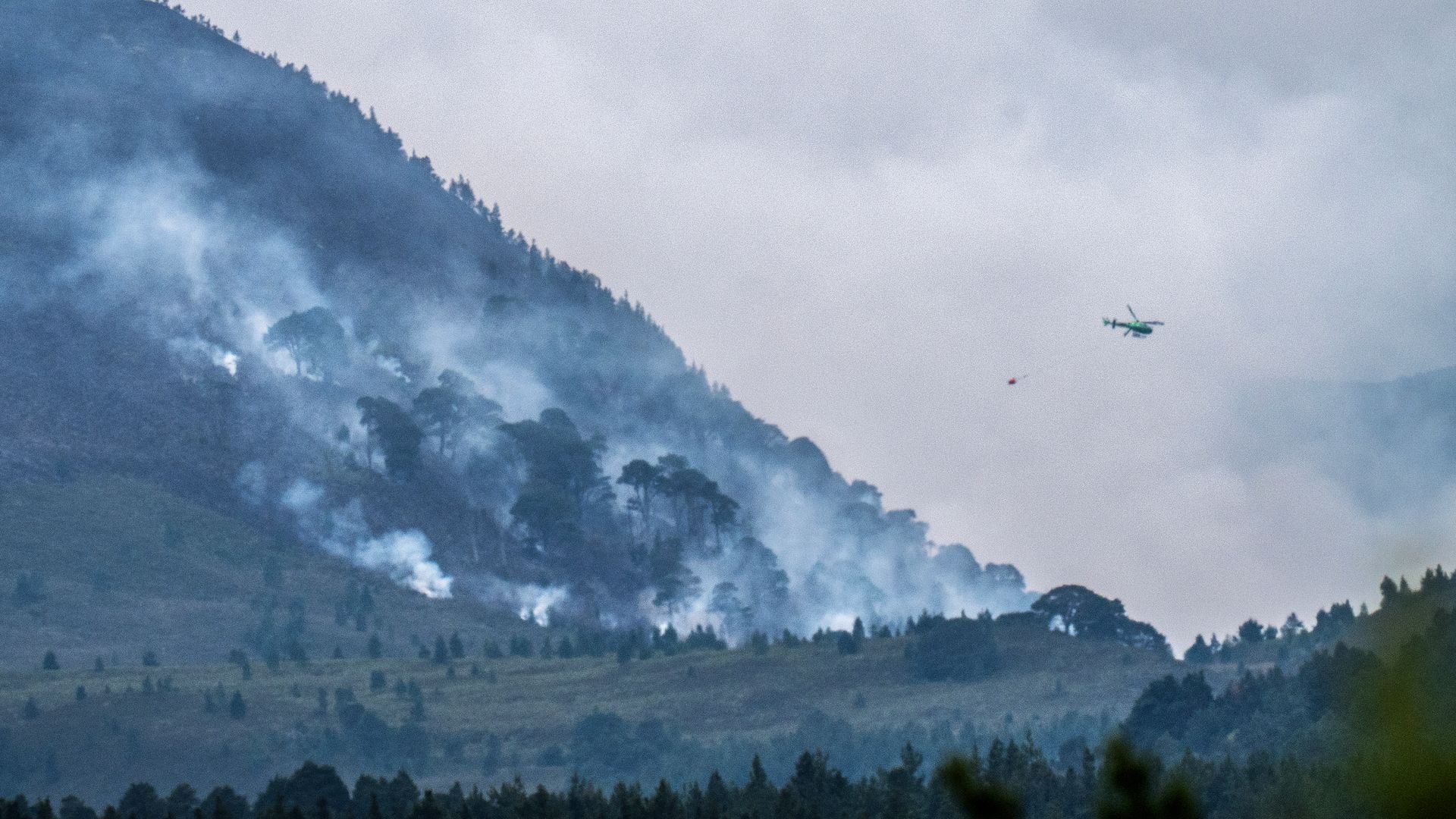
The fire broke out late on Wednesday morning, July 15, 2026, near Ryvoan Bothy, close to Nethy Bridge. Driven by warm weather and high winds, the flames ripped through heathland and dry heather. Within 24 hours, the front extended across nearly four miles of the park. Over 300 hectares of vital habitat burned. Local emergency services responded quickly, but the scale of the emergency exposed a critical bottleneck in how we fight these disasters.
As the flames advanced, RSPB Scotland made a desperate plea for air support. They couldn't get any. The reason? Private firefighting helicopters were stretched thin, mostly deployed to tackle separate, long-running blazes on Tintwistle Moor in the Peak District. While more than 50 ground firefighters worked tirelessly through the night, they had to wait until Friday for two helicopters to finally arrive and begin waterbombing the area.
This delay highlights a systemic issue that goes far beyond a single bad summer.
The Battle at Glenmore Forest
Fighting a wildfire in the Scottish Highlands is an entirely different beast compared to fighting a structural fire in a town. The terrain itself makes traditional firefighting methods nearly impossible.
The blaze quickly threatened the Glenmore Forest Park area. This required immediate, precautionary evacuations of homes, busy holiday campsites, and local businesses. Smoke drifted over the major A9 road, blinding drivers. Police Scotland shut down local access roads entirely. The Cairngorm Mountain Resort had to close its doors at the height of the summer tourist season.
A Clackmannanshire family enjoying a getaway at the Glenmore Campsite described their holiday turning sour as thick smoke rolled over the trees. It’s a terrifying reminder of how fast a scenic holiday spot can turn into an active evacuation zone.
Ground crews face immense physical hurdles in these environments. You can't easily drive a massive fire engine up a mountain or through dense, bogs and heather. Firefighters have to haul heavy equipment on foot or use small all-terrain vehicles. They use beaters to smother flames and cut manual fire breaks into the soil.
When a fire front stretches out over six kilometres, ground crews alone can only do so much. They can try to contain the edges, but they can't stop a fast-moving crown fire or a deep-seated ground fire without help from the sky.
The Real Ground War and Why Helicopters Matter
When the two helicopters finally joined the operation on Friday, the dynamic changed. Waterbombing isn't just about putting out the flames. It's about buying time for the people on the ground.
Helicopters use massive underslung buckets to scoop water from nearby lochs. They fly over the fire line and drop hundreds of gallons of water directly onto the most intense hot spots. This cools the fire down enough so that ground crews can move in safely to extinguish the remaining embers.
Without air support, firefighters have to stay back. The heat is too intense, and the risk of getting trapped by sudden wind shifts is too high.
But relying heavily on helicopters brings its own set of problems. Fire managers note that low visibility from thick smoke can ground aircraft instantly. Heavy water drops can also pose a severe physical hazard to ground crews working directly beneath them. Communications must be perfectly synchronized. If a helicopter drops water on a crew or flushes intense hot air and embers toward them, the results can be fatal.
Why UK Peatlands are a Ticking Time Bomb
To understand why this wildfire is so dangerous, you have to look at what's burning underneath the surface. The Cairngorms National Park holds some of the most important peatlands and ancient woodlands in the UK.
Peat is made of decomposed plant matter that has packed down tightly over thousands of years. It stores vast amounts of carbon. When peat is wet and healthy, it acts as a natural defense against global warming. But when a prolonged spell of hot weather dries out the top layers of vegetation, the peat beneath becomes highly flammable.
A peat fire doesn't just burn on the surface. It can burrow deep underground.
Once a fire gets into the peat layer, it can smolder for weeks, months, or even through an entire winter. It eats away at the root systems of ancient pine trees from below. It releases massive amounts of stored carbon back into the atmosphere, turning a carbon sink into a carbon bomb.
The fire at Ryvoan Bothy didn't just burn the heather you can see. It threatened to destroy decades of careful habitat restoration work by conservation bodies like the RSPB.
The Resource Crisis We Aren't Talking About
The scramble for air support during the first 48 hours of the Cairngorms fire reveals a massive gap in UK emergency planning. The UK doesn't own a dedicated national fleet of firefighting aircraft.
Instead, fire services and landowners rely on commercial helicopter operators. When multiple fires break out simultaneously across the UK, those private resources get stretched to the breaking point. While the Cairngorms burned, resources were tied up down south dealing with the aftermath of a three-week-long moorland fire in Greater Manchester and the Peak District.
The Scottish Fire and Rescue Service stated that they have adequate direct and indirect means to fight fires without aircraft. But the frantic calls from conservationists on the ground show a clear disconnect between high-level operational confidence and the harsh reality of managing a massive blaze on the hillside.
We can't keep treating wildfires as freak occurrences. The Scottish Fire and Rescue Service has issued repeated high and very high wildfire risk warnings for the central Highlands, as well as southern and eastern Scotland. The conditions creating these fires are becoming the new normal.
What Needs to Change Next
If we want to protect our wild spaces, our infrastructure, and our communities, we have to change our approach to land management and emergency funding.
First, the UK needs a coordinated strategy for aerial firefighting assets. Relying on a patchwork of private contractors who are shared between England, Wales, and Scotland is a recipe for disaster when hot, dry summers trigger multiple outbreaks at once.
Second, we have to rethink how we manage land in our national parks. Healthy, wet peatlands don't catch fire easily. For centuries, hillsides have been drained and managed in ways that dry out the landscape. Restoring natural wetlands, blocking old drainage ditches, and encouraging a diverse mix of native trees can create natural fire breaks that slow down blazes.
Finally, public awareness needs a major upgrade. While the exact cause of the Ryvoan Bothy fire is still under investigation, the vast majority of UK wildfires are caused by human activity. It takes just one poorly managed campfire, a discarded disposable barbecue, or a dropped cigarette to spark an environmental catastrophe that costs millions of pounds to fight.
If you live near or visit high-risk areas like the Cairngorms, you need to take basic precautions seriously.
- Check local wildfire warning levels before traveling.
- Never light open fires or use disposable barbecues in dry heathland or forest areas.
- Pack out all rubbish, especially glass bottles which can magnify sunlight and spark fires.
- Keep emergency contact numbers handy and report even small plumes of smoke immediately to the fire service.