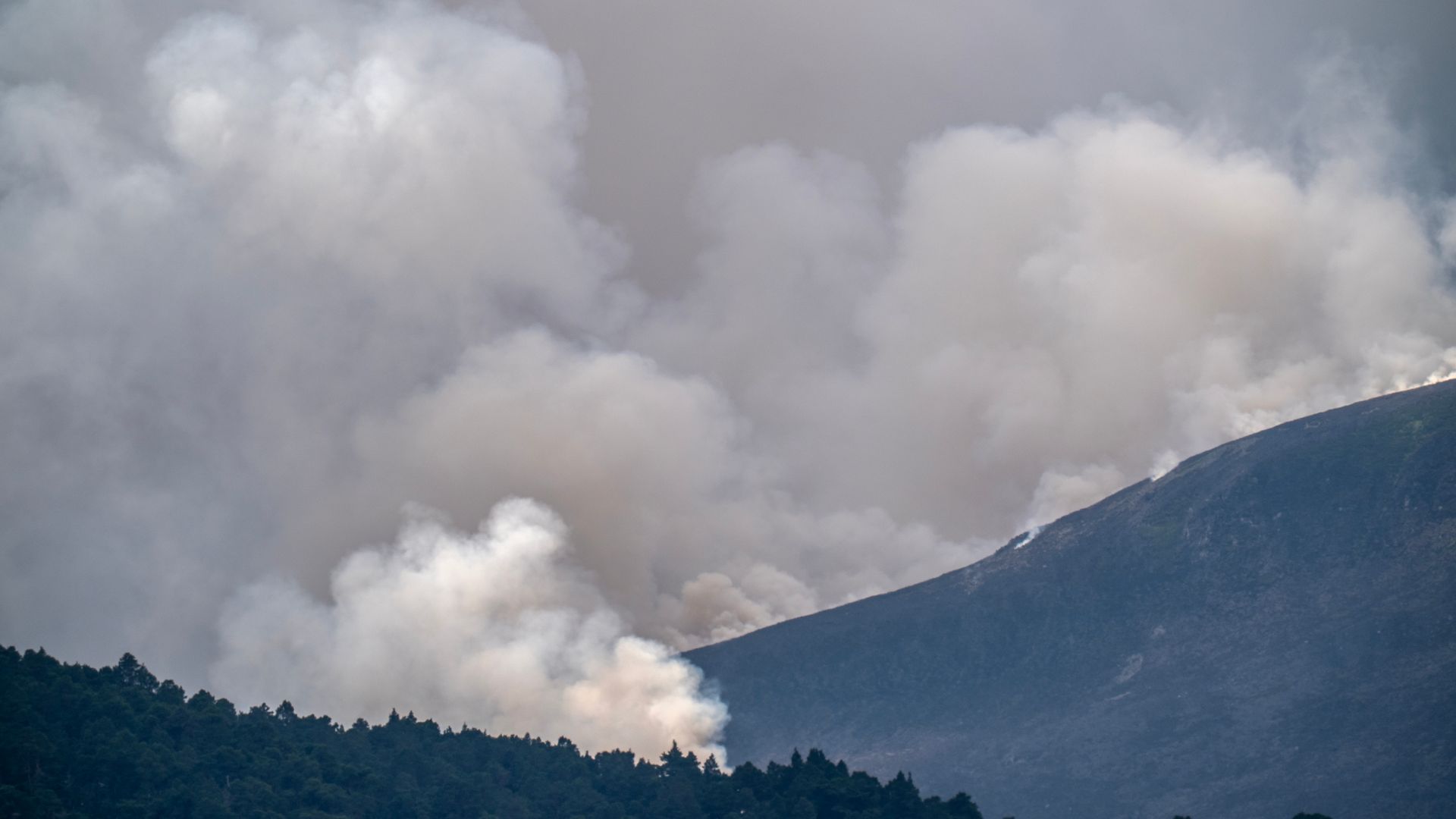
When Police Scotland declared a major incident and forced the evacuation of Nethy Bridge, it wasn't just a local emergency. It was a wake-up call. Hundreds of villagers packed bags and headed for respite centers in Aviemore as a massive wildfire raged out of control in the Cairngorms National Park. For nine days, over 500 firefighters have battled an invisible wall of smoke and heat across rugged terrain that is basically impossible to reach by standard vehicles.
If you think massive, out-of-control wildfires are exclusive to Mediterranean summers or California dry brush, look at the Scottish Highlands right now. The reality on the ground is stark.
The Breaking Point at Nethy Bridge
The fire started near Glenmore on July 15. For over a week, it consumed heather, peat, and small trees across roughly six square kilometres. Crews thought they were gaining ground. Then the wind shifted.
Stronger winds and prolonged dry conditions turned a contained hazard into an unpredictable beast. It pushed the flames directly toward Nethy Bridge. Police Scotland had no choice. Superintendent Judy Hill and emergency partners triggered a major incident protocol, shutting down access roads and deploying officers door-to-door to pull residents out before thick smoke and flying embers cut off escape routes.
First Minister John Swinney convened the Scottish Government's Resilience Room (SGORR) as the situation deteriorated. But meetings in Edinburgh don't stop wind-driven flames.
Why Traditional Firefighting Fails in the Cairngorms
Fighting a wildfire in a national park is a logistical nightmare. You can't just drive a fire engine up a mountain path.
The Scottish Fire and Rescue Service has relied heavily on helicopter water-bombing, all-terrain vehicles, and specialized wildfire tactics just to make a dent. Deputy Assistant Chief Officer Kenny Barbour noted that large sections of the fire ground are completely inaccessible on foot or by vehicle.
Think about what that means. Firefighters are dealing with:
- Remote terrain that requires air support for basic water delivery.
- Deep-seated peat fires that smolder underground long after the surface flames look dead.
- Rapidly shifting wind patterns that send smoke drifting all the way to Aberdeen.
When the weather turns dry and windy, traditional Scottish moorlands turn into tinderboxes. We aren't talking about a random bonfire gone wrong. We are talking about landscape-scale vulnerability.
The Political and Practical Fallout
Local politicians are already pointing fingers. Scottish Conservative MSP Tim Eagle criticized the initial government response speed, arguing that official declarations lagged behind the reality on the ground. Residents are left wondering when they can return to homes surrounded by charred earth.
Tourism in the Cairngorms is taking a massive hit, too. Access restrictions cover critical paths around Glenmore, Loch Morlich, the Green Loch, and routes toward Cairngorm Mountain. Peak summer season is effectively on pause for anyone hoping to hike or camp in the northern corries.
If you are planning to travel to the Highlands anytime soon, throw those plans out. Exclusion zones are active, and ignoring them puts rescue workers at direct risk. Check official updates from Police Scotland before heading north, and stay completely clear of Aviemore and surrounding bypass routes unless you live there or are providing emergency support.
Wildfires like this are rewriting the rules of Highland weather. Scotland needs a permanent, heavily funded aerial firefighting strategy, or situations like the evacuation of Nethy Bridge will become our new normal.