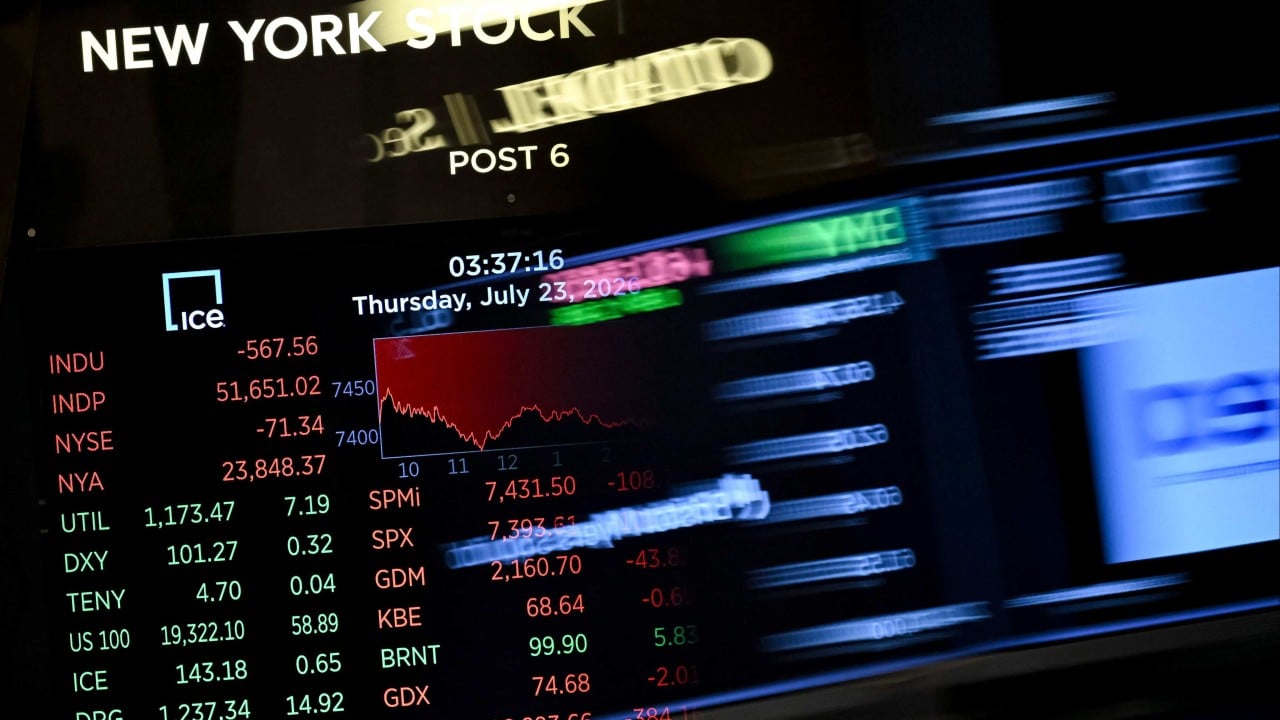
The sudden liquidation of a prominent United States artificial intelligence hedge fund has sent shockwaves across international markets, leaving a trail of heavy losses for Chinese institutional investors and family offices who chased high-beta technology exposure abroad. For years, cross-border capital flowed freely from Shenzhen and Shanghai into US-based quantitative funds promising outsized returns driven by algorithmic trading and artificial intelligence models. That liquidity pipeline has now fractured. When aggressive leverage meets a sudden correction in tech valuations, the result is a margin call cascade that exposes the structural vulnerabilities of speculative cross-border investing.
The Anatomy of a Cross Border Liquidation
To understand why this specific US hedge fund collapse reverberated so powerfully through Asian portfolios, one must look at the mechanics of modern fund allocation. Many Chinese high-net-worth individuals and corporate treasuries sought refuge from domestic regulatory tightening and a slowing local property market by deploying capital offshore. US artificial intelligence funds became the default destination. These funds marketed themselves as technological vanguards, utilizing machine learning algorithms to trade momentum stocks, derivatives, and pre-IPO tech shares.
The pitch was irresistible. Promise double-digit yields wrapped in the veneer of cutting-edge data science.
Behind closed doors, the mechanics were far more pedestrian and dangerous. The fund in question relied heavily on short-term repo financing and cross-collateralized derivatives to amplify its buying power in high-flying artificial intelligence equities. When a subset of those underlying holdings missed earnings expectations or faced regulatory scrutiny, the downward pressure triggered automatic algorithmic sell-offs. Margin requirements spiked overnight. The fund managers faced a stark choice: inject fresh capital or liquidate assets at distressed prices. They chose liquidation.
Why Chinese Investors Were Uniquely Exposed
International capital allocation is rarely just about returns; it is about regulatory arbitrage and diversification. Investors from mainland China and Hong Kong faced severe capital controls when moving funds past national borders. To clear these hurdles legally or via authorized intermediary structures, they often required high conviction, high return targets to justify the friction costs. A standard global equity index fund yielding seven percent annual returns could not justify the legal and administrative complexity of outbound capital deployment.
They needed alpha. They found it in the risk-heavy corridors of specialized US tech funds.
Unfortunately, many of these investors treated the fund managers as black boxes. Trusting the brand name of US financial innovation, they skipped the granular due diligence required for high-risk alternative investments. They did not audit the leverage ratios. They did not stress-test the portfolio against a rising interest rate environment. When the fund collapsed, these investors discovered too late that their capital sat at the bottom of the creditor waterfall, subordinate to prime brokers and institutional lenders who claimed the remaining liquid assets first.
The Illusion of Algorithmic Safety
A persistent myth in modern finance posits that artificial intelligence and machine learning make trading desks immune to human panic. Algorithms do not get scared. Algorithms process millions of data points per second.
This narrative ignores a fundamental reality of market microstructure. Algorithms share similar underlying training data and momentum-following logic. When multiple quantitative funds utilize comparable momentum models, they do not diversify risk; they concentrate it. They buy the same assets at the same time and sell the same assets at the exact same moment.
When the US hedge fund began unwinding its positions, its exit strategy collided with identical exit strategies executed by competing quantitative funds. Market depth evaporated instantly. Bid-ask spreads widened into chasms. The artificial intelligence models designed to manage risk became the very engine of destruction, accelerating the downward spiral because the models could not find willing buyers at rational prices.
Lessons for Global Capital Allocators
The fallout from this collapse forces a hard reassessment of how cross-border capital is managed. The era of writing blank checks to foreign managers simply because they brand themselves as artificial intelligence pioneers has ended.
First, leverage visibility is non-negotiable. Allocators must demand real-time transparency regarding how much borrowed money backs every dollar of equity. A fund generating thirty percent annual returns with three-to-one leverage is a ticking time bomb disguised as a portfolio manager.
Second, geographic diversification does not equal asset diversification. Moving money from a slowing Asian economy into a concentrated basket of US large-cap technology stocks means taking on currency risk, regulatory risk, and localized asset bubble risk simultaneously. If the underlying asset class corrects globally, geographic borders offer zero protection.
The market has delivered its verdict. Speculative excess disguised as technological superiority always ends the same way, leaving late arrivals holding the bag while prime brokers sweep the floor.