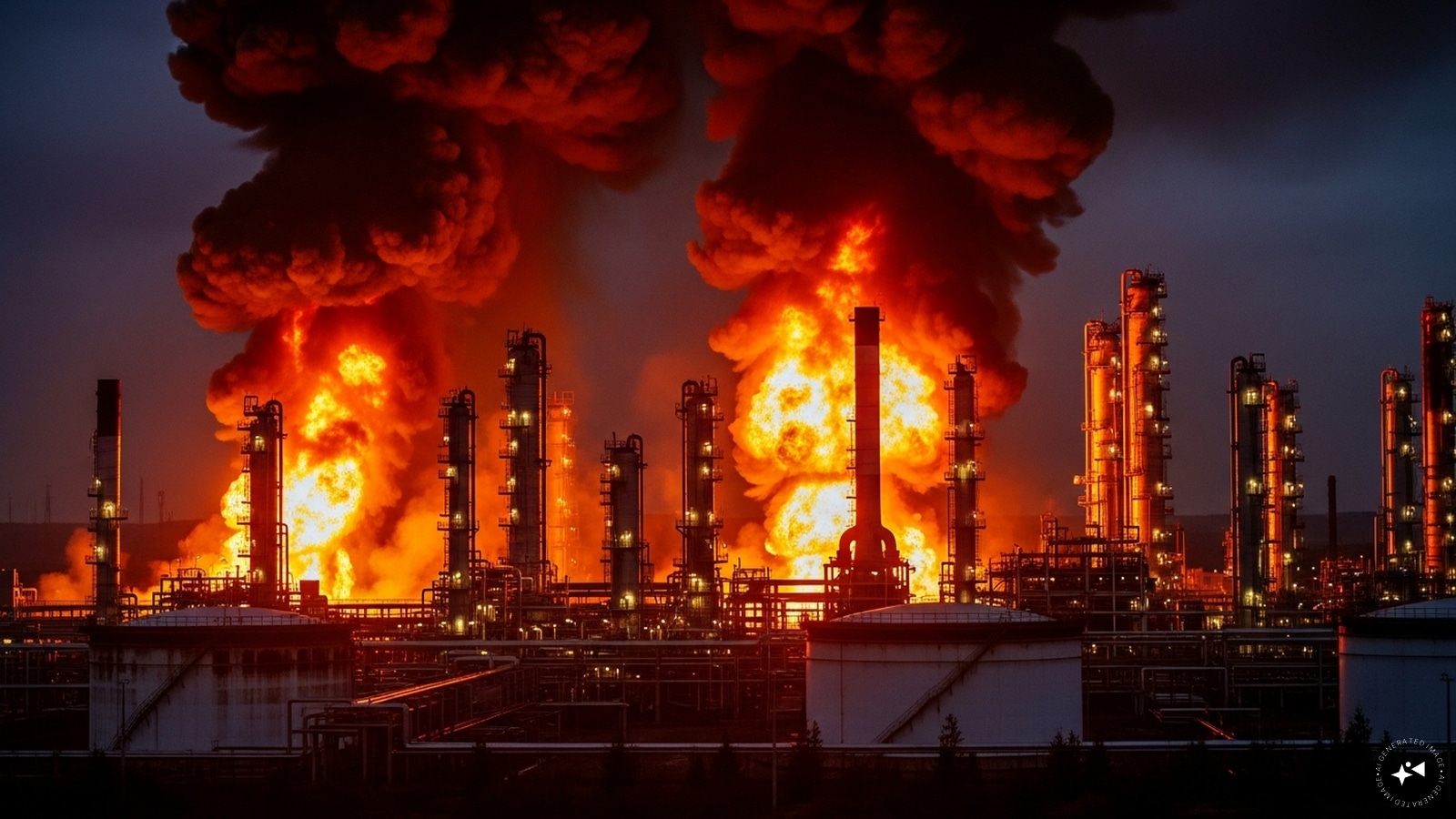
Ukraine executed a massive, synchronized long-range drone operation overnight, striking the major Slavyansk oil refinery in Russia's southern Krasnodar region and another strategic facility 700 kilometers away in Yaroslavl. The attacks, which occurred early on June 28, 2026, ignited a massive blaze at the Slavyansk facility, cutting off a primary fuel supply line for occupied Crimea and sending shockwaves through the Kremlin's domestic energy infrastructure. This operation marks an aggressive expansion of Kyiv's strategy to paralyze Moscow's internal fuel logistics rather than merely chasing frontline targets.
Local authorities in Krasnodar confirmed that the overnight assault forced a total halt at the Slavyansk-na-Kubani refinery, a privately owned plant processing roughly 100,000 barrels per day. The facility is a cornerstone of Russia's southern energy export matrix, feeding vital petroleum products, naphtha, and marine fuel directly into Black Sea ports. By knocking it offline, Ukraine has targeted the literal fuel tank powering Russian naval and air assets operating around the Crimean Peninsula. Expanding on this theme, you can also read: Where the Trillions Go When a Nation Bleeds Cash.
The Logistics of Attrition
While early state media reports from Moscow claimed the destruction of over 200 Ukrainian drones, the smoke rising from Krasnodar and Yaroslavl tells a far more complicated story. The Russian defense grid is struggling to cope with the sheer volume of low-cost, long-range uncrewed aerial vehicles.
Ukraine is exploiting a fundamental asymmetry in modern warfare. Cheap drones are draining expensive air defense interceptors. A single pantsir system missile costs exponentially more than the composite-bodied drone it aims to destroy, and Russia simply cannot cover every square mile of its massive airspace. Experts at Al Jazeera have also weighed in on this matter.
The simultaneously targeted Yaroslavl refinery, located more than 400 miles from the Ukrainian border and just northeast of Moscow, emphasizes the reach of Kyiv’s domestic drone program. Regional Governor Mikhail Yevrayev was forced to shut down major highways leading into the capital as military personnel rushed to handle the fallout. The geographical spread of these strikes proves that no energy facility in western Russia is safe from interdiction.
The Chokehold on Domestic Russian Energy
This is not a temporary inconvenience for the Kremlin. It is a mounting systemic crisis. Over 20 Russian regions have already implemented strict rationing on fuel sales, creating a scenario where ordinary citizens are facing hours-long queues at service stations just to fill their tanks.
The Slavyansk strike follows a series of highly effective operations earlier this month, including the shutdown of the massive Moscow Oil Refinery and the Lukoil facility in Kstovo. Together, these actions have knocked out significant portions of Russia's refining capacity. Moscow has even initiated high-level talks to import gasoline from neighboring Kazakhstan, an extraordinary reversal for one of the world’s leading oil producers.
Crimea Isolated in Plain Sight
The geopolitical ramifications for the Black Sea theater are immediate. For years, the Slavyansk-on-Kuban plant operated as the primary lifeline for Russian forces entrenched in Crimea. The peninsula’s civilian and military fuel reserves have been systematically degraded over the past forty days, and this latest blow removes the closest regional processing hub.
Moving fuel to Crimea now requires long, highly vulnerable rail journeys across the Kerch Bridge or through occupied southern Ukraine, both of which are under constant surveillance and threat from western-supplied long-range missiles. Without a steady stream of refined fuel, the operational readiness of the Black Sea Fleet and local defense garrisons will deteriorate rapidly.
By hitting these economic choke points, Kyiv is executing a form of kinetic economic sanctions that international diplomatic measures failed to achieve, driving the war's economic consequences directly into the Russian heartland.