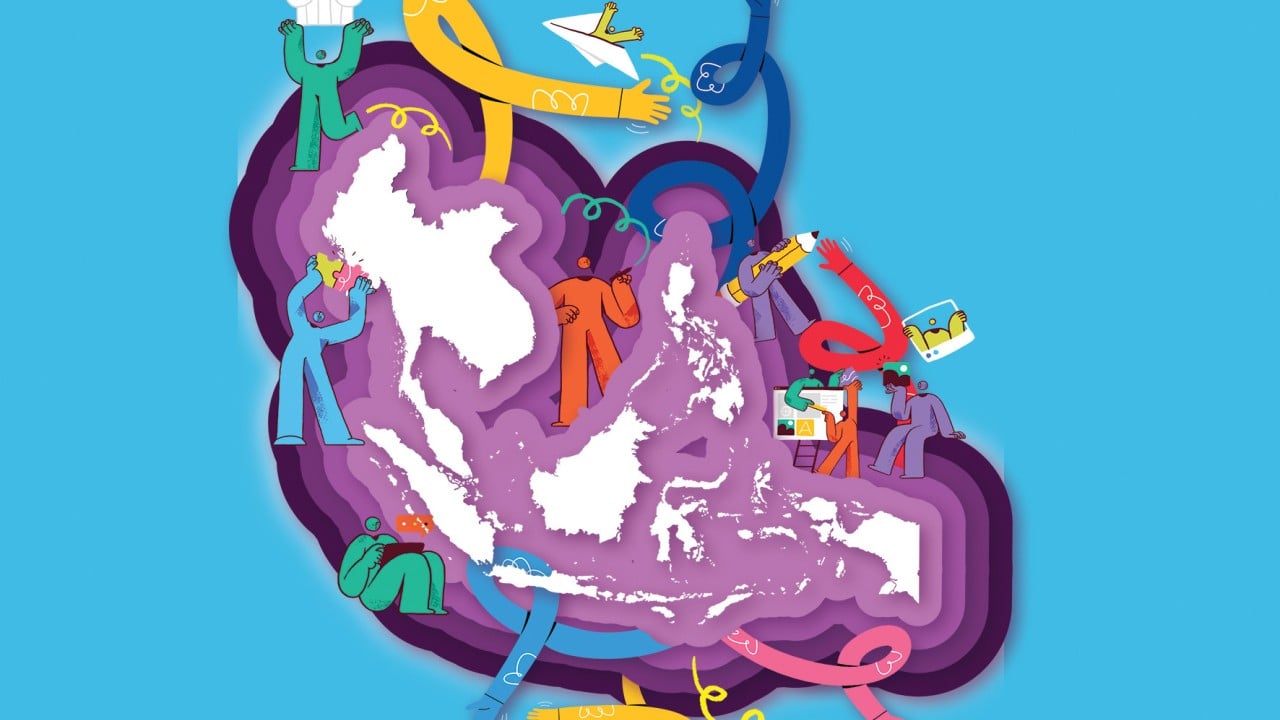
Southeast Asia is currently trapped in a high-stakes paradox. While the region has attracted over US$300 billion in infrastructure and manufacturing investment intended to turn it into the world's next great factory floor, its leaders have realized that hardware alone does not buy global relevance. Governments from Bangkok to Jakarta are now scrambling to manufacture "soft power"—the ability to influence through culture and values—to ensure they aren't merely treated as replaceable cogs in a global supply chain. However, the attempt to top-down engineer a cultural "moment" like South Korea’s Hallyu wave is hitting a wall of internal censorship, fragmented identities, and a fundamental misunderstanding of how creativity actually scales.
The money is there, but the influence is lagging. To move beyond being a low-cost alternative to China, these nations must solve a gritty, structural problem: how to export a cohesive identity when their own domestic policies often stifle the very subcultures that drive global trends.
The Infrastructure Trap
For the last decade, the narrative surrounding Southeast Asia focused almost exclusively on "the big build." Foreign direct investment poured into Indonesian nickel mines, Vietnamese electronics plants, and Thai automotive hubs. This US$300 billion influx created a massive industrial footprint, yet it left the region culturally invisible on the global stage. When Western or East Asian consumers think of the region, they often think of tourism or labor, not "cool."
This is a strategic liability.
History shows that economic giants who fail to export their culture remain vulnerable. Japan’s rise in the 1980s was cemented by anime and tech-lifestyle dominance. South Korea used the 1997 financial crisis as a catalyst to pivot toward K-Pop and cinema, creating a shield of "cultural indispensability." If a nation is beloved for its music, food, and films, it becomes harder for global corporations to decouple from it when wages inevitably rise. Southeast Asia is currently a region of producers that lacks a singular, resonant voice.
The Korean Blueprint and the Southeast Asian Reality
Policy advisors in Thailand and the Philippines often point to the "Korean Model" as a holy grail. They see a government-backed agency like KOCCA and assume that if they just throw enough subsidies at local filmmakers or boy bands, a global hit will follow. This is a shallow reading of history.
South Korea’s success wasn't just about cash. It was about a specific set of conditions: a highly educated workforce, a hyper-competitive domestic market, and, crucially, a government that—after decades of dictatorship—learned to stay out of the way of the creators.
In contrast, several Southeast Asian nations are attempting to build soft power while maintaining rigid control over expression. You cannot manufacture a global "rebel" icon if your censorship board bans anything that critiques the status quo. Creativity thrives on friction. When governments try to "curate" a national brand to be perfectly sanitized and "polite," they end up with a product that nobody outside their own borders wants to consume.
The Thai Push for Creative Economy
Thailand is perhaps the most aggressive in this space. The government has identified "Five Fs"—Food, Film, Fashion, Fighting (Muay Thai), and Festivals—as strategic assets. While Thai horror films and "Boys' Love" (BL) dramas have found massive niche audiences across Asia and parts of Latin America, the industry remains hampered by a lack of centralized professional infrastructure.
The talent is undeniable. The production quality is soaring. But the industry still operates in silos. A Thai film director might find success at Cannes, but that success rarely translates into a broader "Brand Thailand" boost because there is no connective tissue between the arts and the wider commercial apparatus.
The Fragmentation Headache
One of the biggest hurdles to a unified Southeast Asian cultural front is the lack of a single "core" identity. Unlike the cultural monoliths of China or Japan, ASEAN is a collection of vastly different languages, religions, and political systems.
- Indonesia has the scale, with a massive Gen Z population and a booming indie music scene.
- Vietnam has the work ethic and a rapidly growing digital creator class.
- The Philippines has the linguistic advantage, with English-language fluency that should, in theory, make its content the most exportable.
Yet, these nations rarely collaborate. The "ASEAN identity" is a diplomatic construct that hasn't trickled down to the street level. A teenager in Manila is more likely to listen to a group from Seoul than a group from Jakarta. This internal fragmentation means that instead of a 600-million-person market acting as a launchpad, creators are stuck fighting for attention in smaller, protected domestic ponds.
The Silicon Valley Factor
The US$300 billion "buzz" mentioned in trade reports isn't just about factories; it’s about the digital economy. Platforms like TikTok (owned by ByteDance) and YouTube have done more for Southeast Asian soft power in three years than government committees have done in thirty.
The region has some of the highest social media penetration rates on earth. This is where the real influence is being built. From Filipino gaming creators to Indonesian "street-wear" influencers, the power is shifting to decentralized individuals. This is a double-edged sword for the state. While these creators bring eyes to the region, they are often beyond the reach of government "national branding" initiatives.
The real winners in this race won't be the ones with the best government brochures. They will be the ones who build the best digital rails for their creators to monetize globally.
The Problem with Subsidies
Direct government funding often kills innovation. When a film or a music project is funded by a ministry, the priority shifts from "making something people love" to "satisfying the bureaucrats who signed the check."
The results are usually "prestige projects" that win awards but lose money and fail to capture the public imagination. To truly scale, the region needs private venture capital that understands the creative industries. It needs entertainment lawyers who can protect intellectual property in international markets. It needs a talent pipeline that doesn't just produce "artists" but "creative entrepreneurs."
The Soft Power Defense
Why does this matter for the average investor or business leader? Because soft power is an insurance policy.
As geopolitical tensions between the US and China tighten, Southeast Asia is being forced to pick sides. A country with strong cultural pull—a country people actually care about—has more leverage in trade negotiations and security alliances. It is much harder for a superpower to bully a nation whose culture is integrated into the daily lives of that superpower's own citizens.
The "US$300 billion buzz" is a temporary advantage. Factories can be moved to India or Africa the moment a cheaper deal appears. But a brand? A brand is sticky.
The Censorship Ceiling
We have to talk about the elephant in the room: the tightening grip on digital speech across the region. From Indonesia’s strict internet regulations to Thailand’s lèse-majesté laws and Vietnam’s social media decrees, the space for "edge" is shrinking.
Global pop culture is built on edge. It is built on the subversion of norms. If the region’s best minds are too afraid to take risks because they might run afoul of a vague "public decency" or "national security" law, they will never produce the next Squid Game or Parasite. Those works were successful precisely because they were scathing critiques of the societies that produced them.
Soft power cannot be commanded into existence by an authoritarian decree. It is a byproduct of a healthy, messy, and often loud democratic culture.
Moving Beyond the Tourism Gimmick
For too long, Southeast Asian soft power has been synonymous with tourism. "Visit [Country Name]" campaigns are the default setting for every ministry of culture. But tourism is passive. It relies on people coming to you. True soft power is active; it goes to them.
The transition from a "destination" to a "producer" requires a mental shift. It means valuing the software engineer as much as the hotel manager. It means realizing that a viral dance trend on a social app is worth more than a dozen expensive tourism trade shows in London or Berlin.
The region is at a crossroads. It can continue to be a playground for the world and a factory for the giants, or it can start building the cultural infrastructure to match its industrial growth. The US$300 billion in investment has provided the foundation, but the foundation is just concrete and steel. Without a soul—without a recognizable, exportable culture—the region will remain a secondary player in its own story.
The next five years will determine if Southeast Asia becomes a cultural powerhouse or if it remains a collection of high-growth economies that the world uses, but never truly knows. The choice isn't about how much money to spend, but how much control the authorities are willing to give up. Power, especially the soft kind, usually flows to the places where the people are most free to create, fail, and speak.