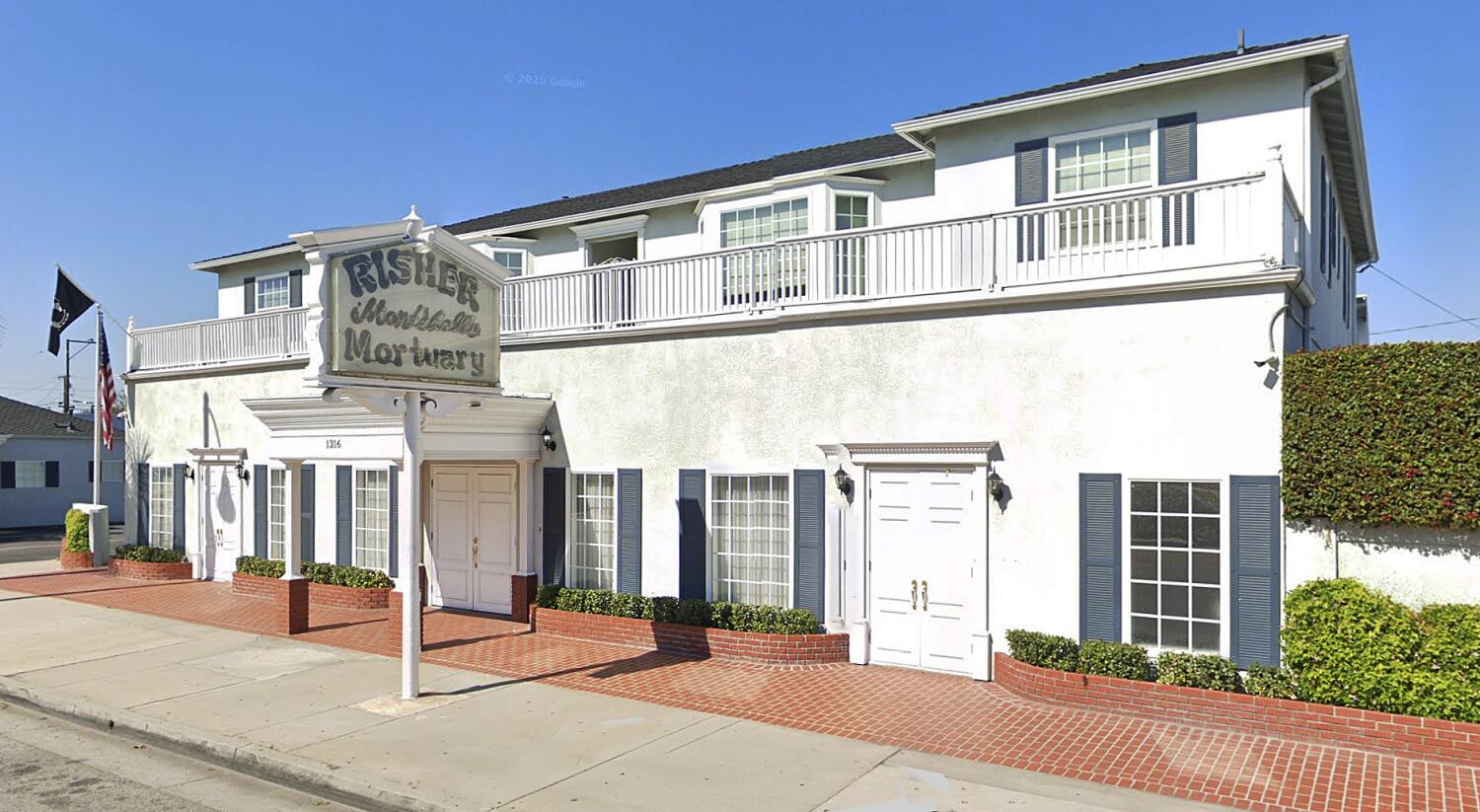
When a grieving family in Los Angeles opened a casket to find their loved one in a state of advanced, "grotesque" decomposition, the resulting lawsuit against a local mortuary sent shockwaves through the death care industry. The allegations describe a nightmare scenario of leaking fluids and a "putrid" stench that replaced the expected peace of a final viewing. While this specific case highlights a catastrophic failure of professional standards, it exposes a much larger, systemic rot within the American funeral business. This isn't just about one negligent mortician; it is about an industry grappling with a shortage of skilled labor, aging infrastructure, and a business model that often prioritizes high-volume turnover over the biological realities of preservation.
The public generally views the back room of a funeral home as a place of clinical precision. We want to believe that once we hand over a body, science and professional ethics take over to stall the inevitable. The reality is far more fragile. Embalming is not mummification. It is a temporary chemical delay, a "sanitary cosmetic treatment" that relies entirely on the skill of the practitioner and the quality of the equipment. When that process fails, as it allegedly did in the L.A. case, the results are visceral, traumatic, and legally indefensible.
The Chemistry of a Catastrophe
To understand how a body reaches a state described as "oozing" and "green" within days of death, you have to look at the chemistry of the prep room. Modern embalming involves displacing blood with a solution of formaldehyde, glutaraldehyde, and other solvents. This process requires a functioning vascular system. If a body has undergone an autopsy, suffered trauma, or sat in a hospital cooler for too long, the "closed-circuit" nature of the circulatory system is compromised.
A skilled embalmer knows how to compensate for these issues using sectional injection or higher concentrations of fluid. However, the industry is currently facing a massive "graying" of its workforce. Veteran morticians are retiring, and the new generation of funeral directors is often spread thin, managing multiple locations owned by large corporations. When a mortuary takes on more "calls" than its staff can technically handle, the meticulous work of vascular preservation becomes a rushed, "slapdash" effort.
In the Los Angeles lawsuit, the family claims the body was not properly refrigerated and that the embalming was fundamentally flawed. If a body is not cooled immediately or if the arterial fluid fails to reach the extremities, anaerobic bacteria begin their work within hours. They produce gases that cause bloating and "purge"—the medical term for the fluid that leaks from the mouth and nose. When this happens inside a sealed casket, it creates a pressurized environment of decay. It is a failure of the most basic tenet of the profession: the "duty of care."
Corporate Consolidation and the Death of Quality
Behind the brass handles and velvet curtains of many neighborhood funeral homes lies a massive corporate structure. Over the last three decades, a few large publicly traded companies have aggressively acquired family-owned mortuaries. While the name on the sign remains the same to maintain local trust, the operations are centralized.
This consolidation has a direct impact on the "product" the family sees. In a centralized model, bodies are often transported to a "care center"—a high-volume warehouse where embalming is performed on an assembly line. The body is then transported back to the local branch for the viewing. Every time a body is moved, every hour it spends in transit, and every hand that touches it increases the margin for error.
- Cost-Cutting Measures: To maximize shareholder value, some firms may use cheaper, lower-index fluids or reduce the time spent on restorative art.
- Staff Burnout: One embalmer might be responsible for prepping ten bodies in a single shift. Under that kind of pressure, the nuance of ensuring "total distribution" of fluid is often the first thing to go.
- Infrastructure Neglect: Maintenance of refrigeration units is expensive. If a compressor fails over a holiday weekend and there is no backup, the biological clock starts ticking at an accelerated rate.
The L.A. case is a symptom of a system where the "back of house" is treated as an expense to be minimized rather than a sacred responsibility. When a family pays $10,000 to $15,000 for a traditional funeral, they aren't just buying a box; they are buying a guarantee of dignity. When that dignity is replaced by a "grotesque" scene of physical decay, the breach of contract is total.
The Myth of the Protective Casket
One of the most persistent "upsells" in the funeral industry is the "protective" or "sealer" casket. These units feature a rubber gasket designed to keep water and air out. Ironically, these very caskets can exacerbate the "oozing" and "liquefying" described in recent lawsuits.
If a body is improperly embalmed and placed in a hermetically sealed metal casket, the gases produced by decomposition have nowhere to go. This creates what the industry calls "Exploding Casket Syndrome." While the caskets don't actually detonate like a bomb, the pressure can build up until the seal fails or the lid buckles, leading to the leakage of fluids.
Families are often sold these caskets under the guise of "preserving" their loved one for the long term. In reality, they often create a "pressure cooker" for anaerobic bacteria. A reputable funeral director should be honest about the limitations of these products, but when commissions are on the line, the science often takes a backseat to the sales pitch.
Legal Recourse and the Emotional Toll
Suing a funeral home is notoriously difficult. The law often treats a body as "quasi-property," which limits the types of damages a family can claim. However, the tide is shifting. Courts are increasingly recognizing "intentional or negligent infliction of emotional distress" as a valid path for litigation in these cases.
The trauma of seeing a parent or child in a state of decomposition is not something that fades. It replaces the final memory of the person with a horrific image that can lead to PTSD. In the L.A. case, the family’s legal team is focusing on the "outrageous" nature of the mortuary’s conduct. To win, they must prove that the funeral home’s actions went beyond mere negligence and entered the territory of "reckless disregard."
What Families Must Demand
If you are currently arranging a service, you have to be your own advocate in a room where you are most vulnerable. Do not be afraid to ask the hard questions that feel "impolite" in a time of grief.
- Where is the embalming taking place? Ask if it happens on-site or at a centralized facility.
- What is your refrigeration policy? Ensure the body will be kept at a constant temperature of 36 to 39 degrees Fahrenheit when not being worked on.
- Can we have a private identification viewing? Before the public service, insist on a brief, private viewing to ensure the presentation meets your expectations. This forces the staff to be accountable for the state of the body early in the process.
The Future of the Death Care Industry
The funeral industry is at a crossroads. The rise of cremation—now chosen by over 60% of Americans—has stripped away the high-margin profits of caskets and embalming. This financial pressure is driving some remaining traditional homes to cut corners in the prep room to stay afloat.
We are seeing a divergence in the market. On one side are the "budget" providers who offer low-cost services but may lack the facilities to manage bodies correctly over long periods. On the other are high-end "boutique" firms that charge a premium but maintain rigorous on-site standards. The middle ground is where the danger lies: homes that charge premium prices but operate with a budget-cut mentality.
The L.A. lawsuit serves as a grim reminder that the dead cannot speak for themselves. They rely on the integrity of the living. When that integrity fails, the result is more than just a botched service; it is a violation of the fundamental human contract to care for our dead. If you find yourself in a funeral director's office, remember that you are a consumer in a high-stakes transaction. Look past the soft lighting and the soothing music. Ask to see the facilities. Demand to know the protocols. Your last memory of your loved one depends on it.