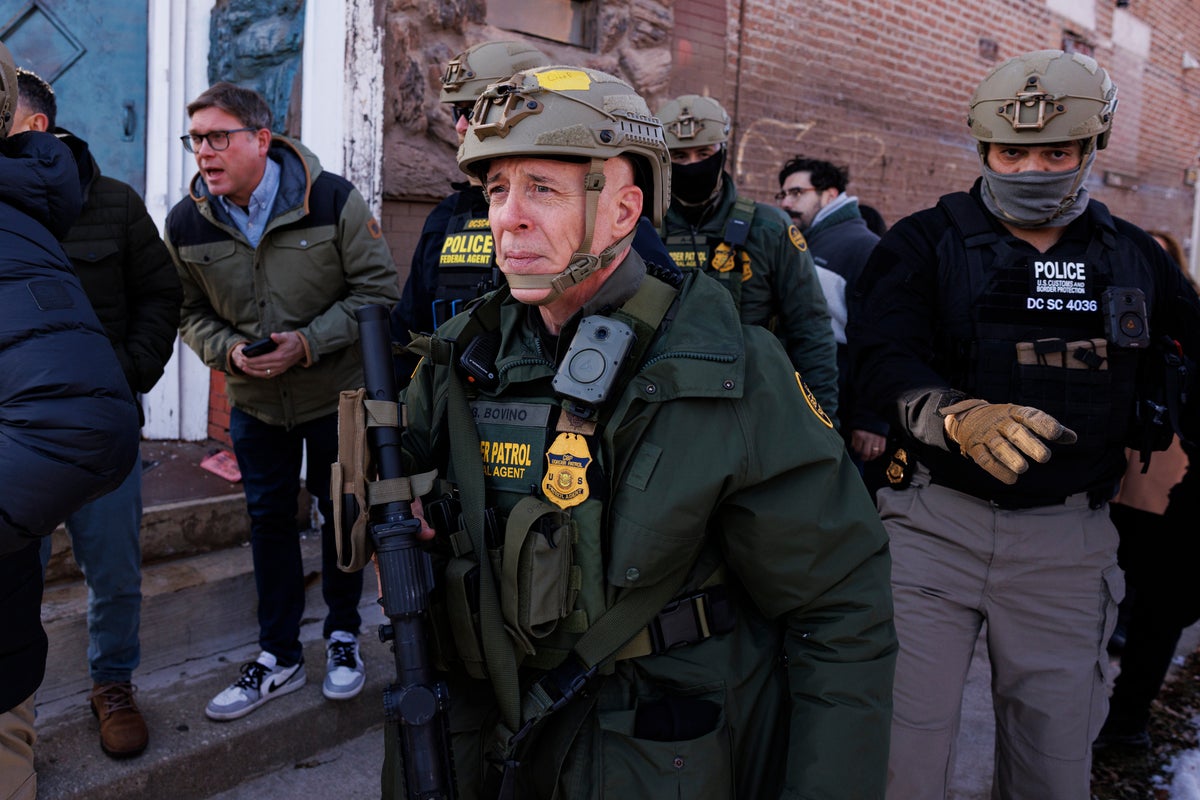
Gregory Bovino, the once-unassailable architect of the most aggressive interior immigration enforcement campaign in modern American history, is heading for a quiet exit. After three decades in the U.S. Border Patrol, the man who became the polarizing face of "Operation Metro Surge" has notified associates of his intent to retire by the end of March 2026. This is not the victory lap many expected for a commander who operated with a direct line to the White House. Instead, it is a strategic retreat following a series of disastrous operations in Minneapolis that left two U.S. citizens dead, a federal judge questioning his honesty, and an internal investigation into alleged antisemitic remarks.
The transition marks a significant shift in the administration’s tactical approach. Bovino was pulled from his "commander-at-large" post in January after the fatal shootings of Renee Good and Alex Pretti sparked a level of civic unrest that even his most ardent supporters in Washington could no longer ignore. While the Department of Homeland Security initially tried to frame his reassignment to the El Centro sector as a routine move, the reality is far more clinical. Bovino didn’t just lose his command; he lost the narrative.
The Architect of Chaos
To understand Bovino’s rise is to understand the "Turn and Burn" doctrine he championed. Long before he was patrolling the streets of Minneapolis, Bovino was a fixture in the El Centro sector, where he developed a reputation for "smash-and-grab" tactics. He wasn't interested in the slow, methodical work of traditional investigations. He wanted high-visibility, high-impact raids designed to "deter through presence."
When the administration needed a leader for its urban enforcement surge in 2025, Bovino was the natural choice. He was bypassed the traditional chain of command, reporting directly to then-Homeland Security Secretary Kristi Noem and political advisors like Corey Lewandowski. This bypass allowed him to operate with a paramilitary autonomy that frustrated veteran immigration authorities. In cities like Los Angeles and Chicago, his "Mean Green Team" became synonymous with shattered car windows and flash-bang grenades.
The Chicago Warning Shots
The first major cracks in the Bovino facade appeared during Operation Midway Blitz in Chicago. In September 2025, federal agents were recorded rappelling from helicopters onto apartment rooftops, a display of force typically reserved for high-value terror targets, not local immigration sweeps.
Federal Judge Sara L. Ellis didn't buy the "immediate threat" justifications Bovino provided. During a deposition, it was revealed that Bovino had claimed he deployed tear gas only after being struck by a rock. Video evidence suggested otherwise, leading the judge to admonish him for what she described as accounts that "contradicted the reality on the ground." It was a rare moment of judicial pushback against a commander who felt he was above the usual scrutiny of the courts.
The Minneapolis Breaking Point
If Chicago was a warning, Minneapolis was the terminal failure. In December 2025, Bovino moved his operations to Minnesota, launching Operation Metro Surge. The results were catastrophic.
- Renee Good: A 37-year-old mother shot in her car by an ICE officer while attempting to leave a protest site.
- Alex Pretti: An ICU nurse beaten and fatally shot after he intervened to help a woman being shoved by officers.
In the hours following Pretti’s death, Bovino took to the microphones to claim the nurse intended to "massacre law enforcement" with a 9mm handgun. Again, the cameras told a different story. Bystander footage showed Pretti holding nothing but a cell phone when he was tackled. The backlash was instantaneous. Governor Tim Walz demanded an end to the "paramilitary-style" crackdown, and even President Trump, usually Bovino's biggest cheerleader, admitted the commander was a "pretty out-there kind of a guy" who might have gone too far.
A Culture of Disdain
Beyond the tactical failures, Bovino’s downfall was accelerated by a series of internal scandals that alienated his peers. Leaked documents suggest he fostered an environment where due process was viewed as a nuisance. In El Centro, the ratio of use-of-force incidents compared to assaults on agents was the highest in the country.
More damaging were the allegations of religious bias. An internal DHS inquiry is currently investigating claims that Bovino made disparaging remarks about Daniel Rosen, the U.S. Attorney for Minnesota. Bovino reportedly mocked Rosen’s Orthodox Jewish faith, complaining that the prosecutor was "unreachable" during the Sabbath. These weren't just "unprofessional comments"; they were a liability for an administration trying to maintain a semblance of legal legitimacy.
The Homan Pivot
The replacement of Bovino with "Border Czar" Tom Homan signals a return to a more calculated, if no less firm, strategy. Homan is a creature of the system, someone who understands the bureaucracy enough to shield it from the kind of PR nightmares Bovino invited. While Bovino relished clashing with protesters and "liberal mayors" on social media, the administration now realizes that a commander who makes himself the story eventually becomes the problem.
Bovino’s retirement effectively erases him from the leadership hierarchy before the Hennepin County Attorney’s office can complete its misconduct investigation. It is a classic Washington exit: a quiet departure designed to lower the temperature while the "Bovino Doctrine" of aggressive interdiction remains baked into the agency's DNA.
The commander may be going back to North Carolina to "harvest apples," as he once told a reporter, but the trail of civil suits and federal inquiries he leaves behind will take years to resolve. He was a man built for a specific kind of conflict, one who eventually found that the tactics used in the desert don't always survive the scrutiny of a city street.
The "Mean Green Team" is still out there, but their loudest voice has finally been silenced.



.jpg?width=1200&auto=webp&trim=0%2C100%2C0%2C100)