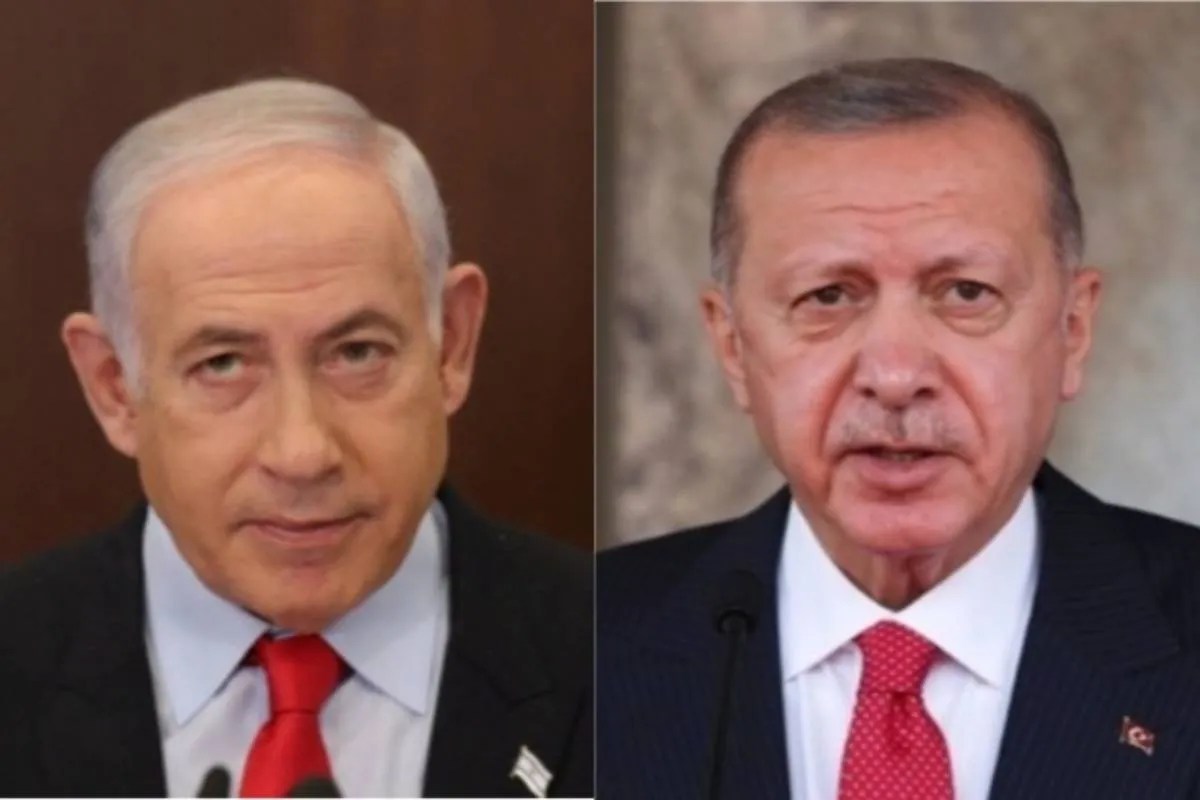
Turkish President Recep Tayyip Erdogan and Israeli Prime Minister Benjamin Netanyahu are locked in a fierce, highly personalized diplomatic feud that has pushed bilateral relations to a historic low. This escalatory rhetoric, highlighted by Erdogan comparing Netanyahu to Adolf Hitler and Netanyahu firing back with accusations of Turkish war crimes, is not merely an emotional outburst. It is a calculated geopolitical strategy. Both leaders are leveraging the Gaza conflict to shore up domestic political support, position themselves as regional champions, and distract from significant vulnerabilities at home.
The underlying mechanics of this diplomatic warfare reveal that behind the harsh public denunciations lies a complex web of economic dependencies and strategic calculations that neither nation can easily dismantle.
The Anatomy of Rhetorical Escalation
Words have become weapons. When Erdogan explicitly likened Netanyahu to Hitler and accused Israel of carrying out a genocide in Gaza, he was tapping into a potent reservoir of regional anger. The Turkish leader demanded that international tribunals hold the Israeli Prime Minister accountable for military actions in the Gaza Strip.
Israel responded swiftly. Netanyahu rejected the comparisons, pointing to Turkey’s own internal human rights record and its long-running military campaigns against Kurdish groups. The Israeli leadership countered by labeling Erdogan’s administration as a protector of Hamas, effectively drawing a line that leaves no room for standard diplomatic mediation.
This back-and-forth represents a total collapse of the fragile normalization process initiated between Ankara and Tel Aviv. For years, diplomats worked quietly to restore ties, exchange ambassadors, and explore joint energy ventures in the Eastern Mediterranean. That progress has vanished. The current hostility is structurally different from past diplomatic spats because it fundamentally alters the public perception of alignment in the Middle East.
Domestic Survival Under the Guise of Foreign Policy
To understand why this feud has reached such heights, one must look at the domestic battlegrounds of both leaders. Foreign policy is frequently an extension of domestic political necessity.
Erdogan faces a highly fractured domestic landscape. With Turkey dealing with persistent economic instability, high inflation, and currency devaluation, foreign policy offers a powerful tool to unify a nationalist and conservative voting base. By positioning Turkey as the loudest defender of Palestinian rights on the global stage, Erdogan neutralizes domestic critics from more radical Islamist factions who argue his government is too soft on Western allies. It is an effective shield. It shifts the national conversation away from local economic struggles toward a grander narrative of historical responsibility and religious solidarity.
Netanyahu operates under a similar survival instinct. Facing ongoing legal challenges, deep domestic polarization, and intense scrutiny over the security failures surrounding the start of the conflict, the Israeli Prime Minister requires a narrative of total defiance. Responding aggressively to foreign leaders like Erdogan allows Netanyahu to project strength. It signals to his coalition partners and the Israeli electorate that he will not bow to international pressure, even from a powerful NATO member. Every broadside from Ankara gives Netanyahu the opportunity to consolidate his right-wing base by framing the international criticism of Israel as inherently biased and existential.
The Trade Paradox Hidden Behind the Anger
Money speaks quieter than politicians, but it often tells a more accurate story. Despite the fierce public denunciations, the commercial ties between Turkey and Israel have historically shown a remarkable resilience to political crises. This commercial reality complicates the narrative of pure hostility.
Turkey has long been a vital supplier of raw materials to Israel. Steel, cement, ceramics, and textiles have flowed from Turkish ports to Israeli industries for decades. Conversely, Israel has relied on these cost-effective imports to sustain its construction and manufacturing sectors. Even during the height of previous diplomatic freezes, cargo ships continued to cross the Mediterranean.
The Breakdown of Interdependence
- Public Pressure vs. Private Contracts: As the civilian toll in Gaza mounted, the gap between Erdogan’s fiery rhetoric and ongoing trade relations became a liability. Domestic opposition parties in Turkey began highlighting the contradiction, forcing the government to take concrete action.
- The Trade Ban: In response to growing domestic pressure, Ankara implemented export restrictions and eventually announced a total halt to trade with Israel. This move marked a major departure from previous crises where trade was kept separate from politics.
- Economic Fallout: The disruption has forced Israeli businesses to search for more expensive alternative supply chains in Europe and Asia, driving up costs. Meanwhile, Turkish exporters lose a lucrative, proximate market, adding strain to an already fragile Turkish manufacturing sector.
The weaponization of trade shows that the current crisis has broken through the traditional firewalls that once protected economic interests from political theater.
The Battle for Regional Influence
The shouting match between Ankara and Tel Aviv is also a contest for leadership within the wider Islamic world. The Middle East is undergoing a profound realignment, and Turkey wants to dictate the terms.
For decades, leadership on the Palestinian issue was held by Arab states like Egypt, Saudi Arabia, and Jordan. However, many Arab governments find themselves constrained by peace treaties, strategic alliances with the United States, or the normalization frameworks of the Abraham Accords. This creates a vacuum. Erdogan recognizes this opening and uses aggressive rhetoric to claim the mantle of the true, uncompromised champion of the Palestinian cause.
This strategy carries high risks. By alienating Israel completely and alienating Washington through association, Turkey limits its ability to act as a practical mediator. When actual ceasefires are negotiated or hostage exchanges are arranged, nations like Qatar and Egypt often take center stage because they maintain functional channels to all parties. Turkey risks shouting itself out of the room where actual decisions are made.
Israel faces its own isolation trap. By engaging in high-profile verbal warfare with a major regional power like Turkey, Israel complicates its long-term goal of integration into the Middle East. The prospects of expanding the Abraham Accords or normalizing relations with other major regional players become far more difficult when the public discourse is dominated by accusations of historical atrocities.
The NATO and Washington Dilemma
The friction between Turkey and Israel creates a massive headache for the United States and the NATO alliance. Turkey possesses the second-largest military in NATO and occupies a crucial geopolitical chokepoint between Europe, Russia, and the Middle East. Israel remains the primary American strategic ally in the region.
When these two states clash, it fractures western strategic cohesion. Washington is forced into a difficult balancing act, trying to support Israel’s security apparatus while simultaneously needing Turkey’s cooperation on black sea security, counter-terrorism, and regional stability. Erdogan’s willingness to completely break diplomatic norms regarding Israel signals to Washington that Ankara will not allow its NATO obligations to dictate its regional policies.
This geopolitical divergence means that any future attempt to construct a stable regional security architecture will face a fundamental roadblock. You cannot build a durable framework when two of the most powerful military actors in the region view each other through the lens of total historical enmity. The rhetoric has moved past disagreements over borders or security measures; it has entered the territory of fundamental ideological opposition, making a return to the status quo nearly impossible for the foreseeable future.