The federal infrastructure designed to protect the American public from catastrophic biological threats is undergoing an unprecedented internal collapse at the exact moment global risks are accelerating.
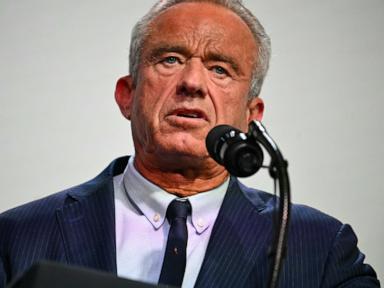
When Health and Human Services Secretary Robert F. Kennedy Jr. dismissed questions about concurrent international outbreaks of Ebola and hantavirus with a casual, "Yeah, we're working on it," he was speaking for an agency that has systematically purged its own expert ranks. The administrative response from the top of the American health apparatus has shifted from a stance of aggressive, proactive containment to one of passive minimization. Behind the assurance that everything is under control lies a stark reality. The institutions responsible for tracking, treating, and preventing high-consequence pathogens have been functionally hollowed out by design, leaving the domestic population vulnerable to the inevitable arrival of highly infectious, lethal viruses.
To comprehend the depth of the current vulnerability, one must look beyond the generic platitudes delivered on press lines and analyze the structural dismantling of federal health agencies over the past year.
The Systemic Evacuation of Infectious Disease Expertise
The capacity of the United States to respond to an emerging outbreak depends entirely on the specialized knowledge of career scientists within the National Institutes of Health (NIH) and the Centers for Disease Control and Prevention (CDC). Over the last several months, that knowledge base has been systematically erased.
The National Institute of Allergy and Infectious Diseases (NIAID) has seen an estimated 80 percent of its top leadership and senior scientific officials forced out or terminated. This historic drain of intellectual capital is the direct result of a coordinated policy targeting civil service job protections across health agencies. By stripping veteran epidemiologists, virologists, and outbreak response coordinators of their standard employment safeguards, the current administration has made it simple to replace career public servants with political loyalists.
The consequences of these personnel decisions manifest instantly during a crisis. When an unprecedented hantavirus outbreak emerged aboard the cruise ship MV Hondius off the coast of South America, the administration’s response lacked the rapid deployment mechanisms that characterized previous biodefense protocols. Instead of immediately dispatching CDC field teams to coordinate containment and contact tracing at the source, or issuing immediate nationwide clinicians' alerts, the public face of the response was handed to political appointees with virtually zero background in zoonotic or respiratory epidemiology.
A prominent example of this operational shift occurred when a primary press briefing on the hantavirus situation was led by an administration appointee whose medical background was entirely limited to a localized urology practice specializing in penile implants. When a nation replaces the world’s foremost authorities on viral transmission with ideological allies lacking baseline epidemiological training, the administrative capacity to interpret raw data and execute precise containment measures disappears.
The Shuttering of High Containment Laboratories
The destruction of the biodefense apparatus is not merely a matter of personnel. It is written into the physical closure of the infrastructure required to study lethal pathogens safely.
Just over a year ago, the Department of Health and Human Services ordered the complete cessation of experimental research at the Integrated Research Facility in Frederick, Maryland. This facility represented one of only a dozen Biosafety Level 4 (BSL-4) laboratories in North America capable of handling pathogens that cause severe to fatal disease in humans, for which there are no available vaccines or treatments.
[Federal Biodefense Infrastructure]
               │
               ▼
   [Personnel & Infrastructure Cuts]
   ├── 80% NIAID Senior Leadership Purged
   └── Integrated Research Facility (BSL-4) Shuttered
               │
               ▼
     [Diminished Operational Capacity]
   ├── Delayed Field Deployment
   └── Loss of Specialized Animal Imaging Data
The Frederick laboratory was entirely unique. It was one of the few places on earth equipped to perform advanced medical imaging on BSL-4 infected animal models, a critical step in understanding exactly how hemorrhagic fevers like Ebola destroy human tissue. The administration defended the closure as a temporary "research pause" stemming from contract staff management issues. However, the shutdown aligns perfectly with a broader policy directive explicitly aimed at defunding and halting federal research into infectious diseases.
By terminating active studies on pathogens like Lassa fever, SARS-CoV-2, and Eastern equine encephalitis, the United States has voluntarily blinded its own scientific community. When an American physician traveling in the Democratic Republic of the Congo tests positive for Ebola, the domestic scientific infrastructure no longer possesses the active, warm-base laboratory capacity to benchmark the specific strain's mutation rates or evaluate therapeutic efficacy in real-time. The nation is forced to rely on historical data or foreign laboratory networks because its own premier facilities have been mothballed.
Ideology Over Epidemiology in Global Health Funding
The current vulnerability extends past domestic borders into international health security partnerships, which serve as the first line of defense against global pandemics.
The administration has systematically delayed or blocked critical international aid allocations based on ideological objections to standard scientific practices. A stark example is the ongoing freeze on roughly $600 million in congressionally appropriated funds intended for Gavi, the Vaccine Alliance. This international organization distributes essential immunizations to dozens of low-income nations, preventing regional outbreaks from scaling into global threats.
The political gridlock centers on the use of thimerosal, a standard compound used as a preservative in multi-dose vaccine vials distributed to regions that completely lack reliable, continuous refrigeration networks. Despite decades of exhaustive, peer-reviewed global research demonstrating that thimerosal is entirely safe and poses no neurological risk, the leadership at HHS has blocked the funding in an attempt to force an immediate international phase-out of the preservative.
By withholding these funds, the administration is actively deteriorating the baseline health infrastructure of developing nations. This creates ideal environments for vaccine-preventable illnesses to re-emerge, which heavily strains the local healthcare systems currently attempting to contain far more dangerous pathogens like the Ebola strain spreading through the Democratic Republic of the Congo and Uganda.
The Mirage of Chronic Disease Focus
The explicit philosophical justification for dismantling the nation's infectious disease infrastructure is a stated desire to redirect federal resources toward the American chronic disease epidemic.
The leadership of HHS has argued that federal agencies have historically over-allocated capital to drug development and vaccine procurement at the expense of researching metabolic dysfunction, autoimmune disorders, and environmental toxins. On its surface, addressing the rise of chronic illness is an objective shared by health policy experts across the political spectrum. However, treating public health as a zero-sum game where infectious disease surveillance must be defunded to pay for chronic illness initiatives represents a fundamental misunderstanding of biological reality.
Infectious pathogens do not wait for a nation to fix its metabolic health. Viruses like hantavirus and Ebola are opportunistic and highly lethal, completely indifferent to political shifts or domestic policy transitions. The argument that the United States can afford to pause its focus on infectious disease because it is focusing on chronic illness ignores the reality that a population suffering from high rates of chronic disease is actually far more vulnerable to severe outcomes when an infectious pathogen breaches containment lines.
Furthermore, the administration's stated commitment to transparency and public health education is deeply contradicted by its own internal actions. The Food and Drug Administration (FDA) and the CDC have actively blocked the publication of large-scale, publicly funded studies confirming the safety and high efficacy profile of existing immunizations. When an agency suppresses peer-reviewed data derived from millions of patient records simply because the findings conflict with the political leadership’s anti-vaccine rhetoric, it actively degrades public trust.
The institutional damage is deep, systemic, and self-inflicted. The United States has spent decades building a redundant, heavily funded biodefense network designed to catch outbreaks before they reach the general public. By firing the scientists who operate the system, padlocking the high-containment labs that analyze the viruses, and substituting rigorous epidemiological communication with dismissive political rhetoric, the current leadership has left the country structurally exposed. The next major health crisis will not find an American government prepared to deploy its full scientific might. It will find an empty shell of an apparatus, run by political loyalists who insisted there was nothing to worry about right up until the moment containment failed.