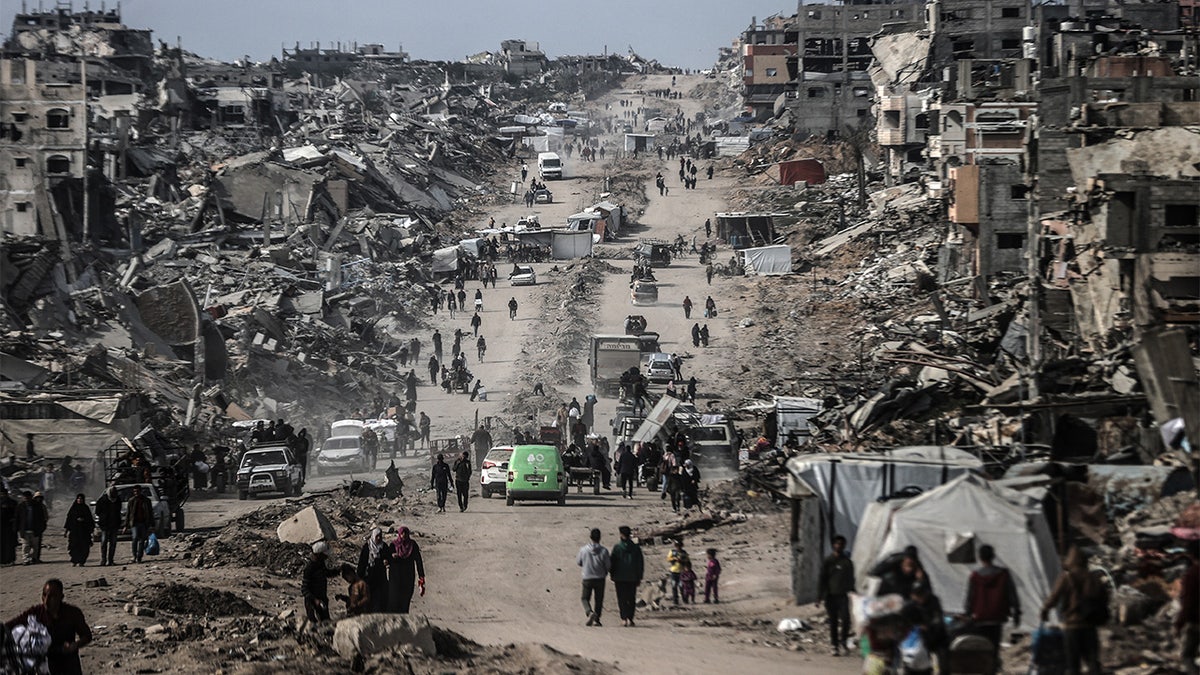
International holidays often feel hollow when they clash with the reality on the ground, but May 1 in Palestine is on a whole different level of irony this year. While the rest of the world stops to celebrate workers' rights and the dignity of labor, the people in Gaza are looking at a pile of rubble that used to be their office, their shop, or their farm. You can't talk about "labour" when the very infrastructure of employment has been pulverized.
Rebuilding Gaza Strip isn't just about pouring concrete or fixing power lines. It's about a total systemic collapse where the concept of a "workday" has been replaced by a 24-hour struggle for basic survival. We're talking about a place where the unemployment rate didn't just spike—it effectively became the default state for nearly the entire population.
The death of the Palestinian workplace
Before the current escalation, the Gazan economy was already gasping for air under years of restrictions. Now, it’s flatlined. According to data from the International Labour Organization (ILO), hundreds of thousands of jobs vanished in a matter of weeks. That’s not a statistic; that’s a catastrophe. Think about the small business owner in Gaza City who spent twenty years building a printing press, only to see it turned into dust in twenty seconds.
Labor Day is supposed to honor the hands that build civilizations. In Gaza, those hands are busy digging through debris for scrap metal or wood to cook a meal. The traditional workforce—teachers, engineers, bankers, shopkeepers—has been forced into a primitive economy of bartering and aid reliance. When you lose your workplace, you lose your identity. You lose the ability to provide, which is a psychological blow that's often harder to heal than the physical destruction.
The sheer scale of the damage to the private sector is staggering. We aren't just talking about broken windows. We’re talking about the total erasure of industrial zones. Most of the greenhouses in the north, which were the backbone of local agriculture, are gone. The fishing fleet is largely incapacitated. If you’re a baker and your oven is destroyed and there’s no flour, what does May 1 mean to you? It means nothing. It’s just another day of wondering if the flour trucks will make it through.
Why the global recovery talk misses the point
I’ve seen plenty of international reports discussing "recovery phases" and "economic stabilization." Honestly, most of those reports feel like they were written for a different planet. You can't have a recovery phase when the basic requirements for a market—safety, movement, and materials—don't exist.
The conversation about rebuilding Gaza Strip usually focuses on the billions of dollars needed. Yes, the World Bank and the UN estimate the damages in the tens of billions. But money is useless if you can't bring in a bag of cement. The "dual-use" list of restricted items has historically made bringing in construction materials a bureaucratic nightmare. Unless the political reality changes, that money will just sit in bank accounts while people live in tents next to the ruins of their homes.
- Infrastructure: Over 60% of housing units are damaged or destroyed.
- Education: Schools have been converted to shelters or leveled, meaning the future workforce is losing years of development.
- Health: The medical sector is operating on life support, with doctors working months without pay.
The workers who are still "employed" are often the ones in the most danger. Municipal workers trying to fix water pipes under fire, or medics driving into active zones, aren't thinking about labor rights. They’re thinking about staying alive. They aren't asking for a forty-hour work week; they're asking for a helmet and a flak jacket.
The psychological cost of a vanished economy
People often forget that work provides more than just a paycheck. It provides a sense of purpose. When you see thousands of men and women sitting in plastic tents with nothing to do, you’re looking at a ticking time bomb of social despair. The "dignity of work" is a phrase politicians love, but in Gaza, the lack of it is a literal crisis.
Young graduates who should be the architects of a new Gaza are instead standing in line for hours to fill a yellow jerrycan with water. This isn't just a temporary setback. It's a generational theft. The skills are there—Palestinians are some of the most highly educated people in the region—but there is no theater for those skills to perform in.
I’ve talked to engineers who are now selling canned goods on street corners. They don't want charity. They want to build. But you can't build when the sky is falling. This disconnect between the global recognition of Labour Day and the local reality of forced idleness is what makes the holiday feel so bitter.
Small scale survival in a ruined landscape
Despite the horror, a "shadow economy" has emerged. It’s not pretty, and it’s not efficient, but it’s how people are staying alive. You’ll see teenagers charging cell phones using small solar panels for a few shekels. You’ll see people repurposing old cooking oil to run engines. This is labor in its rawest, most desperate form.
It’s an economy of necessity. There are no unions here. There are no safety regulations. There is only the immediate need to find bread. If we want to talk about rebuilding, we have to start by acknowledging these micro-efforts. The focus shouldn't just be on massive housing projects that might take a decade. It needs to be on getting small businesses back on their feet now.
- Cash assistance: Directly injecting liquidity so people can buy what little is available.
- Solar energy: Decentralizing power so businesses don't rely on a grid that doesn't exist.
- Borders: Opening crossings for both aid and commercial trade.
Breaking the cycle of temporary fixes
The world has seen this movie before. Conflict happens, the world pledges money, some houses get built, and then it happens again. Breaking that cycle is the only way "Rebuilding Gaza Strip" becomes more than a headline. It requires a fundamental shift in how the territory is treated. You can't treat Gaza like a humanitarian warehouse and expect it to function like a state.
True rebuilding means an economy that can breathe. It means Gazan products being sold in the West Bank and abroad. It means a port. It means the ability for a tech worker in Gaza to remote-work for a firm in Dubai without the power cutting out every four hours. Without these things, any talk of "labor" is just noise.
The Palestinian worker has always been resilient, but resilience has its limits. You can't ask a population to be "resilient" forever while their children grow up in the shadow of cranes that never move. Labour Day 2026 isn't a celebration in Gaza. It’s a reminder of everything that has been taken away.
If you want to actually support the rebuilding effort, stop looking at it as a construction project. Look at it as a restoration of human rights and economic agency. Support organizations that are getting tools and raw materials directly into the hands of local tradespeople. Demand that trade barriers be lifted so the "Made in Gaza" label can actually mean something again. Don't just send a bag of flour; help the baker fix his oven. That’s the only way the next Labour Day won't feel like a slap in the face. Move past the headlines and look at the logistics of survival. The work is there—the world just needs to let them do it.